Want to be in the loop?
subscribe to
our notification
Business News
PROPERTY PRICES TO BOTTOM BY MID-2021
The Vietnamese property market is expected to slow down, with prices starting to drop by the end of this year and hitting the bottom by mid-2021, creating opportunities for home buyers sitting on cash, experts have forecast.
Hanoi - The Vietnamese property market is expected to slow down, with prices starting to drop by the end of this year and hitting the bottom by mid-2021, creating opportunities for home buyers sitting on cash, experts have forecast.
“Housing prices will begin to plummet by the end of this year and bottom out by mid-2021 when the [COVID-19] pandemic has impacted almost every sector, especially the housing market,” Tran Khanh Quang, general director of Viet An Hoa Company, said.
Since the second wave of the pandemic began late last month, investors’ confidence has once again weakened as property sales ped and incomes were hit hard.
“The financial market has faced fluctuations since the beginning of the year when the outbreak started,” he said, adding that a large amount of long-term cash flow is still waiting for good prices to buy.
“From the end of the year to the first half of 2021 will be an opportunity for home buyers. The most affected segment is the higher end.”
With the real estate market remaining uncertain in the first half and probably continuing to be so for the rest of the year the commercial housing segment in HCM City faces a slump, according to Savills Vietnam.
The outbreak has forced people to tighten their purse strings due to loss of income, which would also affect housing demand.
Housing development has also been facing a prolonged legal and licensing barrier, hitting buyers’ confidence.
The resurgence of COVID-19 caused the online real estate market to slow down by 7 percent in July as measured by users’ likes and number of searches, according to a report from popular property website Batdongsan.
The amount of news posted and the level of interest in the market has seen a decrease since late-July due to the return of the deadly virus, it reports.
Interest levels in online real estate floors in provinces recorded an average drop of 10 percent.
The website’s internet consumer research data also show that in Da Nang, the new epidemic epicentre, it dropped by 20 percent, the highest rate in the country.
Le Hoang Chau, chairman of the HCM City Real Estate Association (HoREA), said the market would continue to have high demand for affordable apartments while the supply in this segment is limited.
“There is need for more investment in the affordable housing segment. This segment has high demand and also high liquidity".
Demand from foreigners was also increasing, said Nguyen Duc Them, project sales manager at Savills.
According to HoREA's report, foreigners now own around 16,000 apartments, or 2 percent of the total supply, and this has not affected locals’ opportunity to buy housing.
Since 2015 big-name developers have sold 12,335 units to foreigners, 81 percent of them in HCM City.
Most people coming from Europe, North America, Australia, and Japan prefer to rent when they come to work in Vietnam, while those from mainland China, the Republic of Korea, Taiwan, Hong Kong, and Singapore prefer buying, it added.
Source: VIR
Related News

CHARITY / EXHIBITION / OTHER EVENTS
INVESTMENT OPPORTUNITIES IN CA MAU PROVINCE: 96 PROJECTS AND 20 STRATEGIC PROJECTS
We are pleased to share with you information on investment projects currently seeking investors in Ca Mau Province. Should your esteemed company or association be interested, we kindly invite you to review the project information and complete the registration form via the links provided. The Ho Chi Minh City Investment and Trade Promotion Centre (ITPC) will consolidate the expressions of interest and facilitate connections with the leadership of Ca Mau Province at a meeting tentatively scheduled for 13 November 2026 in Ho Chi Minh City.

MEMBER CORNER / PROMOTIONS
BẰNG KIỀU LIVESHOW - A SYMPHONY OF LOVE UNDER THE GOLDEN GLOW
A masterclass in live music that takes the audience on a soulful journey through immortal love songs, guided by the peerless artistry and emotive storytelling of renowned singer Bằng Kiều. The highlight of the night is his seamless musical chemistry with special guest Triệu Hồng Ngọc, promising passionate and deeply resonant duets inside the magnificent Grand Ballroom.
INFRASTRUCTURE / CONSTRUCTION / LOGISTIC / PORT
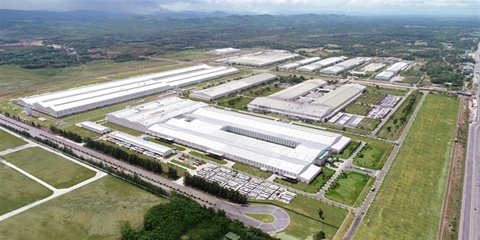
ĐÀ NẴNG GREEN-LIGHTS US$105 MILLION THAI DEVELOPMENT DEAL
The central city has approved an investment proposal by Thailand’s WHA Group to develop infrastructure for the 400ha WHA Đà Nẵng Industrial Park project on two communes of Thăng Bình and Đồng Dương, with an investment of more than VNĐ2.7 trillion (US$105 million). The city said it approved WHA Industrial Development International's status as an investor in the project, which is expected to take place between 2027 and 2034.
VIETNAM ECONOMY INVESTMENT
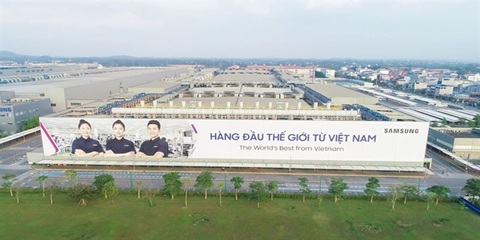
MOBILE PHONE EXPORTS RISE 20% TO $51.8 BILLION IN FIRST NINE MONTHS
Exports of mobile phones and components rose 20 per cent year-on-year to nearly US$51.8 billion in the first nine months of 2026, with China, the US and Republic of Korea accounting for more than half of the total. Shipments to the three markets reached a combined $26.18 billion, or 50.6 per cent of total exports of the product group during the period, according to data from the Vietnam Department of Customs under the Ministry of Finance.
INFRASTRUCTURE / CONSTRUCTION / LOGISTIC / PORT
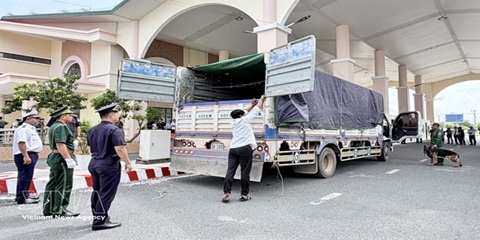
VIỆT NAM-CAMBODIA TRADE GATHERS PACE TOWARDS $20 BILLION TARGET
Trade between Việt Nam and Cambodia continues to grow, remaining a bright spot and a key pillar of bilateral cooperation as the two countries aim to raise two-way trade to US$20 billion in the coming years. After setting a record of more than $11.3 billion last year, bilateral trade reached about $8.7 billion in the first eight months of this year, up 8.3 per cent year on year.
VIETNAM ECONOMY INVESTMENT
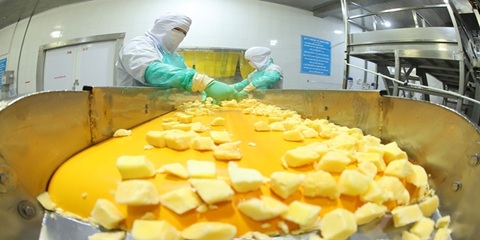
FRUIT AND VEGETABLE EXPORTS POISED TO HIT $10 BILLION IN 2026
Fruit and vegetable exports are on track to reach nearly US$10 billion in 2026, after rising 19.9 per cent year on year to nearly US$7.4 billion in the first nine months, driven by strong seasonal demand and abundant tropical fruit supplies. The Ministry of Agriculture and Environment said the growth reflected stronger international demand for fresh produce and processed agricultural products.
Events Sponsors






















