Want to be in the loop?
subscribe to
our notification
Business News
PROPERTY MARKET 2018: GREAT OPPORTUNITY FOR BUSINESSES
Driven by growth momentum of the property market in 2017 and coupled with the miraculous rally of the stock market, the property market will continue a positive prospect for 2018. Particularly, in 2018, the Government will complete mechanisms, characteristics and development orientations for three special administrative economic zones - Van Don (Quang Ninh province), Van Phong (Khanh Hoa province) and Phu Quoc (Kien Giang province) in addition to the adoption of specific mechanism for the economic development of Ho Chi Minh City.
2017 saw a robust revival of many real estate companies in Hanoi and Ho Chi Minh City, and a resumption of a series of long inactive projects. Housing and land prices surged, particularly in Ho Chi Minh City, where some places like District 2 and District 9 underwent price fevers.
Real deals
According to statistics from the Housing Management and Real Estate Market Department under the Ministry of Construction, Ho Chi Minh City and Hanoi alone had 3,000 successful property deals as of the year. Despite lower growth than in 2016, deals concluded in 2017 were made by end buyers while speculation prevailed in 2016.
Policies that support the sustainable development of the property market also became more flexible and reasonable with the market and this helped draw more foreign investors. From 2009 to 2015, only 126 foreign investors were given house ownership certificates, commonly called red books, but the number has jumped to over 2,000 since the enforcement of the Housing Law of 2014 to date. The number of foreign buyers is sharply rising.
Foreign investors make presence in the Vietnamese property market by entering mergers and acquisitions (M&As) deals. According to consulting firm JLL Vietnam, property M&A deals amounted to US$1.5 billion last year. For example, Warburg Pincus Investment Fund established a US$300 million joint venture with VinaCapital to invest in resorts and hotels. Soon after, Warburg Pincus acquired Serenity Holding, a hotel management company, or purchased a 50 per cent stake in Sofitel Legend Metropole Hanoi Hotel.
Mr Phan Xuan Can, Chairman of the Board of Directors of SohoVietnam Real Estate Consulting Company, which specialises in property M&As and project transfer, said, announced M&A deals in the real estate sector are just the tip of the iceberg, and many deals are not disclosed. The value of announced property M&A deals accounted for just 20 - 30 per cent of the real value.
In addition, foreign investors invested US$2.5 billion in property projects in 2017, accounting for 7.6 per cent of total registered FDI capital.
FDI into property will rise sharply
Dr Vu Dinh Anh forecast that, based on domestic macro-economic factors and more accommodating investor support policies, FDI flows into the property market will increase strongly in 2018. Over the next five years, the real estate market will continue to attract over US$3 billion of FDI capital each year.
According to experts, the real estate market will be more diverse in 2018, led by low-cost housing. Giving an optimistic view on the real estate market in 2018, Mr Le Hoang Chau, Chairman of the Ho Chi Minh City Real Estate Association, said that this will be a banner year for the real estate market to grow. Demand and supply will meet in reality. Key buyers will be middle-income and low-income residents in urban areas.
He added that, the property market will see considerable corrections in supply and demand from 2018 to 2020 that will make it more balanced and healthier. Hanoi and Ho Chi Minh City are currently completing a new urban infrastructure system, which will be a great opportunity for businesses to seize opportunities to invest and develop the real estate market in the medium and long term.
With the timely and effective adjustments to State property policies, a property bubble is unlikely in 2018.
Mr Ngo Quang Phuc, Deputy General Director of Himlam Land, said that after a long downturn, many investors have identified and reassessed investment opportunities of the market. Accordingly, many investors have shifted portfolios to middle-class apartment segment, which serves the vast majority of customers. The demand seems to outweigh the supply.
Mr Pham Thanh Hung, Vice President of Cen Group, forecast that the real estate market will have many opportunities in 2018 as this is a banner year for the Vietnamese economy when WTO commitments are fully fulfilled. Thus, a globalisation trend will appear in 2017 - 2018: Vietnamese investors buy houses in foreign countries and foreigners buy houses in Vietnam.
He added that the official globalisation integration of the real estate market will shape a strong and fair game for powerful foreign countries. The Vietnamese market is witnessing a wave of investment from Japan, South Korea, Singapore, China, Germany and the United Kingdom (UK). The participation of foreign investors and rich customers will affect the market, prices, and especially high-end and luxury segments in Vietnam.
Along with positive development signals from the real estate market, many experts said that, to grasp this opportunity, enterprises need to constantly restructure, reform and renovate themselves, build corporate culture, corporate spirit, and fulfil their responsibility to the society and to customers. The Fourth Industrial Revolution, internet of things, artificial intelligence, development trends of green, environment-friendly, safe and convenient real estate projects are new requirements of consumers that investors must meet.
Source: VCCI
Related News

CHARITY / EXHIBITION / OTHER EVENTS
INVESTMENT OPPORTUNITIES IN CA MAU PROVINCE: 96 PROJECTS AND 20 STRATEGIC PROJECTS
We are pleased to share with you information on investment projects currently seeking investors in Ca Mau Province. Should your esteemed company or association be interested, we kindly invite you to review the project information and complete the registration form via the links provided. The Ho Chi Minh City Investment and Trade Promotion Centre (ITPC) will consolidate the expressions of interest and facilitate connections with the leadership of Ca Mau Province at a meeting tentatively scheduled for 13 November 2026 in Ho Chi Minh City.

MEMBER CORNER / PROMOTIONS
BẰNG KIỀU LIVESHOW - A SYMPHONY OF LOVE UNDER THE GOLDEN GLOW
A masterclass in live music that takes the audience on a soulful journey through immortal love songs, guided by the peerless artistry and emotive storytelling of renowned singer Bằng Kiều. The highlight of the night is his seamless musical chemistry with special guest Triệu Hồng Ngọc, promising passionate and deeply resonant duets inside the magnificent Grand Ballroom.
INFRASTRUCTURE / CONSTRUCTION / LOGISTIC / PORT
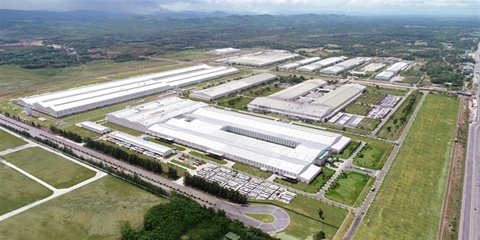
ĐÀ NẴNG GREEN-LIGHTS US$105 MILLION THAI DEVELOPMENT DEAL
The central city has approved an investment proposal by Thailand’s WHA Group to develop infrastructure for the 400ha WHA Đà Nẵng Industrial Park project on two communes of Thăng Bình and Đồng Dương, with an investment of more than VNĐ2.7 trillion (US$105 million). The city said it approved WHA Industrial Development International's status as an investor in the project, which is expected to take place between 2027 and 2034.
VIETNAM ECONOMY INVESTMENT
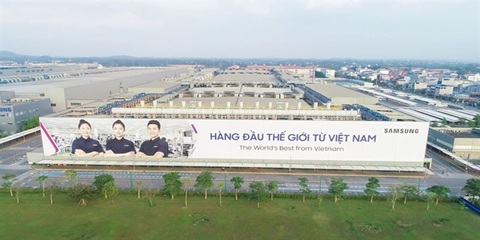
MOBILE PHONE EXPORTS RISE 20% TO $51.8 BILLION IN FIRST NINE MONTHS
Exports of mobile phones and components rose 20 per cent year-on-year to nearly US$51.8 billion in the first nine months of 2026, with China, the US and Republic of Korea accounting for more than half of the total. Shipments to the three markets reached a combined $26.18 billion, or 50.6 per cent of total exports of the product group during the period, according to data from the Vietnam Department of Customs under the Ministry of Finance.

INFRASTRUCTURE / CONSTRUCTION / LOGISTIC / PORT
VIỆT NAM-CAMBODIA TRADE GATHERS PACE TOWARDS $20 BILLION TARGET
Trade between Việt Nam and Cambodia continues to grow, remaining a bright spot and a key pillar of bilateral cooperation as the two countries aim to raise two-way trade to US$20 billion in the coming years. After setting a record of more than $11.3 billion last year, bilateral trade reached about $8.7 billion in the first eight months of this year, up 8.3 per cent year on year.
VIETNAM ECONOMY INVESTMENT
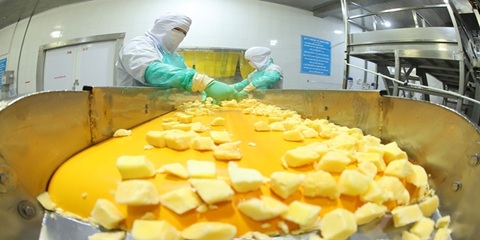
FRUIT AND VEGETABLE EXPORTS POISED TO HIT $10 BILLION IN 2026
Fruit and vegetable exports are on track to reach nearly US$10 billion in 2026, after rising 19.9 per cent year on year to nearly US$7.4 billion in the first nine months, driven by strong seasonal demand and abundant tropical fruit supplies. The Ministry of Agriculture and Environment said the growth reflected stronger international demand for fresh produce and processed agricultural products.
Events Sponsors






















