Want to be in the loop?
subscribe to
our notification
Business News
PPP INVESTORS FACE POLICY DISADVANTAGES
Decree 28 on financial management of public-private partnership (PPP) investment projects in Vietnam is controversial after half a year of practical application.
Changes in capital advance mechanism for businesses
According to experts, Clause 3, Article 8 of Decree 28/2021/ND-CP stipulates that the budget for infrastructure construction is paid for only completed volume that is verified by project contracting parties. This will put investors at risk because they have to spend equity and loan capital for their projects before the State fund is disbursed for completed items.
In PPP projects, investors and the government share investment capital. However, according to the investor of the North-South Expressway that is invested in the PPP form, it is irrational that investors cannot make an advance as per Decree 28/2021/ND-CP. Therefore, this clause needs to be revised to have State budget advance for investors and contractors when the project is prepared and executed.
Overdue interest rates need to be counted
Constraints in regulations on capital advance also make it difficult for businesses to sign credit contracts because banks are afraid of risks of delayed disbursement of State support budget.
In addition, regulations on the principle of controlling public budget payment in PPP projects in Clause 2, Decree 28 state: "State budget in PPP projects is paid when competent authorities assign capital plans and allocate budget estimates by law”. This regulation is reportedly unclear in settling slowed State budget payment under PPP project contracts, leading to heightened risks for investors and banks.”
Currently, some PPP projects, especially the North-South Expressway, have been delayed because competent governmental agencies do not timely allocate State budget. Therefore, some investors are asking to calculate interest if the State is slow to disburse the support capital.
Revising regulations on increased/decreased revenue sharing
Another shortcoming in regulations on revenue sharing of a PPP project under Clause 2, Article 17 of Decree 28/2021/ND-CP is that the contract-signing agency determines the value of the shared revenue while investors are not mentioned.
Dr. Tran Chung, Chairman of the Vietnam Association of Road Systems Investors (VARSI), affirmed that the project company is also a party and it therefore has the right to have a part in determining the revenue which serves as the basis for implementing the revenue sharing mechanism. This provision of Decree 28 is contrary to the principle of equity between the project company and the contracting agency, so it should be considered for amendment or cancellation.
Contractor appointment applied to only single investor registered
Circular 06/2020/TT-BKHDT provides: In case only one investor registers and meets requirements of bidding documents (HSMT), contractor appointment may be used or time may be extended for more registration.
Decree 25/2020/ND-CP stipulates that the contractor appointment shall only be applied in cases where only one investor registers and meets bidding requirements or it is only one qualified investor.
According to PPP Law and Decree 35/2021/ND-CP, contractor appointment is only applicable to projects that need to meet requirements of national defense, security, and state secret; or projects that need to immediately replace investors to ensure project continuity.
Thus, there are contradictions in contractor appointment. In ordinary projects, Decree 25/2020/ND-CP and Circular 06/2020/TT-BKHDT allow applying contractor appointment but Decree 35/2021/ND-CP disallows it.
In order to resolve this contradiction, according to experts, it is necessary to revise consistency of Decree 25/2020/ND-CP, Circular 06/2020/TT-BKHDT and Decree 35/2021/ND-CP to provide guidance on cases where there is only one registered investor who meets bidding requirements or only one investor wins the bid after extending the deadline for submitting tender documents which are not filed by any other new investors.
Source: VCCI
Related News

BANKING / FINANCE / INSURANCE / TAX
REMITTANCES TO HCM CITY RISE NEARLY 40% IN Q3
Remittances to HCM City reached more than US$2.83 billion in the third quarter of this year, up 39.5 per cent from the previous quarter and 3.6 per cent year-on-year. This was the first quarter showing positive annual growth this year, helping narrow the decline in remittance inflows over the first nine months. According to the State Bank of Vietnam (SBV)’s Regional Branch 2, remittances transferred to HCM City through credit institutions and economic organisations totalled $2.835 billion in Q3, an increase of more than $802 million from the previous quarter.

TECHNOLOGY
TECH SECTOR GROWTH OPENS UP OPPORTUNITIES FOR VIỆT NAM TO GO GLOBAL
The growth of the electronics, semiconductor and high-tech sectors worldwide is opening up a variety of opportunities for Vietnamese enterprises to integrate more deeply into the global supply chain. However, to become suppliers for these corporations, domestic enterprises must meet rigorous standards regarding quality, technology, productivity and order fulfilment capabilities.
VIETNAM ECONOMY INVESTMENT
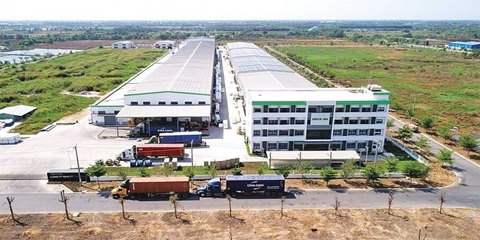
FOREIGN INVESTORS SEEKING A SYNCHRONISED MANUFACTURING ECOSYSTEM
Instead of focusing only on land costs and incentives as usual, foreign investors are seeking a synchronised manufacturing ecosystem, from stable power supply and logistics to shared infrastructure and the convenience of completing residence procedures for experts to serve their long-term investment in the country.
MEMBER CORNER / PROMOTIONS
SENTRYSAFE FHW40200 – PROTECT YOUR VALUABLES, ENJOY PEACE OF MIND!
Looking for a reliable solution to protect your important documents, cash, and valuables from fire and water damage? Genuine SENTRYSAFE - Reliable protection for your valuables and peace of mind! Contact Sen Wai Vietnam for more information and personalized product recommendations.
PROPERTY / INDUSTRIAL ZONE
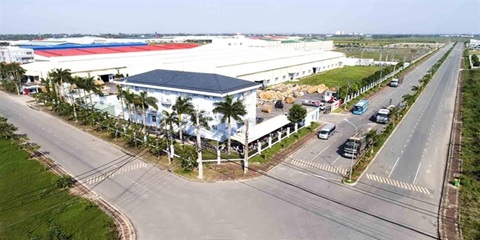
HCM CITY ATTRACTS US$5.7 BILLION INTO EXPORT PROCESSING AND INDUSTRIAL ZONES
HCM City attracted US$5.7 billion in domestic and foreign investment into its export processing and industrial zones during the first nine months of 2026. The figure exceeded the city's full-year target by 31 per cent, highlighting strong momentum in high-quality industrial investment under Resolution No.10-NQ/TW. Total investment reached 131 per cent of the 2026 target of $4.25 billion and represented a 29 per cent increase compared with the same period in 2025, according to the city's Export Processing and Industrial Zones Authority (HEPZA).
INFRASTRUCTURE / CONSTRUCTION / LOGISTIC / PORT
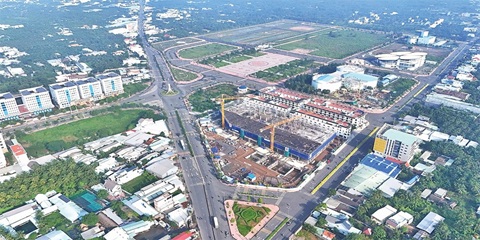
DONG THAP PROVINCE STEPS UP INDUSTRIAL EXPANSION AND INFRASTRUCTURE CONNECTIVITY
Accelerating public investment, strengthening inter-regional connectivity, and expanding industrial land are helping Dong Thap efficiently bolster competitiveness and drive economic growth. Following the 2025 merger of the former Dong Thap and Tien Giang provinces, the expanded Dong Thap province in the Mekong Delta faces mounting pressure to accelerate infrastructure development and strengthen connectivity among local economic zones, urban areas, industrial parks (IPs), and production centres.
Events Sponsors






















