Want to be in the loop?
subscribe to
our notification
Business News
POSITIVE OUTLOOK FOR VIỆT NAM’S BANKING SECTOR IN 2025
Bank stocks will deliver a strong performance again this year, partly because sector-wide bank earnings growth is expected to accelerate from 14 per cent in 2024 to 17 per cent in 2025 driven by a shift in GDP growth drivers from external factors to domestic driven growth, according to investment management firm VinaCapital.

Banking sector’s earnings growth is expected to pick up this year driven by a shift in GDP growth drivers from exports and tourism in 2024 to consumption, infrastructure spending, and real estate in 2025. — Photo courtesy of HDBank
HCM CITY — Bank stocks will deliver a strong performance again this year, partly because sector-wide bank earnings growth is expected to accelerate from 14 per cent in 2024 to 17 per cent in 2025 driven by a shift in GDP growth drivers from external factors to domestic driven growth, according to investment management firm VinaCapital.
Bank stocks significantly outperformed the VN-Index in 2024 with the 18 banks listed on the Ho Chi Minh Stock Exchange surging 26 per cent in VND terms versus 12 per cent for the VN-Index.
A recent report conducted by Michael Kokalari, chief economist at VinaCapital, and Nguyễn Thị Thúy Anh, senior bank analyst at VinaCapital, pointed out that earnings growth acceleration, coupled with attractive valuations (1.3x price to book (P/B) versus 16 per cent return on equity (ROE)), should drive further stock price appreciation.
According to the report, Việt Nam’s export growth to the US is projected to plunge this year, which should be offset by increases in infrastructure spending, real estate development activity, and consumer spending.
Slower export growth will weigh on GDP growth because exports are nearly 100 per cent/GDP, but most of Việt Nam’s exports are produced by FDI companies that are not reliant on local banks for financing; while slower exports will affect the economy, they will not significantly hurt the banks.
Furthermore, banks should be the biggest beneficiaries of the shift to more domestically driven growth because Vietnamese banks touch nearly every part of the country’s domestic economy, and banks are especially exposed to real estate and consumption, which will help drive the economy in 2025.
VinaCapital expected that the Government will take concrete steps to boost the real estate market this year, which could result in mortgage loan growth doubling from around 10 per cent in 2024 to 20 per cent in 2025.
A real estate market revival would also boost consumer confidence, as well as other forms of high margin consumer lending, such as auto loans and buy-now-pay-later purchases.
The Government also plans to support 2025 GDP growth by spending more on infrastructure development, which should create more lending opportunities for banks.
They stressed that the combination of increased infrastructure spending, improved consumer sentiment, and a real estate market revival would all propel banks’ credit growth, support banks’ net interest margins (NIMs), and foster the ongoing recovery of asset quality in Việt Nam.
Recovering asset quality and improving loan mix

The 18 banks listed on the Ho Chi Minh Stock Exchange surged 26 per cent in VND terms versus 12 per cent for the VN-Index in 2024. Bank stocks are expected to deliver a strong performance again this year. — Source VinaCapital
The two experts expected the earnings of Việt Nam’s listed banks to grow 17 per cent this year, driven by 15 per cent system-wide credit growth and by a slight increase in system-wide NIM (by 6 basis points (bps) to 355 bps in 2025). The ongoing recovery in asset quality will also support earnings growth somewhat this year, as will an improved composition of loan growth.
Việt Nam’s system-wide loan growth is expected to remain at around 15 per cent in 2025 but for high-margin retail loan growth to accelerate from around 12 per cent in 2024 to 15 per cent in 2025.
They also expected banks to make more long-dated loans this year by lending to infrastructure projects, which typically have long time horizons. The resulting “maturity transformation” associated with those new long-dated loans will support NIMs (banks earn higher profits by gathering short-term deposits and extending long-term loans that usually earn higher interest rates).
Finally, real estate lending picked up considerably last year as the market recovery gathered steam, although some lending to real estate developers was for the refinancing of maturing corporate bonds that developers previously sold to retail and other investors.
Attractive valuations
Kokalari underscored that Vietnamese bank stocks are trading at a 1.3x price to book for 2025 versus 16 per cent expected return on equity, which is nearly two standard deviations below banks’ 5-year average P/B (banks that generate 16 per cent ROE typically trade above 2x P/B).
Valuation is also cheap on a Price Earnings Ratio basis at 0.5x PEG (8x FY2025 P/E vs. 17 per cent EPS growth). Last year, valuations were even cheaper before a partial re-rating of bank stock valuations, when the increase in bank stock prices (26 per cent) outpaced EPS growth (14 per cent).
One reason for that cheap valuation is that Việt Nam’s 30 per cent foreign ownership limit for banks essentially makes local retail investors the marginal buyers who set bank stock prices in Việt Nam, and those investors are not as focused on valuations as foreigners.
Investors in Việt Nam’s stock market are generally aware of the sector’s inexpensive valuation, but many do not realise how big the divergence is between the valuations and stock price performance of individual banks, or how much divergence there is between the operating, asset quality, and other metrics among individual banks, he said. — VNS
Source: VNS
Related News
VIETNAM ECONOMY INVESTMENT
FOREIGN INVESTORS SEEKING A SYNCHRONISED MANUFACTURING ECOSYSTEM
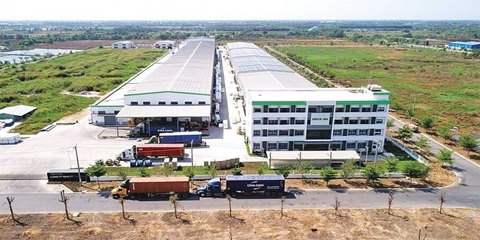
Instead of focusing only on land costs and incentives as usual, foreign investors are seeking a synchronised manufacturing ecosystem, from stable power supply and logistics to shared infrastructure and the convenience of completing residence procedures for experts to serve their long-term investment in the country.
INFRASTRUCTURE / CONSTRUCTION / LOGISTIC / PORT
DONG THAP PROVINCE STEPS UP INDUSTRIAL EXPANSION AND INFRASTRUCTURE CONNECTIVITY
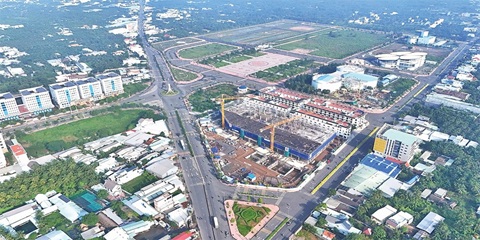
Accelerating public investment, strengthening inter-regional connectivity, and expanding industrial land are helping Dong Thap efficiently bolster competitiveness and drive economic growth. Following the 2025 merger of the former Dong Thap and Tien Giang provinces, the expanded Dong Thap province in the Mekong Delta faces mounting pressure to accelerate infrastructure development and strengthen connectivity among local economic zones, urban areas, industrial parks (IPs), and production centres.
PROPERTY / INDUSTRIAL ZONE
HCM CITY ATTRACTS US$5.7 BILLION INTO EXPORT PROCESSING AND INDUSTRIAL ZONES
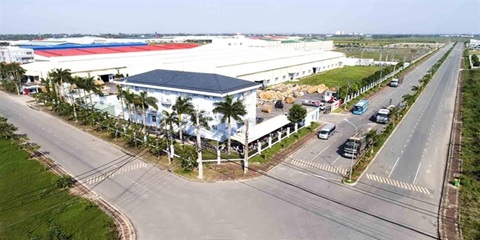
HCM City attracted US$5.7 billion in domestic and foreign investment into its export processing and industrial zones during the first nine months of 2026. The figure exceeded the city's full-year target by 31 per cent, highlighting strong momentum in high-quality industrial investment under Resolution No.10-NQ/TW. Total investment reached 131 per cent of the 2026 target of $4.25 billion and represented a 29 per cent increase compared with the same period in 2025, according to the city's Export Processing and Industrial Zones Authority (HEPZA).

BANKING / FINANCE / INSURANCE / TAX
REMITTANCES TO HCM CITY RISE NEARLY 40% IN Q3
Remittances to HCM City reached more than US$2.83 billion in the third quarter of this year, up 39.5 per cent from the previous quarter and 3.6 per cent year-on-year. This was the first quarter showing positive annual growth this year, helping narrow the decline in remittance inflows over the first nine months. According to the State Bank of Vietnam (SBV)’s Regional Branch 2, remittances transferred to HCM City through credit institutions and economic organisations totalled $2.835 billion in Q3, an increase of more than $802 million from the previous quarter.

VIETNAM ECONOMY INVESTMENT
LOCALITIES REPORT BREAKTHROUGH RESULTS IN FDI IN FIRST NINE MONTHS
In Ho Chi Minh City, total registered capital reached $17.2 billion in the first nine months, up 4.2 times from the same period last year. The figure included more than $9.35 billion in newly registered capital and over $4.9 billion in additional capital for existing projects. Foreign investors also registered more than $2.9 billion through capital contributions and share purchases.

TECHNOLOGY
TECH SECTOR GROWTH OPENS UP OPPORTUNITIES FOR VIỆT NAM TO GO GLOBAL
The growth of the electronics, semiconductor and high-tech sectors worldwide is opening up a variety of opportunities for Vietnamese enterprises to integrate more deeply into the global supply chain. However, to become suppliers for these corporations, domestic enterprises must meet rigorous standards regarding quality, technology, productivity and order fulfilment capabilities.
Events Sponsors






















