Want to be in the loop?
subscribe to
our notification
Business News
POLICY SUPPORT FOR DOMESTIC AUTOMOBILE MANUFACTURING AND ASSEMBLY ENTERPRISES
The Vietnamese Government has recently disseminated a decree that extends the deadline for the payment of special consumption tax on domestically manufactured and assembled automobiles. This measure is expected to bolster the recovery efforts of domestic automobile enterprises.
Declining sales
The Department of Industry (Ministry of Industry and Trade) reported significant challenges in the production and business operations of domestically manufactured and assembled automobile enterprises, posing a threat to the country's economic and social development objectives. Against the backdrop of economic downturn, the automotive manufacturing and assembly sector has witnessed dwindling sales and production adjustments. Moreover, inflationary pressures, fluctuating exchange rates and soaring gold prices have dampened consumer confidence, prompting a tightening in expenditure on high-value items, notably automobiles.
Reflecting the prevailing conditions in the automotive market during late 2023 and early 2024, total sales plummeted notably in the first five months of 2024. According to data from the Vietnam Automobile Manufacturers Association (VAMA) and non-VAMA member enterprises, the market absorbed approximately 121,189 vehicles of various types (including passenger cars and commercial vehicles), marking a 42% decline compared to the corresponding period in 2022 and an 8% decrease from the same period in 2023. Confronted with a sharp downturn, automobile manufacturing and assembly firms have initiated numerous incentive and support initiatives aimed at stimulating consumer car purchases. However, relying solely on individual enterprise resources and stimulus measures is deemed insufficient to foster sustained and stable growth in the automotive market.
In light of these challenges, Ministry of Finance emphasized the imperative of continued support for domestic automobile manufacturing and assembly enterprises to revitalize and enhance their production and business capacities.
Supporting domestic automobile manufacturing and assembly enterprises is necessary
To support the resurgence of domestic automobile manufacturing and assembly enterprises, the Government has enacted Decree 65/2024/ND-CP, extending the deadline for the payment of special consumption tax on domestically manufactured and assembled automobiles.
Under the provisions of the decree, the deadline for paying special consumption tax on domestically produced or assembled automobiles from the tax calculation periods of May to September 2024 is extended until November 20, 2024. This extension aims to prevent financial burdens from accumulating towards the year's end for businesses and to safeguard the fulfillment of the State budget revenue targets, particularly in cases of financial adversity.
During this extended period, no late payment penalties will be levied on the deferred special consumption tax amounts. Ministry of Finance estimated that the total amount of special consumption tax for domestically produced and assembled cars, extended across four tax periods, is approximately VND8,560 billion, with each subsequent month contributing about VND2,140 billion.
Addressing concerns about international commitments, Ministry of Finance asserted that this measure does not constitute a preferential tax treatment or violate subsidy regulations, thereby minimizing apprehensions from automobile importing enterprises. While this extension does not alter tax rates, it does enhance conditions favorably for domestic manufacturing and assembly enterprises compared to foreign counterparts, prompting considerations within the frameworks of WTO principles and free trade agreements (FTAs).
Furthermore, the Ministry of Industry and Trade supported the removal of obstacles hindering enterprises in general and domestic automobile manufacturing and assembly enterprises specifically. Should this policy extend into 2024, Vietnam will proactively pursue appropriate diplomatic measures to preserve its standing and relations with international trade partners.
Source: VCCI
Related News

BANKING / FINANCE / INSURANCE / TAX
REMITTANCES TO HCM CITY RISE NEARLY 40% IN Q3
Remittances to HCM City reached more than US$2.83 billion in the third quarter of this year, up 39.5 per cent from the previous quarter and 3.6 per cent year-on-year. This was the first quarter showing positive annual growth this year, helping narrow the decline in remittance inflows over the first nine months. According to the State Bank of Vietnam (SBV)’s Regional Branch 2, remittances transferred to HCM City through credit institutions and economic organisations totalled $2.835 billion in Q3, an increase of more than $802 million from the previous quarter.

TECHNOLOGY
TECH SECTOR GROWTH OPENS UP OPPORTUNITIES FOR VIỆT NAM TO GO GLOBAL
The growth of the electronics, semiconductor and high-tech sectors worldwide is opening up a variety of opportunities for Vietnamese enterprises to integrate more deeply into the global supply chain. However, to become suppliers for these corporations, domestic enterprises must meet rigorous standards regarding quality, technology, productivity and order fulfilment capabilities.
VIETNAM ECONOMY INVESTMENT
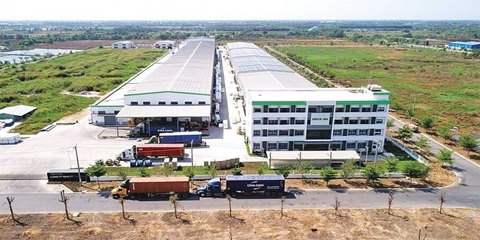
FOREIGN INVESTORS SEEKING A SYNCHRONISED MANUFACTURING ECOSYSTEM
Instead of focusing only on land costs and incentives as usual, foreign investors are seeking a synchronised manufacturing ecosystem, from stable power supply and logistics to shared infrastructure and the convenience of completing residence procedures for experts to serve their long-term investment in the country.
MEMBER CORNER / PROMOTIONS
SENTRYSAFE FHW40200 – PROTECT YOUR VALUABLES, ENJOY PEACE OF MIND!
Looking for a reliable solution to protect your important documents, cash, and valuables from fire and water damage? Genuine SENTRYSAFE - Reliable protection for your valuables and peace of mind! Contact Sen Wai Vietnam for more information and personalized product recommendations.
PROPERTY / INDUSTRIAL ZONE
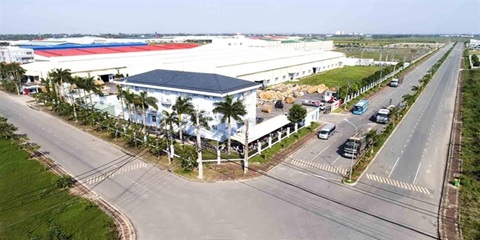
HCM CITY ATTRACTS US$5.7 BILLION INTO EXPORT PROCESSING AND INDUSTRIAL ZONES
HCM City attracted US$5.7 billion in domestic and foreign investment into its export processing and industrial zones during the first nine months of 2026. The figure exceeded the city's full-year target by 31 per cent, highlighting strong momentum in high-quality industrial investment under Resolution No.10-NQ/TW. Total investment reached 131 per cent of the 2026 target of $4.25 billion and represented a 29 per cent increase compared with the same period in 2025, according to the city's Export Processing and Industrial Zones Authority (HEPZA).
INFRASTRUCTURE / CONSTRUCTION / LOGISTIC / PORT
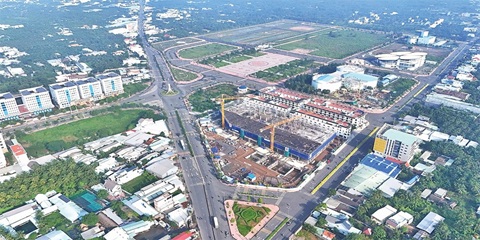
DONG THAP PROVINCE STEPS UP INDUSTRIAL EXPANSION AND INFRASTRUCTURE CONNECTIVITY
Accelerating public investment, strengthening inter-regional connectivity, and expanding industrial land are helping Dong Thap efficiently bolster competitiveness and drive economic growth. Following the 2025 merger of the former Dong Thap and Tien Giang provinces, the expanded Dong Thap province in the Mekong Delta faces mounting pressure to accelerate infrastructure development and strengthen connectivity among local economic zones, urban areas, industrial parks (IPs), and production centres.
Events Sponsors






















