Want to be in the loop?
subscribe to
our notification
Business News
PETROL MARKET BROADLY STABLE IN FIRST HALF OF 2025
A MoIT report indicates that Việt Nam’s domestic petrol market remained broadly stable in H1 2025, despite challenging global economic and political conditions.
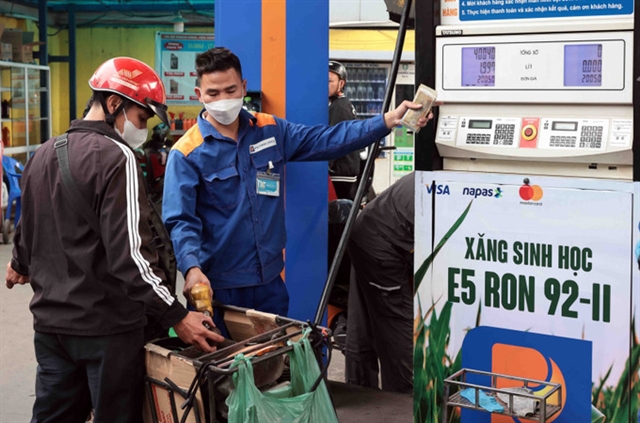
A customer fills up at a petrol station on Trần Quang Khải Street, Hà Nội. — VNA/VNS Photo Trần Việt
HÀ NỘI — Việt Nam’s domestic petrol market remained broadly stable in H1 2025, despite challenging global geopolitical conditions, according to the Ministry of Industry and Trade (MoIT).
Minister of Industry and Trade Nguyễn Hồng Diên chaired a conference on Wednesday in Hà Nội to review petrol supply in the first half of the year and outline priorities for the remaining six months.
The ministry's report indicates that of the 29.5 million cubic metres of petrol products allocated to key traders this year, 28.3 million cubic metres were earmarked for ground fuels and 1.2 million cubic metres for aviation fuel.
From January to June, imports totalled approximately 4.8 million tonnes (5.8 million cubic metres), while domestic refineries produced about 7.8 million tonnes (9.4 million cubic metres). Domestic consumption reached 7.6 million tonnes (9.1 million cubic metres) and exports amounted to 226,000 cubic metres.
Overall supply to the domestic market in the first half of the year was 13.9 million cubic metres — 47 per cent of the annual allocation and a 1.1 per cent increase over H1 2024 — with average monthly consumption at 2.1 million cubic metres and inventories maintained at 1.7–1.8 million cubic metres.
Minister Diên noted that this outcome reflects steady Government oversight, coordinated support measures, and the adaptability of local producers and traders.
To prepare for possible international supply constraints, the Ministry has reinforced its strategic reserves to cover nearly one month of peak demand and diversified import contracts to reduce dependence on any single source. Permit processes have been strengthened so that only fully compliant operators manage critical fuel stocks, and the Domestic Market Management and Development Department has enhanced its reporting system for more timely updates on production, trade flows and inventory levels.
In addition, six draft decrees on petroleum trading submitted on 19 June aim to simplify regulatory requirements and enable prompt adjustments in response to global price shifts. Coordination with the Ministry of Finance and the State Bank of Việt Nam continues to ensure that the Petrol Price Stabilisation Fund remains readily available for market support if needed.
The Domestic Market Management and Development Department reports that most traders continue to meet reporting obligations on distribution, production, imports, exports, inventories and price-stabilisation funds, with only a few requiring follow-up reminders. As of June, there are 32 key fuel traders (27 ground fuel and five aviation fuel) and 262 distributors nationwide.
Looking ahead, H2 consumption is projected at around 13.2 million cubic metres (2.2 million cubic metres per month) and total supply at 14.3 million cubic metres, or 48.2 per cent of the annual allocation. The Ministry emphasises that continued collaboration across agencies and the industry will help Việt Nam navigate any further fluctuations in the global oil market.
Representatives from the Domestic Market Management and Development Department, the Petroleum and Coal Division, the Import–Export Department, the Planning, Finance and Enterprise Management Department and the Foreign Market Development Department, as well as industry associations, producers and petrol traders, were in attendance. — VNS
Source: VNS
Related News
BANKING / FINANCE / INSURANCE / TAX
REMITTANCES TO HCM CITY RISE NEARLY 40% IN Q3
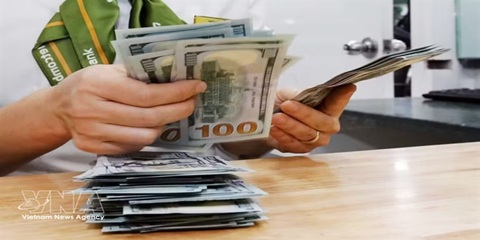
Remittances to HCM City reached more than US$2.83 billion in the third quarter of this year, up 39.5 per cent from the previous quarter and 3.6 per cent year-on-year. This was the first quarter showing positive annual growth this year, helping narrow the decline in remittance inflows over the first nine months. According to the State Bank of Vietnam (SBV)’s Regional Branch 2, remittances transferred to HCM City through credit institutions and economic organisations totalled $2.835 billion in Q3, an increase of more than $802 million from the previous quarter.
TECHNOLOGY
TECH SECTOR GROWTH OPENS UP OPPORTUNITIES FOR VIỆT NAM TO GO GLOBAL
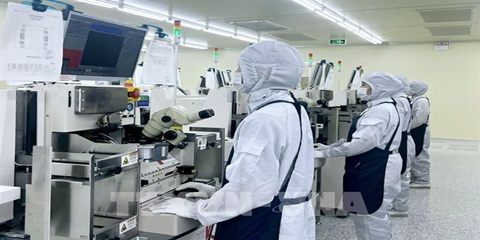
The growth of the electronics, semiconductor and high-tech sectors worldwide is opening up a variety of opportunities for Vietnamese enterprises to integrate more deeply into the global supply chain. However, to become suppliers for these corporations, domestic enterprises must meet rigorous standards regarding quality, technology, productivity and order fulfilment capabilities.
VIETNAM ECONOMY INVESTMENT
FOREIGN INVESTORS SEEKING A SYNCHRONISED MANUFACTURING ECOSYSTEM
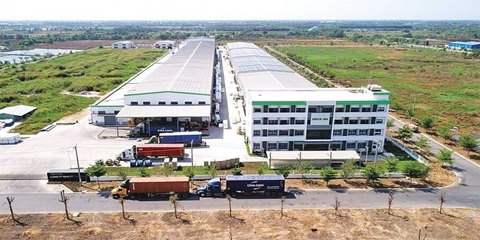
Instead of focusing only on land costs and incentives as usual, foreign investors are seeking a synchronised manufacturing ecosystem, from stable power supply and logistics to shared infrastructure and the convenience of completing residence procedures for experts to serve their long-term investment in the country.
MEMBER CORNER / PROMOTIONS
SENTRYSAFE FHW40200 – PROTECT YOUR VALUABLES, ENJOY PEACE OF MIND!
Looking for a reliable solution to protect your important documents, cash, and valuables from fire and water damage? Genuine SENTRYSAFE - Reliable protection for your valuables and peace of mind! Contact Sen Wai Vietnam for more information and personalized product recommendations.
PROPERTY / INDUSTRIAL ZONE
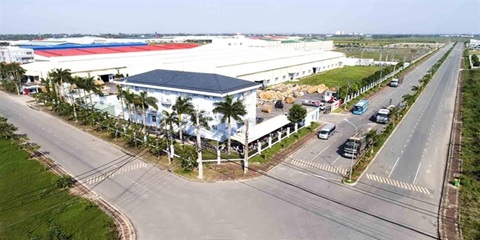
HCM CITY ATTRACTS US$5.7 BILLION INTO EXPORT PROCESSING AND INDUSTRIAL ZONES
HCM City attracted US$5.7 billion in domestic and foreign investment into its export processing and industrial zones during the first nine months of 2026. The figure exceeded the city's full-year target by 31 per cent, highlighting strong momentum in high-quality industrial investment under Resolution No.10-NQ/TW. Total investment reached 131 per cent of the 2026 target of $4.25 billion and represented a 29 per cent increase compared with the same period in 2025, according to the city's Export Processing and Industrial Zones Authority (HEPZA).
INFRASTRUCTURE / CONSTRUCTION / LOGISTIC / PORT
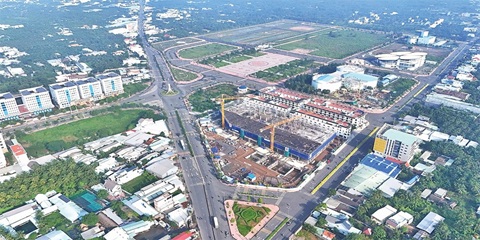
DONG THAP PROVINCE STEPS UP INDUSTRIAL EXPANSION AND INFRASTRUCTURE CONNECTIVITY
Accelerating public investment, strengthening inter-regional connectivity, and expanding industrial land are helping Dong Thap efficiently bolster competitiveness and drive economic growth. Following the 2025 merger of the former Dong Thap and Tien Giang provinces, the expanded Dong Thap province in the Mekong Delta faces mounting pressure to accelerate infrastructure development and strengthen connectivity among local economic zones, urban areas, industrial parks (IPs), and production centres.
Events Sponsors






















