Want to be in the loop?
subscribe to
our notification
Business News
OVER VND219 TRILLION IN PUBLIC INVESTMENT DISBURSED
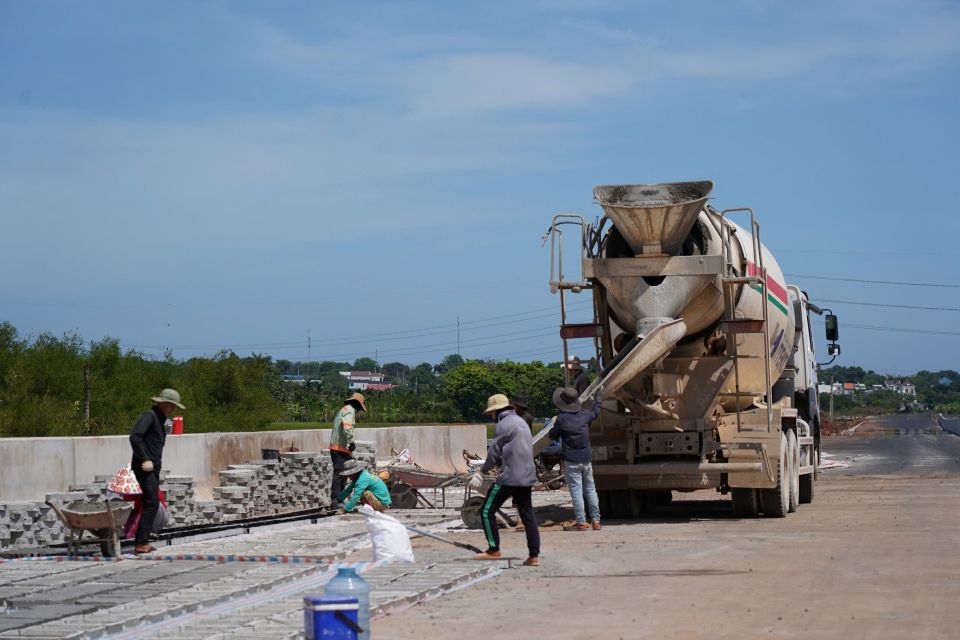
An expressway is under construction in southern Vietnam - PHOTO: LE VU
HCMC – As of May 31, Vietnam had disbursed VND219.358 trillion in public investment funds, equivalent to 21.6% of the annual plan.
While the disbursement rate was unchanged from the same period last year, the result came against a record public investment target of VND1.08 quadrillion for 2026. In absolute terms, the amount disbursed was nearly VND34.82 trillion higher than a year earlier.
The increase reflects substantial efforts by ministries, agencies and local governments, given that this year’s capital allocation was around VND175 trillion higher than in 2025.
The figures were released by the Ministry of Finance on June 3 in its latest report on the implementation and disbursement of public investment funds in 2026. Of the total amount disbursed, more than VND70.64 trillion came from the central budget, representing 19.4% of the annual plan, while local-budget disbursements reached VND148.715 trillion, or 22.9% of the target.
Regarding capital allocation, ministries, agencies and localities had assigned more than VND1 quadrillion to specific projects, equivalent to 97.8% of the plan approved by the prime minister. However, VND22.73 trillion allocated to 12 ministries and central agencies, as well as 12 localities, has yet to be assigned to individual projects.
The delays are mainly attributed to investment procedure bottlenecks and ongoing efforts to transfer funds to agencies and localities with stronger demand and faster project implementation.
To accelerate disbursement in the remaining months of the year, the Ministry of Finance has urged ministries, agencies and local governments to strictly implement government directives and strengthen the accountability of project leaders in resolving obstacles on the ground. According to the ministry, public investment disbursement this year continues to face a range of internal and external challenges.
The biggest hurdle remains site clearance, including land-origin verification and compensation planning. In addition, shortages of construction materials and price increases beyond initial estimates have widened cost gaps, forcing some projects to pause and revise contracts.
Meanwhile, limited implementation capacity among some project management units and contractors has also slowed progress. During the first months of the year, many investors focused on completing project designs and tender procedures, resulting in a relatively low volume of completed work eligible for payment.
To address these issues, the Ministry of Finance said it would strengthen discipline in public investment management and impose stricter penalties on organizations and individuals responsible for project delays.
The Ministry of Construction will work with local authorities to closely monitor market developments and take action against material-price manipulation. The ministry also requires agencies and localities to regularly update disbursement data on the Ministry of Finance’s information system, supporting the operation of a KPI-based monitoring tool designed to provide timely and accurate assessments of public investment flows nationwide.
Source: The Saigon Times
Related News

BANKING / FINANCE / INSURANCE / TAX
REMITTANCES TO HCM CITY RISE NEARLY 40% IN Q3
Remittances to HCM City reached more than US$2.83 billion in the third quarter of this year, up 39.5 per cent from the previous quarter and 3.6 per cent year-on-year. This was the first quarter showing positive annual growth this year, helping narrow the decline in remittance inflows over the first nine months. According to the State Bank of Vietnam (SBV)’s Regional Branch 2, remittances transferred to HCM City through credit institutions and economic organisations totalled $2.835 billion in Q3, an increase of more than $802 million from the previous quarter.

TECHNOLOGY
TECH SECTOR GROWTH OPENS UP OPPORTUNITIES FOR VIỆT NAM TO GO GLOBAL
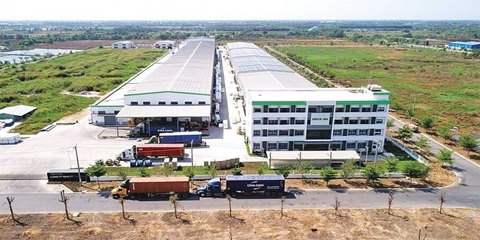
The growth of the electronics, semiconductor and high-tech sectors worldwide is opening up a variety of opportunities for Vietnamese enterprises to integrate more deeply into the global supply chain. However, to become suppliers for these corporations, domestic enterprises must meet rigorous standards regarding quality, technology, productivity and order fulfilment capabilities.
VIETNAM ECONOMY INVESTMENT
FOREIGN INVESTORS SEEKING A SYNCHRONISED MANUFACTURING ECOSYSTEM
Instead of focusing only on land costs and incentives as usual, foreign investors are seeking a synchronised manufacturing ecosystem, from stable power supply and logistics to shared infrastructure and the convenience of completing residence procedures for experts to serve their long-term investment in the country.
MEMBER CORNER / PROMOTIONS
SENTRYSAFE FHW40200 – PROTECT YOUR VALUABLES, ENJOY PEACE OF MIND!
Looking for a reliable solution to protect your important documents, cash, and valuables from fire and water damage? Genuine SENTRYSAFE - Reliable protection for your valuables and peace of mind! Contact Sen Wai Vietnam for more information and personalized product recommendations.
PROPERTY / INDUSTRIAL ZONE
HCM CITY ATTRACTS US$5.7 BILLION INTO EXPORT PROCESSING AND INDUSTRIAL ZONES
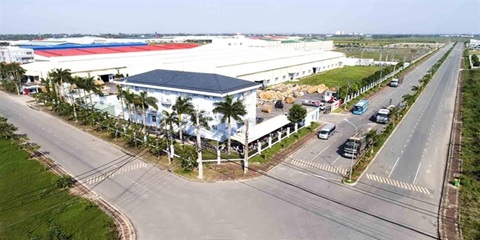
HCM City attracted US$5.7 billion in domestic and foreign investment into its export processing and industrial zones during the first nine months of 2026. The figure exceeded the city's full-year target by 31 per cent, highlighting strong momentum in high-quality industrial investment under Resolution No.10-NQ/TW. Total investment reached 131 per cent of the 2026 target of $4.25 billion and represented a 29 per cent increase compared with the same period in 2025, according to the city's Export Processing and Industrial Zones Authority (HEPZA).
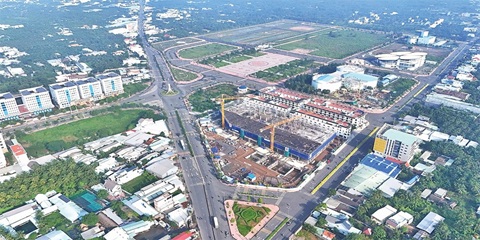
INFRASTRUCTURE / CONSTRUCTION / LOGISTIC / PORT
DONG THAP PROVINCE STEPS UP INDUSTRIAL EXPANSION AND INFRASTRUCTURE CONNECTIVITY
Accelerating public investment, strengthening inter-regional connectivity, and expanding industrial land are helping Dong Thap efficiently bolster competitiveness and drive economic growth. Following the 2025 merger of the former Dong Thap and Tien Giang provinces, the expanded Dong Thap province in the Mekong Delta faces mounting pressure to accelerate infrastructure development and strengthen connectivity among local economic zones, urban areas, industrial parks (IPs), and production centres.
Events Sponsors






















