Want to be in the loop?
subscribe to
our notification
Business News
NEW PROPOSAL REQUIRES E-COMMERCE PLATFORMS TO PAY TAXES OF SELLERS
A proposed revision to the tax law would obligate e-commerce platforms to declare and pay taxes on behalf of sellers, aiming to enhance tax management amid the rapid growth of the digital economy.
At a press briefing on September 27, Dang Ngoc Minh, deputy director general of the General Department of Taxation (GDT) announced that the revised draft of the Law on Tax Administration includes a proposal requiring e-commerce platforms to declare and pay taxes on behalf of sellers. This measure aims to strengthen the effectiveness of tax management in the growing digital economy.
Minh pointed out that the current Law on Tax Administration already mandates collaboration between various agencies, such as the State Bank of Vietnam, to assist tax authorities in collecting taxes. For instance, e-commerce platforms are currently required to provide seller information to the tax authorities.
He also noted that this proposal aligns with international practices.
"Foreign suppliers, even without a physical presence in Vietnam, already declare and pay taxes on behalf of sellers. As of now, 108 foreign suppliers, including Google and Facebook, are complying with this requirement," Minh stated.
He further highlighted that extending the same obligations to domestic platforms is essential for ensuring fairness. "If foreign suppliers can manage this process, there is no reason why local e-commerce platforms cannot do the same."
Executives from domestic e-commerce platforms have expressed confidence in their ability to comply with the proposed regulations. They confirmed that they are ready to declare and pay taxes on behalf of individual sellers, provided the policy is enacted.
Deputy Minister of Finance Nguyen Duc Chi also commented during the press conference, acknowledging the rapid expansion of e-commerce recently.
He stated, "With the explosive growth of e-commerce, it is only natural that we update our tax management methods." However, Chi emphasised that any new policies, "must be thoroughly evaluated."
The Ministry of Finance will continue to gather feedback from businesses to fine-tune the proposed adjustments.
The Ministry of Industry and Trade reported that Vietnam’s e-commerce retail market has grown consistently at 20-25 per cent annually over the past five years.
Around a decade ago, the market was valued at approximately $2.2 billion. By 2023, this figure had skyrocketed to $20.5 billion, accounting for 8 per cent of the nation’s total retail sales of goods and consumer services.
The GDT also noted that tax revenue from e-commerce has risen steadily, with contributions from both domestic businesses and international platforms such as Google, Facebook, and Amazon.
In the first seven months of this year, e-commerce tax revenue has already exceeded VND78 trillion ($3.12 billion).
Source: VIR
Related News
VIETNAM ECONOMY INVESTMENT
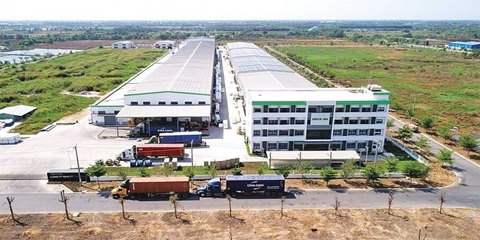
FOREIGN INVESTORS SEEKING A SYNCHRONISED MANUFACTURING ECOSYSTEM
Instead of focusing only on land costs and incentives as usual, foreign investors are seeking a synchronised manufacturing ecosystem, from stable power supply and logistics to shared infrastructure and the convenience of completing residence procedures for experts to serve their long-term investment in the country.
INFRASTRUCTURE / CONSTRUCTION / LOGISTIC / PORT
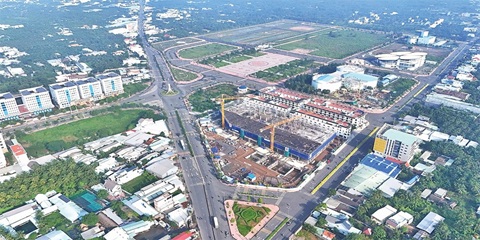
DONG THAP PROVINCE STEPS UP INDUSTRIAL EXPANSION AND INFRASTRUCTURE CONNECTIVITY
Accelerating public investment, strengthening inter-regional connectivity, and expanding industrial land are helping Dong Thap efficiently bolster competitiveness and drive economic growth. Following the 2025 merger of the former Dong Thap and Tien Giang provinces, the expanded Dong Thap province in the Mekong Delta faces mounting pressure to accelerate infrastructure development and strengthen connectivity among local economic zones, urban areas, industrial parks (IPs), and production centres.
PROPERTY / INDUSTRIAL ZONE
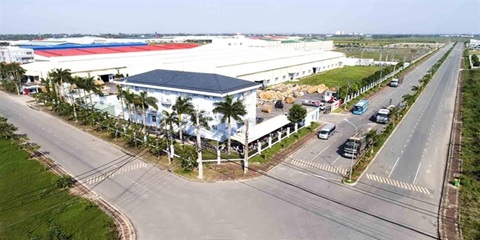
HCM CITY ATTRACTS US$5.7 BILLION INTO EXPORT PROCESSING AND INDUSTRIAL ZONES
HCM City attracted US$5.7 billion in domestic and foreign investment into its export processing and industrial zones during the first nine months of 2026. The figure exceeded the city's full-year target by 31 per cent, highlighting strong momentum in high-quality industrial investment under Resolution No.10-NQ/TW. Total investment reached 131 per cent of the 2026 target of $4.25 billion and represented a 29 per cent increase compared with the same period in 2025, according to the city's Export Processing and Industrial Zones Authority (HEPZA).

BANKING / FINANCE / INSURANCE / TAX
REMITTANCES TO HCM CITY RISE NEARLY 40% IN Q3
Remittances to HCM City reached more than US$2.83 billion in the third quarter of this year, up 39.5 per cent from the previous quarter and 3.6 per cent year-on-year. This was the first quarter showing positive annual growth this year, helping narrow the decline in remittance inflows over the first nine months. According to the State Bank of Vietnam (SBV)’s Regional Branch 2, remittances transferred to HCM City through credit institutions and economic organisations totalled $2.835 billion in Q3, an increase of more than $802 million from the previous quarter.

VIETNAM ECONOMY INVESTMENT
LOCALITIES REPORT BREAKTHROUGH RESULTS IN FDI IN FIRST NINE MONTHS
In Ho Chi Minh City, total registered capital reached $17.2 billion in the first nine months, up 4.2 times from the same period last year. The figure included more than $9.35 billion in newly registered capital and over $4.9 billion in additional capital for existing projects. Foreign investors also registered more than $2.9 billion through capital contributions and share purchases.

TECHNOLOGY
TECH SECTOR GROWTH OPENS UP OPPORTUNITIES FOR VIỆT NAM TO GO GLOBAL
The growth of the electronics, semiconductor and high-tech sectors worldwide is opening up a variety of opportunities for Vietnamese enterprises to integrate more deeply into the global supply chain. However, to become suppliers for these corporations, domestic enterprises must meet rigorous standards regarding quality, technology, productivity and order fulfilment capabilities.
Events Sponsors






















