Want to be in the loop?
subscribe to
our notification
Business News
NEW POLICIES TAKE EFFECT SINCE DECEMBER
A series of policies on administrative penalties for violations arising in the monetary and banking sector, sanctioning of administrative violations in the field of competition, driver training, driving tests and issuance of driving licenses for road motor vehicles shall come into effect since December 2019.
Petty forex transactions face relaxed penalty
Decree 88/2019/ND-CP on administrative penalties for violations arising in the monetary and banking sector shall take effect from December 31.
The Decree prescribes that any transaction, quotation or determination of contract prices to be carried out using any foreign currency in breach of laws will be fined from VND 30 million to VND 50 million.
Any act of buying or selling foreign currency at unauthorized currency conversion entities will be fined at the following specific levels (instead of a general fine ranging from VND 80 million to VND 100 million as prescribed in existing regulations):
- Cautions will be given if value of foreign currency sold or bought is less than USD 1,000;
- Fines ranging from VND 10 million to VND 20 million will be imposed if value of foreign currency sold or bought is from US$ 1,000 to under US$ 10,000, or is less than US$ 1,000 for any repeat or serial offence;
- Fines ranging from VND 20 million to VND 30 million will be imposed if value of foreign currency sold or bought is from US$ 10,000 to under US$ 100,000;
- Fines ranging from VND 20 million to VND 30 million will be imposed if value of foreign currency sold or bought is equal to or greater than US$ 100,000.
Penalties for violations of competition law
Decree 75/2019/ND-CP on sanctioning of administrative violations in the field of competition (“Decree 75”) came into effect since December 1.
Violators may also be subject to remedial measures, such as public correction, restructuring of an enterprise which abuses its dominant market position or monopoly position, or removal of illegal clauses from an agreement or contract.
Some key provisions on administrative penalties in Decree 75 are as follows:
(a) The maximum fine for violations on competition-restricting agreements and abuse of market dominance/monopoly position is 10% of the violating company’s total turnover in the relevant market in the financial year immediately preceding the year in which the violations were committed, but shall be lower than the lowest level of fines applicable to violations of corresponding regulations in the Penal Code.
(b) The maximum fine for violations of the provisions on economic concentration is 5% of the violating company’s total turnover in the relevant market in the financial year immediately preceding the year in which the violations were committed.
(c) The maximum fine for violations of the provisions on unfair competition is VND 2 billion (approximately US$ 86,000).
If the violating company’s total turnover in the relevant market in the financial year immediately preceding the year in which the violations were committed in items (a) and (b) above is 0, the fine will be imposed in the range of VND 100 million to VND 200 million (approximately US$ 4,300 to US$ 8,600).
New modal of driving licenses from June 1, 2020
Circular No. 38/2019/TT-BGTVT (Circular 38) dated October 8, 2019 on amendments to Circular No. 12/2017/TT-BGTVT on driver training, driving tests and issuance of driving licenses for road motor vehicles came to effect from December 1, 2019.
Circular 38 regulates new modal of driving licenses from June 1, 2020.
In addition, from January 1, 2020, teaching program of B1, B2, and C driving licenses will cover contents of wine and beer prevention while taking part in transport.
From June 1, 2020, new driving licenses will have QR codes.
Driving licenses which were issued before December 1, 2019 are valid in accordance with time of expiration which is written on the driving licenses.
Increasing loan size for disadvantaged students
Decision No.1656/QD-TTg on credit loans for disadvantaged students took effect since December 1, 2019. Accordingly, the maximum loan size is VND2.5 million a month, higher than VND VND1 million a month as previously.
Preferential borrowing interest rate is 0.55% per month and overdue interest rate is equivalent to 130% of lending interest rates.
This is a credit program with meaningful purposes in terms of economics, politics and society, creating a high consensus of various authority levels and social community, a link between the economy and society in poverty reduction, social security, contributing to creating human resources for the country./.
Preferential policies for public employees in difficult socio-economic conditions
Decree 76/2019/ND-CP of the Government on policies towards cadres, civil servants and public employees working in regions with exceptionally difficult socio-economic conditions took effect since December 1, 2019.
Specially, one-time benefit is ten times of the basic salary (instead of serving at least five years).
With accompanied families, cadres, civil servants and public employees will be given a subsidy which is 12 times of the basic salary.
Source: VGP
Related News

CHARITY / EXHIBITION / OTHER EVENTS
INVESTMENT OPPORTUNITIES IN CA MAU PROVINCE: 96 PROJECTS AND 20 STRATEGIC PROJECTS
We are pleased to share with you information on investment projects currently seeking investors in Ca Mau Province. Should your esteemed company or association be interested, we kindly invite you to review the project information and complete the registration form via the links provided. The Ho Chi Minh City Investment and Trade Promotion Centre (ITPC) will consolidate the expressions of interest and facilitate connections with the leadership of Ca Mau Province at a meeting tentatively scheduled for 13 November 2026 in Ho Chi Minh City.

MEMBER CORNER / PROMOTIONS
BẰNG KIỀU LIVESHOW - A SYMPHONY OF LOVE UNDER THE GOLDEN GLOW
A masterclass in live music that takes the audience on a soulful journey through immortal love songs, guided by the peerless artistry and emotive storytelling of renowned singer Bằng Kiều. The highlight of the night is his seamless musical chemistry with special guest Triệu Hồng Ngọc, promising passionate and deeply resonant duets inside the magnificent Grand Ballroom.
INFRASTRUCTURE / CONSTRUCTION / LOGISTIC / PORT
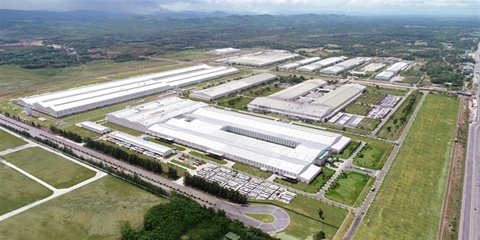
ĐÀ NẴNG GREEN-LIGHTS US$105 MILLION THAI DEVELOPMENT DEAL
The central city has approved an investment proposal by Thailand’s WHA Group to develop infrastructure for the 400ha WHA Đà Nẵng Industrial Park project on two communes of Thăng Bình and Đồng Dương, with an investment of more than VNĐ2.7 trillion (US$105 million). The city said it approved WHA Industrial Development International's status as an investor in the project, which is expected to take place between 2027 and 2034.
VIETNAM ECONOMY INVESTMENT
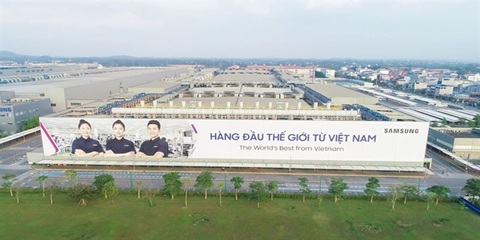
MOBILE PHONE EXPORTS RISE 20% TO $51.8 BILLION IN FIRST NINE MONTHS
Exports of mobile phones and components rose 20 per cent year-on-year to nearly US$51.8 billion in the first nine months of 2026, with China, the US and Republic of Korea accounting for more than half of the total. Shipments to the three markets reached a combined $26.18 billion, or 50.6 per cent of total exports of the product group during the period, according to data from the Vietnam Department of Customs under the Ministry of Finance.

INFRASTRUCTURE / CONSTRUCTION / LOGISTIC / PORT
VIỆT NAM-CAMBODIA TRADE GATHERS PACE TOWARDS $20 BILLION TARGET
Trade between Việt Nam and Cambodia continues to grow, remaining a bright spot and a key pillar of bilateral cooperation as the two countries aim to raise two-way trade to US$20 billion in the coming years. After setting a record of more than $11.3 billion last year, bilateral trade reached about $8.7 billion in the first eight months of this year, up 8.3 per cent year on year.
VIETNAM ECONOMY INVESTMENT
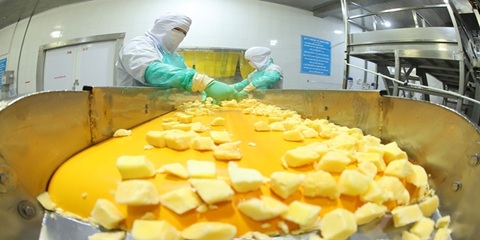
FRUIT AND VEGETABLE EXPORTS POISED TO HIT $10 BILLION IN 2026
Fruit and vegetable exports are on track to reach nearly US$10 billion in 2026, after rising 19.9 per cent year on year to nearly US$7.4 billion in the first nine months, driven by strong seasonal demand and abundant tropical fruit supplies. The Ministry of Agriculture and Environment said the growth reflected stronger international demand for fresh produce and processed agricultural products.
Events Sponsors






















