Want to be in the loop?
subscribe to
our notification
Business News
NEW IMMIGRATION LAW TO ATTRACT INVESTMENT
Việt Nam’s new immigration law includes a new type of visa for foreigners who come to Việt Nam to conduct activities as part of international agreements Việt Nam has signed.
The change is expected to facilitate the implementation of new agreements that Việt Nam has signed such as the EU-Việt Nam Free Trade Agreement (EVFTA) and the EU-Việt Nam Investment Protection Agreement (EVIPA), said Colonel Trần Văn Dự, deputy head of the Immigration Department under Ministry of Public Security.
The department last week held a session to explain immigration laws to diplomatic missions and non-governmental organisations (NGOs) in Việt Nam.
Việt Nam will issue visas with validity from six to 12 months for foreigners who enter to promote services and establish commercial presence according to international agreements.
The amendment to the law on entry, exit, transit and residence of foreigners in Việt Nam came into force this month.
“Strategic foreign investors who contribute capital of VNĐ100 billion (US$4.4 million) or more in Việt Nam are granted an up-to-five-year visa and temporary residence cards for at most 10 years. This will attract more foreign investment in the country,” Dự said.
The outdated immigration law regulated that all certified foreign investors in Việt Nam could obtain a five-year-visa regardless of their investment capital. The new law issues a visa with a duration of at most 12 months and does not grant temporary residence cards to foreign investors that invest less than VNĐ3 billion ($130,400).
The outdated law also required citizens from 13 countries entering Việt Nam under the visa waiver scheme to wait for at least 30 days to return and the new law has removed this regulation, creating conditions for foreign visitors to return anytime.
Countries from which citizens do not have to apply for visas to enter Việt Nam include Belarus, Denmark, Japan, Norway, Italy, Finland, France, Russia, South Korea, Spain, Sweden, Germany and the UK.
Chika Tsujimoto, head of political section, Japanese Embassy in Việt Nam said: “The removal of this regulation will create conditions for Japanese businesspeople to come to Việt Nam on short-term trips. Japanese businesspeople have interests in making investment in Việt Nam. Việt Nam is not only an attractive destination for Japanese investors but also acts as a linkage between Japan and other neighbouring countries.”
“I believe that the new immigration law for foreigners will attract not only Japanese investment in Việt Nam but also tourists and students,” she told Việt Nam News.
Marko Lovrekovic, managing co-director of Việt Nam Union of Friendship Organisations-NGO Resource Centre, said the law on entry, exit, transit and residence of foreigners in Việt Nam is important for foreign NGOs as well as the business sector in Việt Nam.
“The Vietnamese Government has tried to constantly make amendments. The new law has extended the length and validity of visas and permits, which makes much easier for the implementation of foreign NGOs’ projects,” he said.
Colonel Trần Văn Dự from the Immigration Department said thanks to the two-year e-visa pilot in 2018 and 2019, the number of foreign visitors to Việt Nam increased. That’s why the immigration agency decided to extend the list of countries eligible for e-visas to 80 countries.
“We will study to continue to extend the list in the time to come,” Dự said.
“Việt Nam will open automated border gates for Vietnamese citizens and foreigners who hold temporary and permanent residence cards in Việt Nam.
“The automated border gates are not new in the world but are definitely new to Việt Nam,” he added.
Foreigners who entered the country under visa waiver programmes, e-visas or tourism visas after March 1 will be automatically given stay permit extensions until July 31 free of charge due to the COVID-19 pandemic.
“We will propose the continuous extension depending on practical situations if international flight routes have not been resumed,” Dự said.
Immigration for Vietnamese citizens
The new law on exit and entry of Vietnamese citizens approved by the National Assembly last November officially took effect this month with several changes that facilitate the travel of Vietnamese citizens.
Vietnamese citizens from 14 years old can choose to be issued a passport embedded with electronic chips or a passport without electronic chips. The chips contain information of the passport holder and a digital signature of the issuing authority.
Hoàng Thị Lệ Hằng, Việt Nam country director of Union Aid Abroad – APHEDA, an Australian NGO, said the electronic chip-embedded passports will facilitate Vietnamese citizens while travelling overseas. The electronic chips also help tackle fake passports.
Colonel Trần Văn Dự advised Vietnamese citizens travelling abroad for a definite period to visit relatives or on holidays to bring personal identification cards.
Identification cards are one of the necessary documents Vietnamese citizens must submit in case they lose their regular passports overseas and wish to return immediately. They can visit Vietnamese representative offices located overseas to be issued regular passports under shortened procedures, he said.
Source: VNS
Related News

CHARITY / EXHIBITION / OTHER EVENTS
INVESTMENT OPPORTUNITIES IN CA MAU PROVINCE: 96 PROJECTS AND 20 STRATEGIC PROJECTS
We are pleased to share with you information on investment projects currently seeking investors in Ca Mau Province. Should your esteemed company or association be interested, we kindly invite you to review the project information and complete the registration form via the links provided. The Ho Chi Minh City Investment and Trade Promotion Centre (ITPC) will consolidate the expressions of interest and facilitate connections with the leadership of Ca Mau Province at a meeting tentatively scheduled for 13 November 2026 in Ho Chi Minh City.

MEMBER CORNER / PROMOTIONS
BẰNG KIỀU LIVESHOW - A SYMPHONY OF LOVE UNDER THE GOLDEN GLOW
A masterclass in live music that takes the audience on a soulful journey through immortal love songs, guided by the peerless artistry and emotive storytelling of renowned singer Bằng Kiều. The highlight of the night is his seamless musical chemistry with special guest Triệu Hồng Ngọc, promising passionate and deeply resonant duets inside the magnificent Grand Ballroom.
INFRASTRUCTURE / CONSTRUCTION / LOGISTIC / PORT
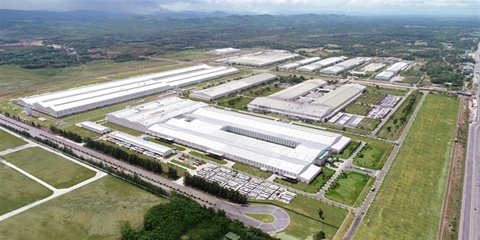
ĐÀ NẴNG GREEN-LIGHTS US$105 MILLION THAI DEVELOPMENT DEAL
The central city has approved an investment proposal by Thailand’s WHA Group to develop infrastructure for the 400ha WHA Đà Nẵng Industrial Park project on two communes of Thăng Bình and Đồng Dương, with an investment of more than VNĐ2.7 trillion (US$105 million). The city said it approved WHA Industrial Development International's status as an investor in the project, which is expected to take place between 2027 and 2034.
VIETNAM ECONOMY INVESTMENT
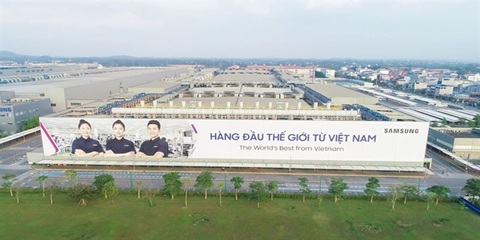
MOBILE PHONE EXPORTS RISE 20% TO $51.8 BILLION IN FIRST NINE MONTHS
Exports of mobile phones and components rose 20 per cent year-on-year to nearly US$51.8 billion in the first nine months of 2026, with China, the US and Republic of Korea accounting for more than half of the total. Shipments to the three markets reached a combined $26.18 billion, or 50.6 per cent of total exports of the product group during the period, according to data from the Vietnam Department of Customs under the Ministry of Finance.

INFRASTRUCTURE / CONSTRUCTION / LOGISTIC / PORT
VIỆT NAM-CAMBODIA TRADE GATHERS PACE TOWARDS $20 BILLION TARGET
Trade between Việt Nam and Cambodia continues to grow, remaining a bright spot and a key pillar of bilateral cooperation as the two countries aim to raise two-way trade to US$20 billion in the coming years. After setting a record of more than $11.3 billion last year, bilateral trade reached about $8.7 billion in the first eight months of this year, up 8.3 per cent year on year.
VIETNAM ECONOMY INVESTMENT
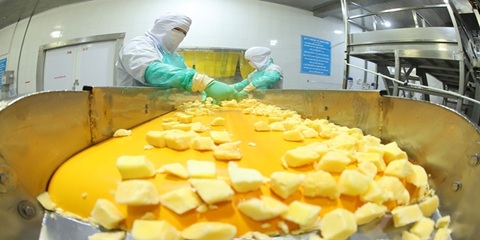
FRUIT AND VEGETABLE EXPORTS POISED TO HIT $10 BILLION IN 2026
Fruit and vegetable exports are on track to reach nearly US$10 billion in 2026, after rising 19.9 per cent year on year to nearly US$7.4 billion in the first nine months, driven by strong seasonal demand and abundant tropical fruit supplies. The Ministry of Agriculture and Environment said the growth reflected stronger international demand for fresh produce and processed agricultural products.
Events Sponsors






















