Want to be in the loop?
subscribe to
our notification
Business News
MULTITUDE OF OPTIONS ON TABLE FOR FURTHER TAX INTERVENTIONS
With the current outbreak still not entirely controlled, the government stands at a complicated crossroads as it needs to choose between further state budget security and continued support for the business community. Meanwhile, some black sheep are profiting from the current policies – an issue that would need to be remedied to free up resources for those in real need.
If taxes and land rents continue to be extended as a form of direct support for businesses, the state’s budget revenue may come under more pressure. But an intervention to help businesses could support the economy in recovering more strongly after the pandemic, especially since the government is working intensely on pandemic prevention and promoting expanded vaccination.
Tax payment extensions, as well as beneficial land rent policies, are a matter of concern, but not a new policy. Vietnam has had three extensions for tax and land rent since the pandemic broke out in early 2020. However, the most recent outbreak in Vietnam has engulfed the ongoing efforts to revive the country’s production.
The government has issued Decree No.52/2021/ND-CP dated April 19, extending the deadline for payments of VAT, corporate income tax, personal income tax, and land rents in 2021. The extension period of five months for VAT lasts until June.
Nguyen Tu Anh, director of the General Economic Department of the Central Economic Commission, said extending tax payment dues and land rents is a good policy. Instead of collecting taxes immediately, the state has granted businesses a credit with zero per cent interest to maintain production, without complicating tax policies, and even reducing policy profiteering.
In addition, data from the General Department of Taxation under the Ministry of Finance also shows that the tax authority has extended payment dues for nearly 185,000 taxpayers last year, with a total amount of about VND87.3 trillion ($3.8 billion). This shows that the government is trying to counter price increases of goods like steel, construction materials, and other items that play an important role in infrastructure development.
Keeping the balance
With the government’s tax and land rent payment extensions, analysts are concerned about the negative side of the policy.
“This form of support is not very effective for those businesses in real difficulties, especially when they lack working capital and cash flow,” explained Anh. “Profits and negative side effects could come from those businesses that need direct support from the state’s policy.”
Negative effects could occur from both sides, the implementing organisation and enterprises, as they may have insufficient resources to evaluate, examine, and monitor all related processes, he added. If such support is carried out ineffectively, businesses that need it will not receive it, and those that do not need could receive support.
To date, vexations and negativity continue to exist in tax collection, although it has decreased year by year. About 30 per cent of businesses say they still must pay special fees for tax officials, according to a report by the Vietnam Chamber of Commerce and Industry from December 2019.
However, Anh does not think that such support policies are effective in a short time. Therefore, it may be necessary to focus on dedicated government support packages. According to him, as there is now another outbreak troubling the nation, “businesses will benefit more if the government extends the implementation of the tax and land rent policy until the end of the year.”
In principle, he argued, the state should support businesses to endure the pandemic. The damage will be much greater if businesses continue to go bankrupt.
“However, the extension of tax and land rent will also slow down state budget revenue, while the implementation of this policy is also very complicated and expensive,” Anh said.
The target audience for such policies is large. Luu Duc Huy, director of the Policy Department under the General Department of Taxation, however, said that there should be no general survey to determine businesses eligible for the extended benefits. Micro- and small enterprises have accounted for 93 per cent of the total number of operating businesses. In addition, businesses in other industries and business households are also subject to these benefits.
According to Huy, the tax authority is managing eligible business according to risk management mechanisms and conducts inspections whenever taxpayers show signs of risk.
“This helps self-identify the taxpayers. Those who are not subject to these extensions but still benefit from it will be handled following the Law on Tax,” Huy said.
The government is standing in the middle of a fork in the road. On the one hand, it wants to help people and businesses to withstand the pandemic. On the other, its ability remains weak as there are many bankrupt businesses or those threatening to go bankrupt without paying taxes. Proposals to extend the extension and further reduce taxes also require considering the resilience of the state budget as this is also used for combatting the pandemic and handling the otherwise shrinking revenue sources.
Lining up interests
Economist Nguyen Tri Hieu said that there must be a harmonisation of interests. “The extension of tax and land rent for businesses is necessary, but balancing the budget is also important,” he said.
The state budget has been affected by the pandemic since last year, and the government’s revenue is limited. In 2020, the budget revenue stood at only 96.35 per cent of the estimate, according to the State Treasury.
According to Hieu, businesses are under a lot of stress because the pandemic has slowed down consumption and production, while input material prices have increased in turn. Compared with the first five months of 2020, prices for iron, steel, and cement have increased by 35-40 per cent, and those for corn, beans, and rice bran increased up to 70 per cent. Meanwhile, the current gasoline prices also exceeded VND19,000 (83 US cents) per litre, an increase of nearly 14 per cent compared to the end of 2020 and more than 60 per cent compared to the same period last year.
Also in the first five months of 2021, the market recorded 59,800 enterprises suspending their operations for a definite time, an increase of 23 per cent over the same period. Thus, on average, nearly 12,000 businesses withdrew from the market every month, equivalent to 400 businesses every day.
According to Hieu, the government needs to “soon take measures to harmonise interests between itself and the business community.” The government, within its budget, “should defer taxes and land rents for another year and, along with that, review the conditions for tax extensions and land rents so that businesses in need can access it. For example, the conditions on procedures and declarations of enterprises related to land need to be more open.”
In principle, businesses should be responsible for paying taxes within their means, but according to Hieu, the government needs to reconsider the subjects for tax exemption, reduction, and deferral.
Some companies take advantage of these tax policies to make a profit. Though they can pay taxes, the policy allows them to benefit. “If we don’t control the pandemic well, this year the number of businesses going bankrupt could rise to hundreds of thousands, causing a significant deficit in the government’s revenue,” said Hieu.
Tax revenue data from the General Statistics Office shows an increase of nearly 12 per cent in the last five months. The current outbreak is gradually being controlled while the expansion of vaccination has been accelerated. Tu Anh reckoned that there is a high possibility that production and business activities can soon stabilise again. The government’s timely support could also help businesses in this endeavour.
Source: VIR
Related News

MEMBER CORNER / PROMOTIONS
AN ELECTRIFYING NIGHT WITH THE "QUEEN OF DANCE" THU MINH AT THE GRAND HO TRAM!
The stage at The Grand Ballroom is set to catch fire as Vietnam’s undisputed "Queen of Dance," Thu Minh, takes the spotlight. Renowned for her powerhouse vocals, magnetic stage presence, and sultry, high-energy performances, Thu Minh promises an evening of pure musical euphoria. The energy escalates with an exclusive appearance by special guest and The Voice champion, Vu Thao My.

HR / LABOUR/ EMPLOYMENT
HIGH-QUALITY HUMAN RESOURCES NEEDED TO ATTRACT NEW TECH INVESTMENT CAPITAL
Besides infrastructure, Việt Nam must also rapidly develop a highly skilled workforce to attract investment in AI, semiconductors and advanced manufacturing, experts have said. Don Lam, CEO and co-founder of investment management company VinaCapital, said that global technology investors were increasingly looking at the readiness of the entire ecosystem, with high-quality human resources a decisive factor.

HR / LABOUR/ EMPLOYMENT
HIRING OUTLOOK STRENGTHENS IN Q4 AS SKILLS SHORTAGES PERSIST
Hiring intentions among employers in Việt Nam strengthened in the fourth quarter, with 52 per cent of surveyed companies planning to increase headcount between October and December, according to a ManpowerGroup survey released this week. Việt Nam's hiring outlook was stronger than the Asia Pacific and Middle East (APME) regional average of 33 per cent and the global average of 29 per cent, ranking third in the region and 11th globally among 42 markets surveyed.

BANKING / FINANCE / INSURANCE / TAX
LARGE BANKS FORECAST TO GAIN HIGHER PROFITABILITY IN H2 2026
The return on average assets (ROAA) of the banking sector will likely remain stable at around 1.5 per cent in the second half of 2026, but profitability divergence among banks will increase, with large banks outperforming peers on stronger margins and diversified earnings, analysts forecast. In a recent report on the banking sector, analysts from the Vietnam Investors Service Rating said the sector’s ROAA rose by 10 basis points quarter-on-quarter to 1.51 per cent in the first half of this year, driven by net interest margin (NIM) improvements at some State-owned banks and large private banks.
GARMENT / TEXTILE
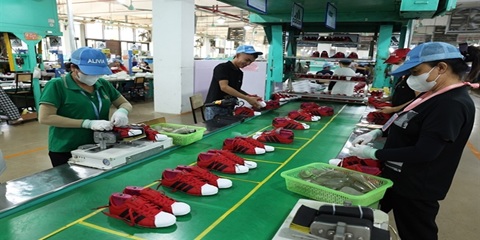
VIỆT NAM'S FOOTWEAR, BAG EXPORTS TO US TOP $8 BILLION IN EIGHT MONTHS
Việt Nam's exports of footwear and handbags to the US exceeded US$8 billion in the first eight months of 2026, as the US and EU remained the country's biggest markets despite sluggish growth in footwear shipments. Exports from Việt Nam's leather and footwear sector reached more than $2.45 billion in August, down 9 per cent from July but up 3 per cent from a year earlier, according to preliminary statistics.
VIETNAM ECONOMY INVESTMENT
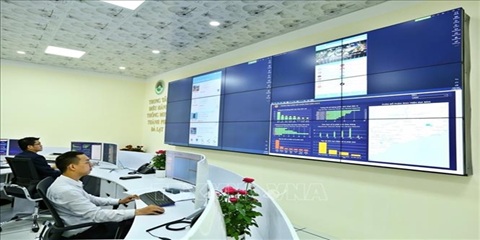
LÂM ĐỒNG TARGETS DIGITAL ECONOMY TO ACCOUNT FOR 30 PER CENT OF GRDP BY 2030
Lâm Đồng Province aims to raise the digital economy’s contribution to around 30 per cent of its gross regional domestic product (GRDP) by 2030, as part of a five-year plan to develop digital economy and society issued recently. Under Plan No. 15358/KH-UBND, the province targets more than 60 per cent of small- and medium-sized enterprises (SMEs) to adopt digital technologies by 2030 while increasing the value of cashless payments to 30 times its GRDP.
Events Sponsors






















