Want to be in the loop?
subscribe to
our notification
Business News
LONGER-TERM FDI STRATEGY IN NEED OF SITUATIONAL TWEAKS
The pandemic is forcing a number of factories to either stop operations or pare down capacity, which has increased pessimism about the short-term outlook of Vietnam’s business environment.
The current disruption to supply chains has created disadvantages for attracting foreign direct investment (FDI) and executing projects, and the downward trend in investment attraction was noted by the Ministry of Planning and Investment (MPI) in a recent report to the legislature.
The report highlighted declines in both registered disbursed capital and the number of projects. Both are important indicators for a needed adjustment in the upcoming FDI attraction strategy. During January-August 20, total FDI, including newly-registered and newly-added capital, and capital contributions and share purchases, hit $19.12 billion, equal to 97.9 per cent against last year. Among that, 1,135 newly-registered projects held over $11.3 billion, down 37 per cent in the number of projects but up 16.3 per cent in capital, according to the MPI’s latest figures.
“If COVID-19 lasts longer, it will reduce the domestic purchasing power, weaken the domestic supply chain and labour recruitment, while increasing investment costs and lowering the prospects of investors,” said Tran Toan Thang, an economic expert at the National Centre for Socio-Economic Information and Forecast under the MPI.
The Organisation for Economic Cooperation and Development’s (OECD) FDI analysis released in April showed that global FDI flows plummeted to $846 billion in 2020, a 38 per cent decrease compared to 2019. The pandemic led to the decline of global FDI flows to their lowest levels since 2005.
“Even in countries that have the financial capacity to vaccinate, the rate of vaccinations remains low. Travel restrictions are expected to remain in place throughout the year and even longer in many places,” the OECD stated.
Mary Tarnowka, executive director of the American Chamber of Commerce in Vietnam, said, “We appreciate the government’s prioritisation of workers in industrial zones and the vaccination efforts in the zones. However, more needs to be done to ensure that production and delivery of essential products and services can be maintained.”
She added the stay-at-work model has been useful as an interim mechanism, but is not sustainable from a health, safety, cost, and practical standpoint. “We urge the higher prioritisation of unvaccinated workers operating in these models since they are at extremely high risk.”
The latest wave has also led to increased pessimism about the short-term outlook of Vietnam’s business environment. Just one-fifth of the members of the European Chamber of Commerce (EuroCham) believed that the economy will stabilise and improve in the next quarter – down from almost two-thirds (61 per cent) in the first quarter.
However, CEO of YouGov Vietnam Thue Quist Thomasen said in EuroCham’s recent report on its Business Climate Index, “Despite the short-term shock of this wave, Vietnam’s long-term prospects remain positive. European business leaders are aiming to maintain or increase their staff and investment plans – even in the midst of this current outbreak – which demonstrates a continued confidence in Vietnam’s trade environment.”
Asian countries are competing strongly to attract FDI, and the fear of this capital flow leaving Vietnam is not a new one. Dau Anh Tuan, director general of the Legal Department under the Vietnam Chamber of Commerce and Industry, said that controlling the pandemic will promote the recovery of FDI attraction and the economy. It would also demonstrate the governance capacity of the government and send a positive signal to investors.
“Vietnam remains an attractive destination for investment thanks to its advantages such as political stability, a range of free trade agreements, and high labour skills. However, in the short term, we need a flexible policy and support,” Tuan said.
Alain Cany, chairman of EuroCham, said, “There is no route out of this wave without an ambitious and accelerated mass vaccination programme which will enable normal life to resume. European companies are prepared to cover the cost of protecting their own staff – this will help to speed up vaccinations while also reducing the financial and administrative burden on the state.”
Tarnowka added, “We welcome an opportunity to develop a roadmap for economic recovery and a safe reopening. Vaccines will be key for an exit strategy and recovery. Tax relieves and reductions in utilities, as well as the availability of low-interest loans, will be critical to help hard-hit sectors and small businesses.”
However, Tarnowka also added that it is necessary to streamline procedures to facilitate approval and travel of foreign experts to Vietnam, including adjusting the requirements to reflect international practices and eliminating the need for legalised and notarised documents. “This will help both maintain existing manufacturing operations and facilitate additional investment,” she said.
Earlier, Vietnam set a strategy for its new landmark FDI attraction towards 2030. Under that, it targets luring in up to $200 billion worth of total registered FDI by 2025, or $30-40 billion a year. In this period, disbursed FDI is targeted at $100-150 billion, or $20-30 billion annually.
Source: VIR
Related News

BANKING / FINANCE / INSURANCE / TAX
REMITTANCES TO HCM CITY RISE NEARLY 40% IN Q3
Remittances to HCM City reached more than US$2.83 billion in the third quarter of this year, up 39.5 per cent from the previous quarter and 3.6 per cent year-on-year. This was the first quarter showing positive annual growth this year, helping narrow the decline in remittance inflows over the first nine months. According to the State Bank of Vietnam (SBV)’s Regional Branch 2, remittances transferred to HCM City through credit institutions and economic organisations totalled $2.835 billion in Q3, an increase of more than $802 million from the previous quarter.
TECHNOLOGY
TECH SECTOR GROWTH OPENS UP OPPORTUNITIES FOR VIỆT NAM TO GO GLOBAL
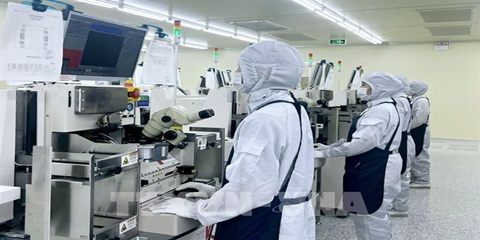
The growth of the electronics, semiconductor and high-tech sectors worldwide is opening up a variety of opportunities for Vietnamese enterprises to integrate more deeply into the global supply chain. However, to become suppliers for these corporations, domestic enterprises must meet rigorous standards regarding quality, technology, productivity and order fulfilment capabilities.
VIETNAM ECONOMY INVESTMENT
FOREIGN INVESTORS SEEKING A SYNCHRONISED MANUFACTURING ECOSYSTEM
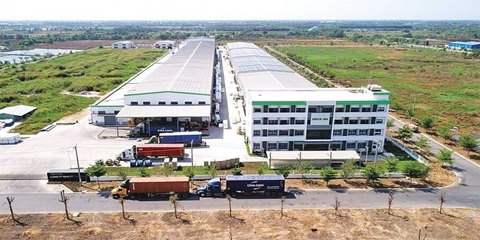
Instead of focusing only on land costs and incentives as usual, foreign investors are seeking a synchronised manufacturing ecosystem, from stable power supply and logistics to shared infrastructure and the convenience of completing residence procedures for experts to serve their long-term investment in the country.
MEMBER CORNER / PROMOTIONS
SENTRYSAFE FHW40200 – PROTECT YOUR VALUABLES, ENJOY PEACE OF MIND!
Looking for a reliable solution to protect your important documents, cash, and valuables from fire and water damage? Genuine SENTRYSAFE - Reliable protection for your valuables and peace of mind! Contact Sen Wai Vietnam for more information and personalized product recommendations.
PROPERTY / INDUSTRIAL ZONE
HCM CITY ATTRACTS US$5.7 BILLION INTO EXPORT PROCESSING AND INDUSTRIAL ZONES
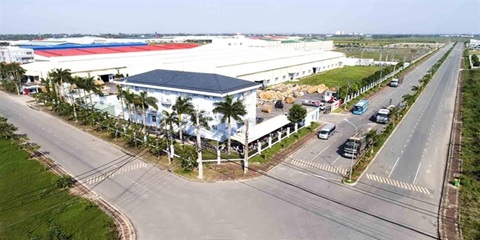
HCM City attracted US$5.7 billion in domestic and foreign investment into its export processing and industrial zones during the first nine months of 2026. The figure exceeded the city's full-year target by 31 per cent, highlighting strong momentum in high-quality industrial investment under Resolution No.10-NQ/TW. Total investment reached 131 per cent of the 2026 target of $4.25 billion and represented a 29 per cent increase compared with the same period in 2025, according to the city's Export Processing and Industrial Zones Authority (HEPZA).
INFRASTRUCTURE / CONSTRUCTION / LOGISTIC / PORT
DONG THAP PROVINCE STEPS UP INDUSTRIAL EXPANSION AND INFRASTRUCTURE CONNECTIVITY
Accelerating public investment, strengthening inter-regional connectivity, and expanding industrial land are helping Dong Thap efficiently bolster competitiveness and drive economic growth. Following the 2025 merger of the former Dong Thap and Tien Giang provinces, the expanded Dong Thap province in the Mekong Delta faces mounting pressure to accelerate infrastructure development and strengthen connectivity among local economic zones, urban areas, industrial parks (IPs), and production centres.
Events Sponsors






















