Want to be in the loop?
subscribe to
our notification
Business News
LIKELY PROPERTY MEGATRENDS IN 2019
Vietnam’s real estate still grew within an acceptable level in 2018, according to industry insiders. Nearly 50% of property businesses believed that the real estate market fared slightly better than in 2017. So, how will the market perform in 2019?
Three remarkable trends
According to industry insiders, the growth of the real estate industry will be driven by three key trends.
First, the development of green real estate. A lot of green standards are being used, including Edge (from the World Bank's International Finance Corporation - IFC), Green Mark (Singapore), Leed (USA) and Lotus, but very few projects are certified “green”" in Vietnam. Less than 3% of constructions in Vietnam met Leed certification in 2017, compared with 37% in Singapore. This reality is attributed to the higher investment value for green buildings, ranging from design, construction and material to completion and operation. Moreover, climate change and living environment also significantly affect “green” standards applied to projects. Nonetheless, with higher demands and rising spending for secure, comfortable and smarter living space of customers, it is certain that green property will become a megatrend in the coming time.
Second, industrial property growth as result of foreign investment shift to Vietnam in recent years. Vietnam is strategically located in Asia. It shares the land border with China and has many large seaports connected to industrial zones. This is considered a very good investment opportunity for industrial park investors, especially in the north, when the leasing demand from large technology corporations such as Samsung and LG is rising very fast.
Third, vacation property growth potential remains despite cooling down. The latest report by BCG shows that Vietnam earned US$8.3 billion from international visitors in 2017, lower than US$12.6 billion in Indonesia, US$18.4 billion in Singapore and US$52.5 billion in Thailand, not because arrivals in Vietnam were fewer, but their spending was less in Vietnam. Indeed, the development of high-class resorts, entertainment and recreational services and shopping services is not really compatible with Vietnam's tourism potential. Thus, investors can continue to research and develop shophouses and condotels in a modern, friendlier way for customers.
According to CIA World Factbook 2017, Vietnam’s urbanization rate was estimated at only 35% but its urbanization speed was among fastest in Southeast Asia, standing at 2.6% a year. Besides, the increase of foreign workers and engineers in Vietnam is expected to boost housing development in big cities. In fact, the current supply is relatively abundant in all segments: high-end, mid-sector and entry. Therefore, residential property is forecasted to continue to hold potential with little change in 2019.
Impact policy and amendment recommendations
According to a survey into real estate enterprises on policy impact assessment conducted by Vietnam Report Joint Stock Company, 21.7% of respondents said, Circular 19/2017/TT-NHNN is negatively impacting their business. However, property credit crunch will encourage enterprises to mobilize capital via bond and stock issuance or cooperation with strategic partners instead of borrowing from banks, thus reducing their repayment liabilities.
To best support sustainable real estate growth, we recommend three main groups of solutions:
First, active economic development strategy and urban development strategy. Urban development and real estate development strategy is considered a part of socioeconomic development strategy. .
Second, consistent in carrying out plans, unifying socioeconomic development plan with urban development plan and land use plan.
Source: VCCI
Related News

CHARITY / EXHIBITION / OTHER EVENTS
INVESTMENT OPPORTUNITIES IN CA MAU PROVINCE: 96 PROJECTS AND 20 STRATEGIC PROJECTS
We are pleased to share with you information on investment projects currently seeking investors in Ca Mau Province. Should your esteemed company or association be interested, we kindly invite you to review the project information and complete the registration form via the links provided. The Ho Chi Minh City Investment and Trade Promotion Centre (ITPC) will consolidate the expressions of interest and facilitate connections with the leadership of Ca Mau Province at a meeting tentatively scheduled for 13 November 2026 in Ho Chi Minh City.
MEMBER CORNER / PROMOTIONS
BẰNG KIỀU LIVESHOW - A SYMPHONY OF LOVE UNDER THE GOLDEN GLOW
A masterclass in live music that takes the audience on a soulful journey through immortal love songs, guided by the peerless artistry and emotive storytelling of renowned singer Bằng Kiều. The highlight of the night is his seamless musical chemistry with special guest Triệu Hồng Ngọc, promising passionate and deeply resonant duets inside the magnificent Grand Ballroom.
INFRASTRUCTURE / CONSTRUCTION / LOGISTIC / PORT
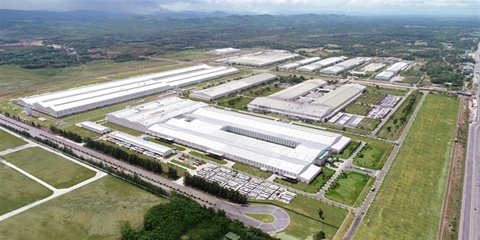
ĐÀ NẴNG GREEN-LIGHTS US$105 MILLION THAI DEVELOPMENT DEAL
The central city has approved an investment proposal by Thailand’s WHA Group to develop infrastructure for the 400ha WHA Đà Nẵng Industrial Park project on two communes of Thăng Bình and Đồng Dương, with an investment of more than VNĐ2.7 trillion (US$105 million). The city said it approved WHA Industrial Development International's status as an investor in the project, which is expected to take place between 2027 and 2034.
VIETNAM ECONOMY INVESTMENT
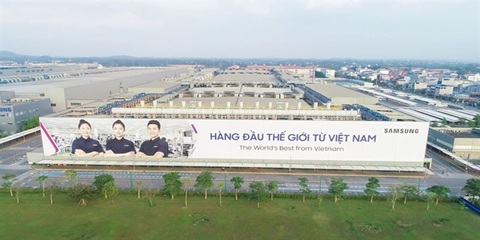
MOBILE PHONE EXPORTS RISE 20% TO $51.8 BILLION IN FIRST NINE MONTHS
Exports of mobile phones and components rose 20 per cent year-on-year to nearly US$51.8 billion in the first nine months of 2026, with China, the US and Republic of Korea accounting for more than half of the total. Shipments to the three markets reached a combined $26.18 billion, or 50.6 per cent of total exports of the product group during the period, according to data from the Vietnam Department of Customs under the Ministry of Finance.
INFRASTRUCTURE / CONSTRUCTION / LOGISTIC / PORT
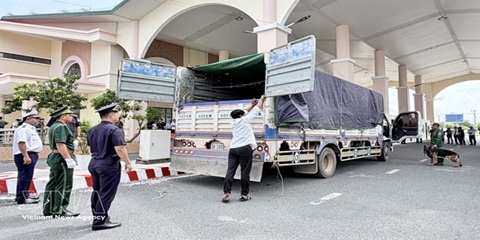
VIỆT NAM-CAMBODIA TRADE GATHERS PACE TOWARDS $20 BILLION TARGET
Trade between Việt Nam and Cambodia continues to grow, remaining a bright spot and a key pillar of bilateral cooperation as the two countries aim to raise two-way trade to US$20 billion in the coming years. After setting a record of more than $11.3 billion last year, bilateral trade reached about $8.7 billion in the first eight months of this year, up 8.3 per cent year on year.
VIETNAM ECONOMY INVESTMENT
FRUIT AND VEGETABLE EXPORTS POISED TO HIT $10 BILLION IN 2026
Fruit and vegetable exports are on track to reach nearly US$10 billion in 2026, after rising 19.9 per cent year on year to nearly US$7.4 billion in the first nine months, driven by strong seasonal demand and abundant tropical fruit supplies. The Ministry of Agriculture and Environment said the growth reflected stronger international demand for fresh produce and processed agricultural products.
Events Sponsors






















