Want to be in the loop?
subscribe to
our notification
Business News
LAND HIKE SHOCK DEEMED NECESSARY
An adjusted land price list in Ho Chi Minh City is set to bring higher compensation for around 80,000 households whose land will be recovered for various projects, but it is also expected to drive up real estate prices.
On August 28, Nguyen Toan Thang, director of Ho Chi Minh City Department of Natural Resources and Environment, confirmed that according to the draft, land prices in many areas of the city are expected to increase by up to 50 times.
The new land price list is expected to be implemented from the beginning of October to the end of the year. After that, the list will be reviewed again, to be applied for 2025. After that, the list will be adjusted every year under the force of the revised Land Law 2024.
However, Thang noted that these prices would still only reflect about 70 per cent of the market value.
“The new land valuation will help prevent real estate brokers from purchasing land at low prices and then inflating them to make large profits. This will protect home buyers’ rights and create a more transparent market, driving sustainable development in the real estate sector,” Thang said.
Le Thi Binh, a resident of Cu Chi district on the outskirts of Ho Chi Minh City, expressed concern that the draft price list will increase land prices by an average of 5-10 fold. In some suburban and peripheral areas, prices are expected to rise by as much as 50 times, creating significant pressure on those with agricultural land.
“I own more than five hectares of long-term cropland in Cu Chi district. If the new land price list is applied, I will have to spend billions to transfer it to residential land,” Binh said.
Similarly concerned, Nguyen Minh in Binh Chanh district said he is currently in the process of transferring his land to residential use.
“I haven’t yet calculated the total taxes and fees I’ll have to pay under the new price, but I’m afraid it will be too much, and I won’t be able to handle it,” Minh said.
Nguyen Minh Hoa from Go Vap district is also anxious as she plans to buy an apartment for VND4 billion ($166,000) after years of saving and borrowing from the bank. However, the seller has decided to halt the sale, anticipating that the apartment price will rise significantly if the new land price list is applied.
“Finding an apartment for our three-generational family has been difficult enough. Now, our dream of owning a home feels even further away, and we don’t know when we will be able to achieve it,” she said.
According to lawyer Le Thu Thao from the Ho Chi Minh City Bar Association, the adjustment of the land price list is not only a significant policy change but also reflects the government’s effort to create a more sustainable investment and development environment.
“Despite differing opinions and objections from the community, it is crucial that the implementation of this policy is carried out transparently and with adequate preparation to ensure the rights and stability of all parties involved,” Thao said.
She emphasised that implementing a major policy like the new land price list, which has such a profound impact on people, must be carried out with clear communication to avoid unnecessary confusion.
“The authorities need to study the land price increases with a clear roadmap, divided into multiple stages, to reduce the shock for businesses and residents, especially in outskirts districts where land conversion procedures are more volatile, and livelihoods remain challenging,” Thao said.
Ho Chi Minh City People’s Committee is currently considering issuing the new land price list in accordance with the provisions of the 2024 Land Law. The land price list has undergone drafting, public consultation, and review conferences. Once all opinions have been considered and revisions made, it will be submitted to the committee for approval.
Source: VIR
Related News

CHARITY / EXHIBITION / OTHER EVENTS
INVESTMENT OPPORTUNITIES IN CA MAU PROVINCE: 96 PROJECTS AND 20 STRATEGIC PROJECTS
We are pleased to share with you information on investment projects currently seeking investors in Ca Mau Province. Should your esteemed company or association be interested, we kindly invite you to review the project information and complete the registration form via the links provided. The Ho Chi Minh City Investment and Trade Promotion Centre (ITPC) will consolidate the expressions of interest and facilitate connections with the leadership of Ca Mau Province at a meeting tentatively scheduled for 13 November 2026 in Ho Chi Minh City.

MEMBER CORNER / PROMOTIONS
BẰNG KIỀU LIVESHOW - A SYMPHONY OF LOVE UNDER THE GOLDEN GLOW
A masterclass in live music that takes the audience on a soulful journey through immortal love songs, guided by the peerless artistry and emotive storytelling of renowned singer Bằng Kiều. The highlight of the night is his seamless musical chemistry with special guest Triệu Hồng Ngọc, promising passionate and deeply resonant duets inside the magnificent Grand Ballroom.
INFRASTRUCTURE / CONSTRUCTION / LOGISTIC / PORT
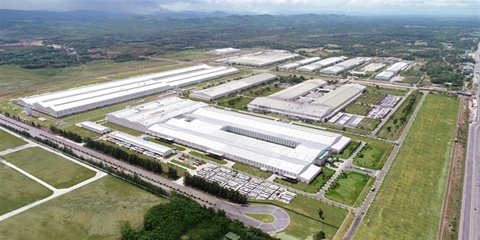
ĐÀ NẴNG GREEN-LIGHTS US$105 MILLION THAI DEVELOPMENT DEAL
The central city has approved an investment proposal by Thailand’s WHA Group to develop infrastructure for the 400ha WHA Đà Nẵng Industrial Park project on two communes of Thăng Bình and Đồng Dương, with an investment of more than VNĐ2.7 trillion (US$105 million). The city said it approved WHA Industrial Development International's status as an investor in the project, which is expected to take place between 2027 and 2034.
VIETNAM ECONOMY INVESTMENT
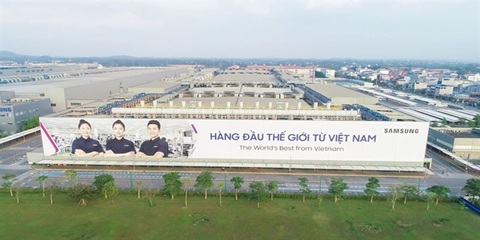
MOBILE PHONE EXPORTS RISE 20% TO $51.8 BILLION IN FIRST NINE MONTHS
Exports of mobile phones and components rose 20 per cent year-on-year to nearly US$51.8 billion in the first nine months of 2026, with China, the US and Republic of Korea accounting for more than half of the total. Shipments to the three markets reached a combined $26.18 billion, or 50.6 per cent of total exports of the product group during the period, according to data from the Vietnam Department of Customs under the Ministry of Finance.
INFRASTRUCTURE / CONSTRUCTION / LOGISTIC / PORT
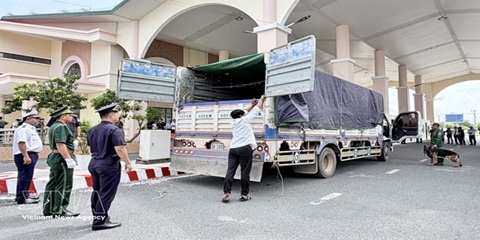
VIỆT NAM-CAMBODIA TRADE GATHERS PACE TOWARDS $20 BILLION TARGET
Trade between Việt Nam and Cambodia continues to grow, remaining a bright spot and a key pillar of bilateral cooperation as the two countries aim to raise two-way trade to US$20 billion in the coming years. After setting a record of more than $11.3 billion last year, bilateral trade reached about $8.7 billion in the first eight months of this year, up 8.3 per cent year on year.
VIETNAM ECONOMY INVESTMENT
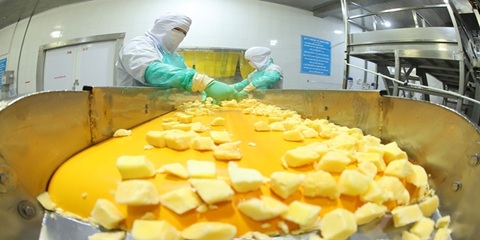
FRUIT AND VEGETABLE EXPORTS POISED TO HIT $10 BILLION IN 2026
Fruit and vegetable exports are on track to reach nearly US$10 billion in 2026, after rising 19.9 per cent year on year to nearly US$7.4 billion in the first nine months, driven by strong seasonal demand and abundant tropical fruit supplies. The Ministry of Agriculture and Environment said the growth reflected stronger international demand for fresh produce and processed agricultural products.
Events Sponsors






















