Want to be in the loop?
subscribe to
our notification
Business News
LABOUR QUALITY SHOULD BE IMPROVED TO SHARPEN COMPETITIVENESS
Along with the development of economy, labour demand generally increases in all types of businesses and services. According to the statistics of the MOLISA, in 2015 the demand for labour in business sector increased by about 360,000 people (up 3.27 percent) compared to 2014, bringing the total number of workers employed in the country up to 12.3 million. It is expected that by the end of 2015 the percentage of waged workers on the total of employed of around 40 percent.
Labour supply, in general throughout the country is still abundant. In Quarter III/2015, labour force in the working age is estimated at 54.31 million (representing 76.01 percent of the population aged 15 or more). Entering Quarter IV/ 2015 this figure is estimated at 54.43 million (representing 76.11 percent of the population aged 15 and over); along with raising the percentage of workers with jobs, the unemployment rate also continued to decline. As of Quarter IV/2015, the unemployment rate was only 2.38 percent. Structure of urban workers increased slightly, accounting for 30.5 percent.
According to figures from published newsletter, in Quarter II/2015 the country had 52.53 million people employed, up by 103,000 people compared to the previous quarter. The Labour movement from rural to urban areas tends to decrease. The number of workers employed in urban areas is about 15.73 million, decreased 663,000 people compared to the first quarter, making the proportion of employment in urban areas fell from 31.26 percent in Quarter I/2015 to 29.94 percent in Quarter II/2015. However, workers with jobs in rural areas increased in Quarter II / 2015 when the region had 36.81 million people employed, up by 766,000 people compared to Quarter I / 2015, making the proportion of employed people in rural areas increased from 68.74 percent in Quarter I / 2015 to 70.06 percent in Quarter II / 2015.
Specifically, the areas having the most increasing workforce are: processing, manufacturing increased by 223,000 people; information and communication 178,000 people; construction 113,000 people; commerce and repair 77,000 people; hired labour for household and household economy 25,000 people. The sectors having the most reduced Labour force are: education and training sector decreased by 181,000 people; agriculture, forestry and fisheries 114,000 people; social and political organizations, defense and security 98,000 people; transport, warehousing 84,000 people. The share of waged employment in total employment continues to rise in Quarter II / 2015 reaches 38.81 percent. Despite slight fluctuations in the proportion of self-employed workers (decrease) Labour and unpaid family workers (increase), overall proportion of vulnerable employment in total employment has remained high (57.09 percent).
On average income of salaried employment in Quarter II/ 2015 decreased by VND435,000 (8.9 percent) from the previous quarter in which women workers have a lower income, but the reduction is higher than with male workers (corresponding to VND334,000 and 576,000 respectively). The Labour force employed in state enterprises had the highest average monthly salary (VND6.15 million / person), the labour force working in the cooperative sector having lowest income levels (VND2.84 million).
According to Mr Doan Mau Diep, Deputy Minister of Labour, Invalids and Social Affairs, in Quarter II / 2015 the biggest bright spot is the rise of the economy has led to lower Labour pressure. Employment in the processing sector rose, but labourers in agriculture, forestry and fishery declined. Many of the programs are implemented effectively, such as: Over 90,000 workers are exported, exceeding the target by 2015, unemployment support policies have been put into practice.
Deputy Minister Doan Mau Diep said, after December 31, 2015, the first 8 sectors will be prioritized to move freely within ASEAN are: accountants, architects, engineers, dentists, doctors, nurses, transport and tourism employees. This will put pressure on the labour market of Vietnam when joining the TPP and ASEAN Economic Community. The drawback of Vietnam’s labour force is low-skilled, this would be very difficult to compete directly with foreign labour.
So the deputy minister stressed Vietnam should focus on improving the quality of human resources; better organizing the labour market; providing information on employment for workers; mastering labour structure to have adjustment and reducing the unemployment rate to prepare for the accession process of ASEAN Community by the end of 2015.
Source: VCCI
Related News

MEMBER CORNER / PROMOTIONS
SENTRYSAFE CHW20201 - EFFECTIVE WATER RESISTANCE, MAXIMUM PROTECTION
In unexpected flooding situations, the most important thing is to keep your valuables dry and intact. SentrySafe CHW20201 is specially designed with superior water-resistant capabilities, helping protect documents, cash, and important belongings even when fully submerged. Proven in real testing: After water submersion, the documents inside remain dry - undamaged.

MEMBER CORNER / PROMOTIONS
AN ELECTRIFYING NIGHT WITH THE "QUEEN OF DANCE" THU MINH AT THE GRAND HO TRAM!
The stage at The Grand Ballroom is set to catch fire as Vietnam’s undisputed "Queen of Dance," Thu Minh, takes the spotlight. Renowned for her powerhouse vocals, magnetic stage presence, and sultry, high-energy performances, Thu Minh promises an evening of pure musical euphoria. The energy escalates with an exclusive appearance by special guest and The Voice champion, Vu Thao My.
HR / LABOUR/ EMPLOYMENT
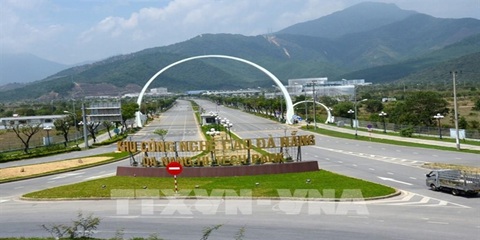
HIGH-QUALITY HUMAN RESOURCES NEEDED TO ATTRACT NEW TECH INVESTMENT CAPITAL
Besides infrastructure, Việt Nam must also rapidly develop a highly skilled workforce to attract investment in AI, semiconductors and advanced manufacturing, experts have said. Don Lam, CEO and co-founder of investment management company VinaCapital, said that global technology investors were increasingly looking at the readiness of the entire ecosystem, with high-quality human resources a decisive factor.

HR / LABOUR/ EMPLOYMENT
HIRING OUTLOOK STRENGTHENS IN Q4 AS SKILLS SHORTAGES PERSIST
Hiring intentions among employers in Việt Nam strengthened in the fourth quarter, with 52 per cent of surveyed companies planning to increase headcount between October and December, according to a ManpowerGroup survey released this week. Việt Nam's hiring outlook was stronger than the Asia Pacific and Middle East (APME) regional average of 33 per cent and the global average of 29 per cent, ranking third in the region and 11th globally among 42 markets surveyed.

BANKING / FINANCE / INSURANCE / TAX
LARGE BANKS FORECAST TO GAIN HIGHER PROFITABILITY IN H2 2026
The return on average assets (ROAA) of the banking sector will likely remain stable at around 1.5 per cent in the second half of 2026, but profitability divergence among banks will increase, with large banks outperforming peers on stronger margins and diversified earnings, analysts forecast. In a recent report on the banking sector, analysts from the Vietnam Investors Service Rating said the sector’s ROAA rose by 10 basis points quarter-on-quarter to 1.51 per cent in the first half of this year, driven by net interest margin (NIM) improvements at some State-owned banks and large private banks.
GARMENT / TEXTILE
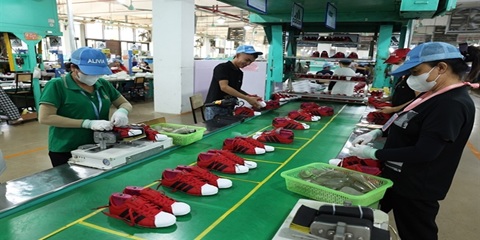
VIỆT NAM'S FOOTWEAR, BAG EXPORTS TO US TOP $8 BILLION IN EIGHT MONTHS
Việt Nam's exports of footwear and handbags to the US exceeded US$8 billion in the first eight months of 2026, as the US and EU remained the country's biggest markets despite sluggish growth in footwear shipments. Exports from Việt Nam's leather and footwear sector reached more than $2.45 billion in August, down 9 per cent from July but up 3 per cent from a year earlier, according to preliminary statistics.
Events Sponsors






















