Want to be in the loop?
subscribe to
our notification
Business News
LABOR CODE REGULATIONS CONTAIN CONFUSING RULES ON SALARY, WORK PERMITS
“Previously, we were told to calculate the overtime wage by multiplying the normal wage by 130 percent. But the 2012 labor code says the overtime wage is 30 percent higher than the normal wage,” he said.
A Hanoi-based company, after consulting with a state management agency, was told that if employees work overtime on ordinary days, they will receive wages equal to 200 percent of the normal wage.
The figure would be 250 percent if they work overtime on weekend and 450 percent if they work overtime on holidays.
Meanwhile, according to a representative of a business in Binh Duong province, the local watchdog agency said there are three ways of calculating wages for employees who work overtime on holidays and national days off, which ends up giving three different results.
Meanwhile, the Ministry of Labor, War Invalids and Social Affairs (MOLISA), in a dispatch to Groz-Beckert Vietnam Company, said the overtime wage on holidays is equal to 390 percent of the normal wage.
Nguyen Thi Dan, chief representative of MOLISA’s southern office, admitted that there were still many unanswered questions about the way to calculate overtime wages.
“It is unclear whether workers will still have days off to make up for the overtime they have done, though they have received overtime wages,” she said.
Teachers seen as “specialists”
Lawyer Nguyen Tien Tai said it is difficult to apply for work permits for foreign teachers.
Tai said under the new regulations, foreign teachers are considered “specialists”, i.e., high-ranking workers. Therefore, employers and foreign teachers have to meet many requirements to apply for work permits.
They must have bachelor’s degrees and have at least five years of experience in their trained fields.
Tai noted that the regulation has placed major difficulties on education establishments, and employers. It is nearly impossible to obtain certificates on foreign workers’ experience if they have worked in many different countries
An analyst said that recruiting teachers with at least five years of experience was “too demanding”.
“Education establishments need to be very financially powerful to be able to recruit experienced teachers,” he noted.
MOLISA, which has received many complaints from schools about the new regulations, has decided that foreign workers only have to satisfy one of the two requirements (having bachelor’s degree or having five years of experience) instead of having both.
Source: VNEP
Related News

CHARITY / EXHIBITION / OTHER EVENTS
INVESTMENT OPPORTUNITIES IN CA MAU PROVINCE: 96 PROJECTS AND 20 STRATEGIC PROJECTS
We are pleased to share with you information on investment projects currently seeking investors in Ca Mau Province. Should your esteemed company or association be interested, we kindly invite you to review the project information and complete the registration form via the links provided. The Ho Chi Minh City Investment and Trade Promotion Centre (ITPC) will consolidate the expressions of interest and facilitate connections with the leadership of Ca Mau Province at a meeting tentatively scheduled for 13 November 2026 in Ho Chi Minh City.

MEMBER CORNER / PROMOTIONS
BẰNG KIỀU LIVESHOW - A SYMPHONY OF LOVE UNDER THE GOLDEN GLOW
A masterclass in live music that takes the audience on a soulful journey through immortal love songs, guided by the peerless artistry and emotive storytelling of renowned singer Bằng Kiều. The highlight of the night is his seamless musical chemistry with special guest Triệu Hồng Ngọc, promising passionate and deeply resonant duets inside the magnificent Grand Ballroom.
INFRASTRUCTURE / CONSTRUCTION / LOGISTIC / PORT
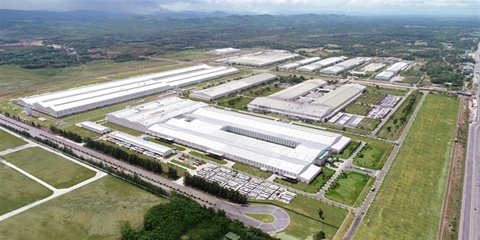
ĐÀ NẴNG GREEN-LIGHTS US$105 MILLION THAI DEVELOPMENT DEAL
The central city has approved an investment proposal by Thailand’s WHA Group to develop infrastructure for the 400ha WHA Đà Nẵng Industrial Park project on two communes of Thăng Bình and Đồng Dương, with an investment of more than VNĐ2.7 trillion (US$105 million). The city said it approved WHA Industrial Development International's status as an investor in the project, which is expected to take place between 2027 and 2034.
VIETNAM ECONOMY INVESTMENT
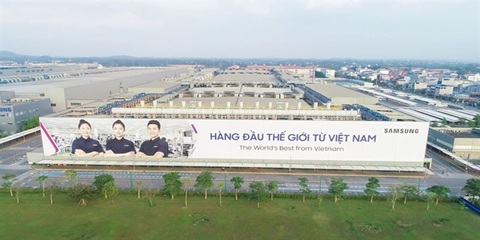
MOBILE PHONE EXPORTS RISE 20% TO $51.8 BILLION IN FIRST NINE MONTHS
Exports of mobile phones and components rose 20 per cent year-on-year to nearly US$51.8 billion in the first nine months of 2026, with China, the US and Republic of Korea accounting for more than half of the total. Shipments to the three markets reached a combined $26.18 billion, or 50.6 per cent of total exports of the product group during the period, according to data from the Vietnam Department of Customs under the Ministry of Finance.
INFRASTRUCTURE / CONSTRUCTION / LOGISTIC / PORT
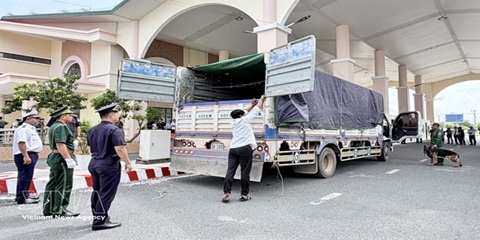
VIỆT NAM-CAMBODIA TRADE GATHERS PACE TOWARDS $20 BILLION TARGET
Trade between Việt Nam and Cambodia continues to grow, remaining a bright spot and a key pillar of bilateral cooperation as the two countries aim to raise two-way trade to US$20 billion in the coming years. After setting a record of more than $11.3 billion last year, bilateral trade reached about $8.7 billion in the first eight months of this year, up 8.3 per cent year on year.
VIETNAM ECONOMY INVESTMENT
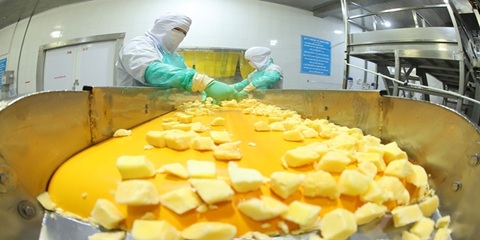
FRUIT AND VEGETABLE EXPORTS POISED TO HIT $10 BILLION IN 2026
Fruit and vegetable exports are on track to reach nearly US$10 billion in 2026, after rising 19.9 per cent year on year to nearly US$7.4 billion in the first nine months, driven by strong seasonal demand and abundant tropical fruit supplies. The Ministry of Agriculture and Environment said the growth reflected stronger international demand for fresh produce and processed agricultural products.
Events Sponsors






















