Want to be in the loop?
subscribe to
our notification
Business News
VIỆT NAM-CAMBODIA TRADE GATHERS PACE TOWARDS $20 BILLION TARGET
After setting a record of more than US$11.3 billion last year, bilateral trade reached about $8.7 billion in the first eight months of this year, up 8.3 per cent year on year. Việt Nam is currently Cambodia’s third-largest trading partner, its second-largest source of imports and second-largest export market.
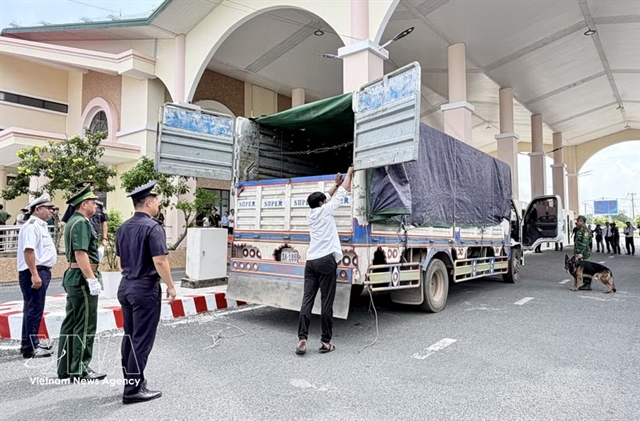
Khánh Bình International Land Border Gate in An Giang Province. — VNA/VNS Photo
HÀ NỘI — Trade between Việt Nam and Cambodia continues to grow, remaining a bright spot and a key pillar of bilateral cooperation as the two countries aim to raise two-way trade to US$20 billion in the coming years.
After setting a record of more than $11.3 billion last year, bilateral trade reached about $8.7 billion in the first eight months of this year, up 8.3 per cent year on year. Việt Nam is currently Cambodia’s third-largest trading partner, its second-largest source of imports and second-largest export market.
Việt Nam has 223 investment projects in Cambodia, with total registered capital of nearly $3.4 billion. These projects have generated jobs for tens of thousands of workers, contributed to the Cambodian budget and supported local social welfare programmes.
Vietnamese Customs data shows that Việt Nam exported $4.3 billion worth of goods to Cambodia during the period, up 13.8 per cent, while imports from the neighbouring country totalled $4.4 billion, an increase of 3.4 per cent.
Việt Nam’s major exports include textiles and garments, steel, textile and footwear materials, fertilisers, animal feed and ingredients, paper and paper products, plastics, chemicals, and machinery and equipment. Imports from Cambodia are concentrated in 14 major product groups, notably cashew nuts, rubber and textile and footwear materials.
The two economies have complementary strengths. Cambodia has advantages in agricultural production, raw materials and certain industrial products, while Việt Nam supplies goods for both production and consumption. Cambodia’s exports to Việt Nam include rice, rubber, cassava, cashew nuts, timber, fruit and vegetables. This complementarity provides a foundation for moving beyond cross-border trade towards deeper processing, higher value addition and participation in shared supply chains.
However, achieving the $20 billion target will require both countries to address policy and institutional barriers, improve the business environment and establish new mechanisms to promote economic, trade and investment cooperation.
Experts point to several potential growth drivers, including deeper processing of agricultural products, expanded industrial and supporting-industry cooperation, and more effective use of ASEAN markets and trade agreements. Combining Cambodia’s agricultural resources with Việt Nam’s processing capacity, technology, capital, and distribution networks could generate greater value than exports of raw materials alone.
Logistics and transport connectivity will also be crucial. The opening of the Meun Chey–Tân Nam international border gate in late 2025 and the Khánh Bình–Chrey Thom international border gate on October 3 this year, is expected to facilitate trade and strengthen links between Cambodia’s Prey Veng and Việt Nam’s Tây Ninh Province, as well as between Việt Nam’s An Giang Province and Cambodia’s Kandal Province.
In the long run, linking the HCM City–Mộc Bài–Bavet–Phnom Penh routes to mutual expressway networks will cut transport times, lower logistics costs, and boost the growth of logistics hubs, industrial parks, and services along the economic corridors.
With their geographic proximity, complementary production structures and established bilateral ties, Việt Nam and Cambodia have an opportunity to build a more closely integrated Mekong economic space. Reaching $20 billion in trade would represent not only higher turnover but also more substantive cooperation, greater value addition and stronger cross-border supply chains. — VNA/VNS
Source: VNS
Related News
VIETNAM ECONOMY INVESTMENT
MOBILE PHONE EXPORTS RISE 20% TO $51.8 BILLION IN FIRST NINE MONTHS
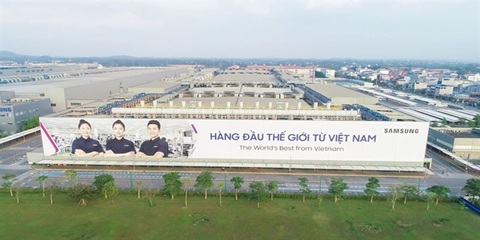
Exports of mobile phones and components rose 20 per cent year-on-year to nearly US$51.8 billion in the first nine months of 2026, with China, the US and Republic of Korea accounting for more than half of the total. Shipments to the three markets reached a combined $26.18 billion, or 50.6 per cent of total exports of the product group during the period, according to data from the Vietnam Department of Customs under the Ministry of Finance.
TECHNOLOGY
AI BEGINNING TO RESHAPE RECRUITMENT CRITERIA
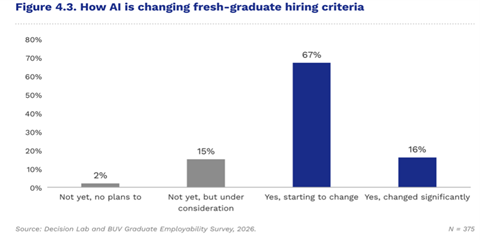
Digital literacy is the only capability area in which fresh graduates meet employers’ expectations, according to a new report. Yet, it is also the standard rising fastest, as businesses increasingly expect new hires to use AI effectively in the workplace. Some 83 per cent of employers say AI has changed, or is beginning to change, their hiring criteria, while 94 per cent report higher expectations for digital and AI capabilities than they had two to three years ago.
GARMENT / TEXTILE
TEXTILE EXPORTS FACE DUAL CHALLENGES OF SUSTAINING ORDERS AND BOOSTING EFFICIENCY AMID GROWING COMPETITION
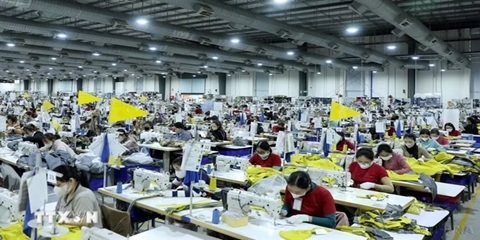
Data shows that the textile and garment sector maintained its growth momentum in the first nine months of this year. The industry's total export turnover reached an estimated US$35.721 billion in the first nine months of this year, up 3.3 per cent year-on-year. Despite posting encouraging export figures, Vietnamese textile and garment enterprises continue to navigate unpredictable market variables.
VIETNAM ECONOMY INVESTMENT
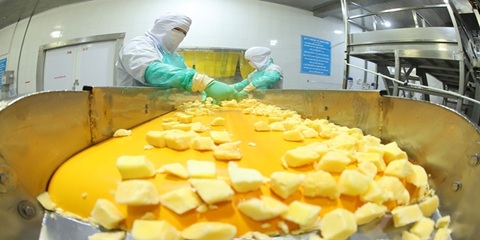
FRUIT AND VEGETABLE EXPORTS POISED TO HIT $10 BILLION IN 2026
Fruit and vegetable exports are on track to reach nearly US$10 billion in 2026, after rising 19.9 per cent year on year to nearly US$7.4 billion in the first nine months, driven by strong seasonal demand and abundant tropical fruit supplies. The Ministry of Agriculture and Environment said the growth reflected stronger international demand for fresh produce and processed agricultural products.
INFRASTRUCTURE / CONSTRUCTION / LOGISTIC / PORT
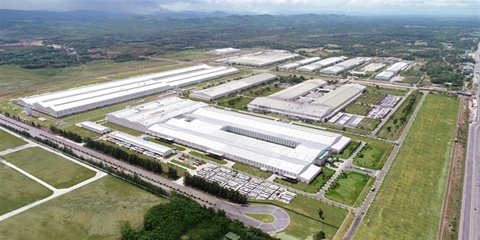
ĐÀ NẴNG GREEN-LIGHTS US$105 MILLION THAI DEVELOPMENT DEAL
The central city has approved an investment proposal by Thailand’s WHA Group to develop infrastructure for the 400ha WHA Đà Nẵng Industrial Park project on two communes of Thăng Bình and Đồng Dương, with an investment of more than VNĐ2.7 trillion (US$105 million). The city said it approved WHA Industrial Development International's status as an investor in the project, which is expected to take place between 2027 and 2034.
VIETNAM ECONOMY INVESTMENT
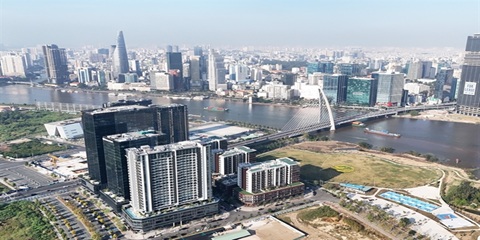
HCM CITY SHIFTS TOWARDS PRODUCTIVITY-DRIVEN GROWTH MODEL
After 40 years of Đổi mới (Renewal), HCM City is entering a new phase of development, seeking to bring together capital, technology, people, infrastructure, and markets to raise productivity and strengthen competitiveness. Before the national Đổi mới reforms were launched in 1986, the centrally planned economy left businesses with limited autonomy. Between 1976 and 1985, the city experimented with a series of “fence-breaking” initiatives, including wage-price compensation, the three-part plan, and the Directors’ Club.
Events Sponsors