Want to be in the loop?
subscribe to
our notification
Business News
ISSUED CIRCULARS DECLINE SHARPLY
According to the legal database on the government's website, in 2020, central authorities issued 546 legal documents, including 17 laws passed by the National Assembly, 158 decrees promulgated by the Government, 39 resolutions issued by the Prime Minister, 310 circulars adopted by ministers and other legal documents. The number of laws, decrees and the Prime Minister’s resolutions did not change a lot from previous years but the number of circulars dropped sharply (compared to 467 circulars in 2019).
According to the Report on Business Law Flow in 2020 recently released by the Vietnam Chamber of Commerce and Industry (VCCI), among 17 ministries that regularly issued documents relating to business laws, 15 ministries reported a decrease in circulars in 2020 from a year earlier. Only the Ministry of Information and Communications and the Ministry of Education and Training had more circulars. For the Ministry of Education and Training, most circulars instruct the enactment of the Law on Higher Education ratified by the National Assembly in previous years. The Ministry of Information and Communications not only issued more circulars, but reviewed many legal documents for future amendments.
There were many reasons for the decline in legal documents, especially circulars. According to the report, 2020 was the last year of the current administration and many ministerial agencies were concerned more about personnel than policymaking. Besides, the COVID-19 epidemic stalled policymaking. This was also attributed to the direction of the Government toward reducing legal documents. The Government’s Resolution 68/NQ-CP dated May 12, 2020 states, “In the 2020-2025 period, the number of existing legal documents relating to business under the jurisdiction of ministers, the Prime Minister and the Government will be minimized”. Many agencies strictly restricted policymaking under the jurisdiction of ministers like issuing new circulars or regulations on business investment conditions.
Notably, business support policies against COVID-19 epidemic impacts in the past year were timely but inconsistent. According to Mr. Dau Anh Tuan, Head of the VCCI Legal Department, early in the year, the Government drafted and issued many legal documents (about 46 central-level documents) in support of businesses such as Decree 41/2020/ND-CP, Decision 15/2020/QD-TTg, Decision 22/2020/QD-TTg, and 19 circulars on fees, charges, and bank debt classification, among other matters. The quick and timely issuance of legal documents helped solve difficulties for businesses, but there were still concerns about the accessibility and consistency of policies on beneficiaries, support levels, conditions and procedures.
A policy highlight in 2020 was regulations on starting a business. According to the World Bank's Doing Business Report 2020, Vietnam ranked No. 115 out of 190 economies in the world and No. 6 in ASEAN, with eight procedures that took 16 days for completion. Decree 122/2020/ND-CP on business registration and Decree 22/2020/ND-CP on license fees built a process of linking administrative procedures: Business registration, labor reporting, social insurance code, invoice registration and license fee exemption in the first year of establishment. He said, the promulgation of above decrees demonstrated the remarkable efforts of authorities for a better business environment and startup promotion. This approach is expected to make an important contribution to boosting Vietnam's rankings in the WB’s report on ease of doing business in the coming time.
In five years, from 2016 to 2020, central agencies issued a total of 71 laws, 745 decrees, 232 Prime Minister's decisions and 2,422 circulars and many other documents. The number of laws and decrees did not change a lot from the previous 5-year period, but the number of Prime Minister's decisions decreased by 129 documents and circulars by 201. This was consistent with the policy on reducing guiding decisions and circulars. Legal regulations will be centrally issued by the National Assembly and the Government.
Source: VCCI
Related News
BANKING / FINANCE / INSURANCE / TAX
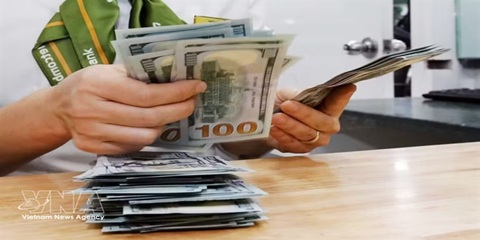
REMITTANCES TO HCM CITY RISE NEARLY 40% IN Q3
Remittances to HCM City reached more than US$2.83 billion in the third quarter of this year, up 39.5 per cent from the previous quarter and 3.6 per cent year-on-year. This was the first quarter showing positive annual growth this year, helping narrow the decline in remittance inflows over the first nine months. According to the State Bank of Vietnam (SBV)’s Regional Branch 2, remittances transferred to HCM City through credit institutions and economic organisations totalled $2.835 billion in Q3, an increase of more than $802 million from the previous quarter.

TECHNOLOGY
TECH SECTOR GROWTH OPENS UP OPPORTUNITIES FOR VIỆT NAM TO GO GLOBAL
The growth of the electronics, semiconductor and high-tech sectors worldwide is opening up a variety of opportunities for Vietnamese enterprises to integrate more deeply into the global supply chain. However, to become suppliers for these corporations, domestic enterprises must meet rigorous standards regarding quality, technology, productivity and order fulfilment capabilities.
VIETNAM ECONOMY INVESTMENT
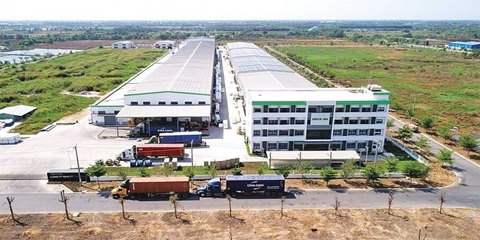
FOREIGN INVESTORS SEEKING A SYNCHRONISED MANUFACTURING ECOSYSTEM
Instead of focusing only on land costs and incentives as usual, foreign investors are seeking a synchronised manufacturing ecosystem, from stable power supply and logistics to shared infrastructure and the convenience of completing residence procedures for experts to serve their long-term investment in the country.
MEMBER CORNER / PROMOTIONS
SENTRYSAFE FHW40200 – PROTECT YOUR VALUABLES, ENJOY PEACE OF MIND!
Looking for a reliable solution to protect your important documents, cash, and valuables from fire and water damage? Genuine SENTRYSAFE - Reliable protection for your valuables and peace of mind! Contact Sen Wai Vietnam for more information and personalized product recommendations.
PROPERTY / INDUSTRIAL ZONE
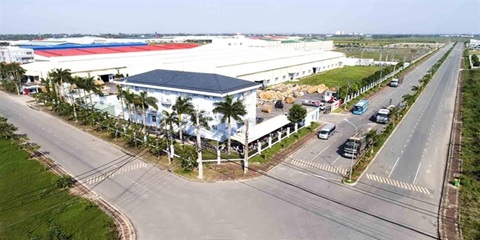
HCM CITY ATTRACTS US$5.7 BILLION INTO EXPORT PROCESSING AND INDUSTRIAL ZONES
HCM City attracted US$5.7 billion in domestic and foreign investment into its export processing and industrial zones during the first nine months of 2026. The figure exceeded the city's full-year target by 31 per cent, highlighting strong momentum in high-quality industrial investment under Resolution No.10-NQ/TW. Total investment reached 131 per cent of the 2026 target of $4.25 billion and represented a 29 per cent increase compared with the same period in 2025, according to the city's Export Processing and Industrial Zones Authority (HEPZA).
INFRASTRUCTURE / CONSTRUCTION / LOGISTIC / PORT
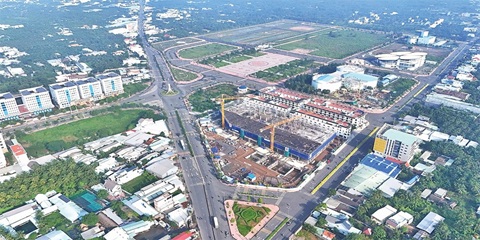
DONG THAP PROVINCE STEPS UP INDUSTRIAL EXPANSION AND INFRASTRUCTURE CONNECTIVITY
Accelerating public investment, strengthening inter-regional connectivity, and expanding industrial land are helping Dong Thap efficiently bolster competitiveness and drive economic growth. Following the 2025 merger of the former Dong Thap and Tien Giang provinces, the expanded Dong Thap province in the Mekong Delta faces mounting pressure to accelerate infrastructure development and strengthen connectivity among local economic zones, urban areas, industrial parks (IPs), and production centres.
Events Sponsors






















