Want to be in the loop?
subscribe to
our notification
Business News
INVESTORS BULLISH ON REAL ESTATE IN 2023
Despite a decline in optimism among real estate investors at the start of 2023, 70 per cent of respondents still expect real estate prices to rise and aim to purchase this year.
According to data from batdongsan.com, the investor sentiment index for the start of 2023 is 36 points, a significant decrease from 47 and 40 points in the first and second halves of 2022, respectively. The category in which real estate purchasers' and sellers' enthusiasm decreased the most was real estate loan interest rates.
In comparison to the second half of 2022, the index evaluating real estate investors' happiness with the market, the likelihood of future price rises, and their ability to purchase a property declined by 12-14 points at the start of 2023.
According to Le Bao Long, the strategic director of Batdongsan.com, the sentiment index of investors interested in the real estate market is based on six factors: market satisfaction, the ability to purchase a home, market conditions, interest rates, policy decisions, and potential property prices.
Although the future price growth index is not as high as it was at the beginning of 2022, 70 per cent of respondents still anticipate that real estate prices will climb in the following 1-5 years, with 40 per cent anticipating an increase of 5-10 per cent and 23 per cent predicting an increase of more than 10 per cent.
Furthermore, several investors are ready to devote 40-60 per cent of their overall income to mortgage payments. 46 per cent of individuals with a monthly family income of less than $1,700 are ready to spend 40-60 per cent of their overall income on mortgage payments.
This proportion grew for respondents with higher family incomes, notably 67 per cent for those with a monthly income between $1,700 and $3,000, 73 per cent for those with a monthly income between $3,000 and $4,200, and 74 per cent for those with a monthly income above $4,200.
In addition, approximately 70 per cent of respondents stated they want to purchase real estate in 2023 for investment purposes. This website's data also indicates that price and location are the top two considerations for investors when buying and selling real estate, followed by area, sort, and security, degree of development, and long-term planning of the community.
The bulk of purchasers will choose a home in the living area; however, only a small fraction will purchase a home in a distant location. Investors in various areas have diverse investment demands. While 16 per cent of Hanoi residents still want to purchase property in Ho Chi Minh City, Danang, or the central regions, just 7 per cent of Ho Chi Minh City residents intend to purchase property in the southern outskirts.
Nguyen Van Dinh, chairman of the Vietnam Association of Realtors, predicts that the real estate market will rebound by the end of 2023, even if the first half of 2023 remains challenging. In particular, when a new credit room opens in 2023, the real estate market will be more active. There will not, however, be land fever as there was in early 2022. Although the increased credit line is modest, it aids the market in attracting more actual homebuyers and retail real estate investors.
"The primary source of development financing for firms is the issuance of bonds and bank loans. Therefore, when the primary source of money continues to be impacted, the tale of the market remains one of scarcity. Therefore, it is possible that the credit source in 2023 will not be able to address the root of the issue," Dinh stated.
As the legislation pertaining to real estate was in the process of being amended, the expert said that investors were nervous to invest during this period. By the time the legislation is finalised and everything is made clear, the market will have a resurgence of momentum.
Nguyen Manh Ha, permanent vice chairman of the Vietnam National Real Estate Association, said that the government would take tougher measures to eliminate restrictions in the first quarter of 2023 while simultaneously reopening credit so that banks may continue to lend. Additionally, businesses will gradually get used to and adjust to the new bond issue laws. Thus, the real estate market's money supply will increase, reviving its development pace.
Prior to these positive expectations, many investors with accessible financial resources were seeking to invest in real estate as opposed to just depositing funds in a bank. However, no decision has been taken since there are still several unknowns.
Director of Viet An Real Estate Investment Tran Khanh Quang said that if people have funds on hand, they should purchase real estate before the Lunar New Year. "It is common knowledge that properties that must be sold before the Lunar New Year are mostly due to sellers' desperate need for cash, they are willing to take discounts," Quang said.
To be able to seek real estate before Lunar New Year at a decent price, however, is not simple; investors must have knowledge in order to pick a suitable product in terms of location, infrastructure, and development space.
"Policy signals, the widening of credit space, and the stabilisation of interest rates will become clearer. Therefore, real estate sales will grow gradually over the Lunar New Year. Those who purchase before that time may earn by selling afterwards," Quang remarked.
Source: VIR
Related News

CHARITY / EXHIBITION / OTHER EVENTS
INVESTMENT OPPORTUNITIES IN CA MAU PROVINCE: 96 PROJECTS AND 20 STRATEGIC PROJECTS
We are pleased to share with you information on investment projects currently seeking investors in Ca Mau Province. Should your esteemed company or association be interested, we kindly invite you to review the project information and complete the registration form via the links provided. The Ho Chi Minh City Investment and Trade Promotion Centre (ITPC) will consolidate the expressions of interest and facilitate connections with the leadership of Ca Mau Province at a meeting tentatively scheduled for 13 November 2026 in Ho Chi Minh City.

MEMBER CORNER / PROMOTIONS
BẰNG KIỀU LIVESHOW - A SYMPHONY OF LOVE UNDER THE GOLDEN GLOW
A masterclass in live music that takes the audience on a soulful journey through immortal love songs, guided by the peerless artistry and emotive storytelling of renowned singer Bằng Kiều. The highlight of the night is his seamless musical chemistry with special guest Triệu Hồng Ngọc, promising passionate and deeply resonant duets inside the magnificent Grand Ballroom.
INFRASTRUCTURE / CONSTRUCTION / LOGISTIC / PORT
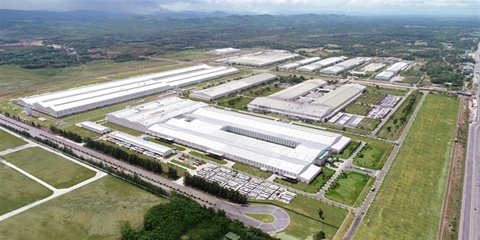
ĐÀ NẴNG GREEN-LIGHTS US$105 MILLION THAI DEVELOPMENT DEAL
The central city has approved an investment proposal by Thailand’s WHA Group to develop infrastructure for the 400ha WHA Đà Nẵng Industrial Park project on two communes of Thăng Bình and Đồng Dương, with an investment of more than VNĐ2.7 trillion (US$105 million). The city said it approved WHA Industrial Development International's status as an investor in the project, which is expected to take place between 2027 and 2034.
VIETNAM ECONOMY INVESTMENT
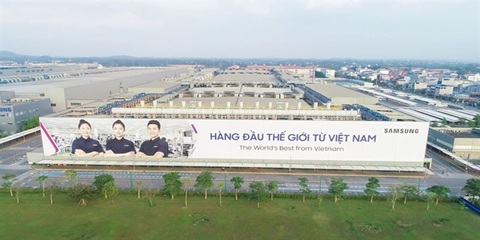
MOBILE PHONE EXPORTS RISE 20% TO $51.8 BILLION IN FIRST NINE MONTHS
Exports of mobile phones and components rose 20 per cent year-on-year to nearly US$51.8 billion in the first nine months of 2026, with China, the US and Republic of Korea accounting for more than half of the total. Shipments to the three markets reached a combined $26.18 billion, or 50.6 per cent of total exports of the product group during the period, according to data from the Vietnam Department of Customs under the Ministry of Finance.

INFRASTRUCTURE / CONSTRUCTION / LOGISTIC / PORT
VIỆT NAM-CAMBODIA TRADE GATHERS PACE TOWARDS $20 BILLION TARGET
Trade between Việt Nam and Cambodia continues to grow, remaining a bright spot and a key pillar of bilateral cooperation as the two countries aim to raise two-way trade to US$20 billion in the coming years. After setting a record of more than $11.3 billion last year, bilateral trade reached about $8.7 billion in the first eight months of this year, up 8.3 per cent year on year.
VIETNAM ECONOMY INVESTMENT
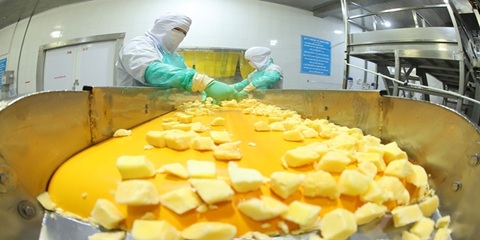
FRUIT AND VEGETABLE EXPORTS POISED TO HIT $10 BILLION IN 2026
Fruit and vegetable exports are on track to reach nearly US$10 billion in 2026, after rising 19.9 per cent year on year to nearly US$7.4 billion in the first nine months, driven by strong seasonal demand and abundant tropical fruit supplies. The Ministry of Agriculture and Environment said the growth reflected stronger international demand for fresh produce and processed agricultural products.
Events Sponsors






















