Want to be in the loop?
subscribe to
our notification
Business News
INSURANCE INDUSTRY FORECASTS LESS FAVOURABLE YEAR IN 2022
After gaining high growth last year, the insurance industry is forecast to experience a less favourable time in 2022 as many insurers have so far planned lower profit targets or slowing growth compared to last year.
After gaining pre-tax profit of VND306.3 billion in 2021, up 31.34 per cent against the previous year despite the severe impacts of the COVID-19 pandemic, Bao Minh Insurance Joint Stock Corporation (BMI) has targeted a fairly modest profit growth rate of 10 per cent to VND340 billion this year when the economy has recovered.
Similarly, though Military Insurance Joint Stock Corporation (MIC) submitted its shareholders a plan to increase pre-tax profit by at least 35 per cent, the rise is still lower than the 40 per cent rate targeted in its annual general shareholders' meeting (AGM) in 2021.
For BIDV Insurance Joint Stock Corporation (BIC), the company’s AGM has approved the insurance premium revenue goal of VND3.31 trillion this year, up by 16.4 per cent against 2021, but the pre-tax profit plan is only VND435 billion, down 13.4 per cent against 2021.
Meanwhile, Petrolimex Insurance Joint Stock Corporation (PJICO) has targeted a minimum profit of VND250 billion this year, a decline of about 43 per cent compared with last year.
PVI Insurance Joint Stock Corporation (PVI)’s pre-tax profit plan this year has also been set at only VND911 billion, down 17.26 per cent against last year, while its consolidated revenue has been targeted at more than VND11.65 trillion, up 4.9 per cent.
Similarly, Agriculture Bank Insurance Joint Stock Corporation (ABI) expects a minimum pre-tax profit of VND310 billion this year, nearly 10 per cent less than that in 2021. The dividend payment of the company is planned at 14 per cent, while the insurance premium revenue is targeted to grow by at least 8 per cent.
Post Telecommunication Joint Stock Corporation (PTI) has also aimed at an after-tax profit of VND208 billion in 2022, down by 20.4 per cent compared to 2021.
According to BIC Chairman Tran Xuan Hoang, his company has targeted a slower growth rate in 2022 as the profit from the investment segment is forecast to grow at a low level as savings interest rates remain low.
Under the current legal regulations, non-life insurers have to use at least 70 per cent of their capital to deposit at banks or buy Government bonds to ensure the insurers’ capital safety. Therefore, though the economic recovery can give non-life insurers opportunities to improve revenue, it will be still difficult for them to increase profits as the majority of their investment portfolios are bank savings and Government bonds, whose interest rates are forecast to remain at low levels this year.
Meanwhile, the profit from the insurance business segment is predicted to decline this year, Hoang said, explaining the insurance business segment last year enjoyed favourable conditions due to social distancing as the company’s compensation costs related to transport accidents and the cost of health check-ups declined.
In fact, not only BIC, but all other insurers reported the insurance claims for motor vehicle insurance and personal insurance in 2021 were low.
At the recent AGM, PVI General Director Nguyen Xuan Hoa said in 2022 when all activities gradually resume, the compensation costs are expected to rise, which has partly been shown in Q1 2022.
In addition, some of PVI’s rivals this year have applied price solutions, causing the company to consider lowering insurance premiums to increase its competitiveness. The new policy will cause the company earn less profit this year.
Besides, the uncertainty around the world will also pose risks to PVI’s insurance and financial investment segments, Hoa said.
It is estimated that by the end of the first quarter of 2022, PVI’s revenue reached more than VND3 trillion and Hòa said the company would try its best to meet the yearly target.
According to experts, the main profit of insurance companies still comes from financial investment and insurance activities. Therefore, if there are no big changes in claim and cost management or financial investment, it will be difficult for insurers to generate high profits.
Despite setting lower profit targets for this year, boards of directors of some insurance companies such as PJICO and MIC have so far still committed with their shareholders at the companies’ AGMs to ensure similar dividend payment rates as in 2021.
Source: VIR
Related News

BANKING / FINANCE / INSURANCE / TAX
REMITTANCES TO HCM CITY RISE NEARLY 40% IN Q3
Remittances to HCM City reached more than US$2.83 billion in the third quarter of this year, up 39.5 per cent from the previous quarter and 3.6 per cent year-on-year. This was the first quarter showing positive annual growth this year, helping narrow the decline in remittance inflows over the first nine months. According to the State Bank of Vietnam (SBV)’s Regional Branch 2, remittances transferred to HCM City through credit institutions and economic organisations totalled $2.835 billion in Q3, an increase of more than $802 million from the previous quarter.

TECHNOLOGY
TECH SECTOR GROWTH OPENS UP OPPORTUNITIES FOR VIỆT NAM TO GO GLOBAL
The growth of the electronics, semiconductor and high-tech sectors worldwide is opening up a variety of opportunities for Vietnamese enterprises to integrate more deeply into the global supply chain. However, to become suppliers for these corporations, domestic enterprises must meet rigorous standards regarding quality, technology, productivity and order fulfilment capabilities.
VIETNAM ECONOMY INVESTMENT
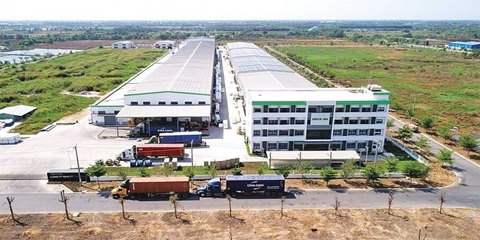
FOREIGN INVESTORS SEEKING A SYNCHRONISED MANUFACTURING ECOSYSTEM
Instead of focusing only on land costs and incentives as usual, foreign investors are seeking a synchronised manufacturing ecosystem, from stable power supply and logistics to shared infrastructure and the convenience of completing residence procedures for experts to serve their long-term investment in the country.
MEMBER CORNER / PROMOTIONS
SENTRYSAFE FHW40200 – PROTECT YOUR VALUABLES, ENJOY PEACE OF MIND!
Looking for a reliable solution to protect your important documents, cash, and valuables from fire and water damage? Genuine SENTRYSAFE - Reliable protection for your valuables and peace of mind! Contact Sen Wai Vietnam for more information and personalized product recommendations.
PROPERTY / INDUSTRIAL ZONE
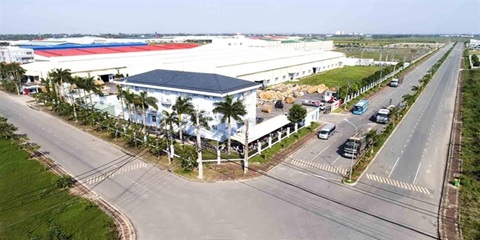
HCM CITY ATTRACTS US$5.7 BILLION INTO EXPORT PROCESSING AND INDUSTRIAL ZONES
HCM City attracted US$5.7 billion in domestic and foreign investment into its export processing and industrial zones during the first nine months of 2026. The figure exceeded the city's full-year target by 31 per cent, highlighting strong momentum in high-quality industrial investment under Resolution No.10-NQ/TW. Total investment reached 131 per cent of the 2026 target of $4.25 billion and represented a 29 per cent increase compared with the same period in 2025, according to the city's Export Processing and Industrial Zones Authority (HEPZA).
INFRASTRUCTURE / CONSTRUCTION / LOGISTIC / PORT
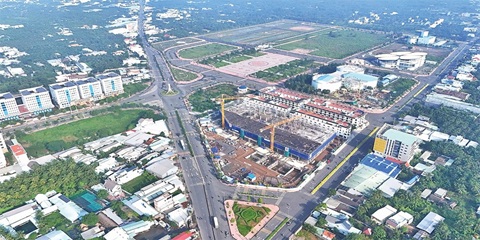
DONG THAP PROVINCE STEPS UP INDUSTRIAL EXPANSION AND INFRASTRUCTURE CONNECTIVITY
Accelerating public investment, strengthening inter-regional connectivity, and expanding industrial land are helping Dong Thap efficiently bolster competitiveness and drive economic growth. Following the 2025 merger of the former Dong Thap and Tien Giang provinces, the expanded Dong Thap province in the Mekong Delta faces mounting pressure to accelerate infrastructure development and strengthen connectivity among local economic zones, urban areas, industrial parks (IPs), and production centres.
Events Sponsors






















