Want to be in the loop?
subscribe to
our notification
Business News
INFLATION CONTROL CANNOT BE TAKEN LIGHTLY
Although many forecasts said that inflation would be controlled at less than four per cent this year, economists recommended it was still important to pay attention to inflationary pressures.
A representative of the Price Management Department under the Ministry of Finance said that in addition to the impact of developments in the world market, the pressure to increase domestic prices also came from the continued price adjustments of some public services according to the market roadmap.
In the context of many uncertainties related to the COVID-19 pandemic, it was difficult for the aggregate demand of the economy to recover, said the representative.
In particular, the business situation in some areas such as accommodation, tourism, entertainment and aviation was forecasted to face many difficulties, therefore,l the price of essential goods was not expected to change.
Nguyễn Anh Tuấn, director of the Price Management Department, said that the department had built and set up a price management scenario for this year, closely following the target of controlling inflation below four per cent of the National Assembly.
It was difficult to predict prices of commodities this year, so the Price Management Department would continue to work closely with ministries, agencies and localities to drastically and effectively implement the public management, administration and price stabilisation under market mechanisms to control inflation according to set targets, said Tuấn.
At the same time, it would continue to implement the market price roadmap for public services and essential goods.
The leader of the Price Management Department also said they would proactively forecast, calculate and build scenarios to control prices of essential commodities this year according to the market roadmap to ensure inflation control; increase inspections; promote communication and publicity of price information, to control inflation; limit false information, causing confusion for consumers and market instability.
Economist Cấn Văn Lực said this year had a number of factors that could significantly push up inflationary pressures.
The first was the strong recovery of the global economy in general and of Việt Nam in particular on this year's low growth. When the economy recovered, the demand for goods and services would increase, thereby pushing up the price.
In addition, the amount of money that countries and central banks pumped out to prevent the pandemic, support major economic recovery, or continue to loosen monetary policies, and reduce interest rates would have a stronger impact next year, making global inflation increase.
In addition, forecasts all showed that prices of basic commodities, including oil prices, continue to increase again, although the increase was not large, it still created additional pressure.
Meanwhile, the domestic roadmap to increase the prices of some goods and services managed by the State would also affect the consumer price index.
“Inflationary pressure will be significantly higher this year. However, we forecast inflation will remain under control at less than four per cent, specifically in the range of 3.7-3.9 per cent, which means we also do not worry that inflation will emerge again," Lực told vov.vn online newspaper.
Lực recommended that there should be co-ordination between fiscal and monetary policy, including price control. Besides, it was necessary to consider delaying the roadmap for increasing prices of some goods managed by the State if the inflationary pressure was greater.
In the short term, in order to keep the market price from strong fluctuations in the first month of the year, the peak month before the Lunar New Year, it was necessary to strongly engage ministries, branches and localities in management and price stabilisation, especially for essential goods, he said.
Source: VNS
Related News
BANKING / FINANCE / INSURANCE / TAX
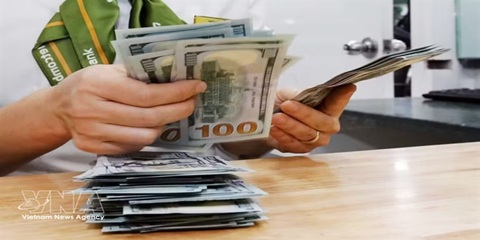
REMITTANCES TO HCM CITY RISE NEARLY 40% IN Q3
Remittances to HCM City reached more than US$2.83 billion in the third quarter of this year, up 39.5 per cent from the previous quarter and 3.6 per cent year-on-year. This was the first quarter showing positive annual growth this year, helping narrow the decline in remittance inflows over the first nine months. According to the State Bank of Vietnam (SBV)’s Regional Branch 2, remittances transferred to HCM City through credit institutions and economic organisations totalled $2.835 billion in Q3, an increase of more than $802 million from the previous quarter.
TECHNOLOGY
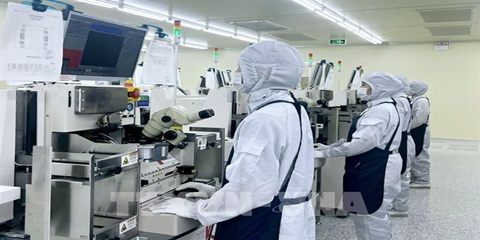
TECH SECTOR GROWTH OPENS UP OPPORTUNITIES FOR VIỆT NAM TO GO GLOBAL
The growth of the electronics, semiconductor and high-tech sectors worldwide is opening up a variety of opportunities for Vietnamese enterprises to integrate more deeply into the global supply chain. However, to become suppliers for these corporations, domestic enterprises must meet rigorous standards regarding quality, technology, productivity and order fulfilment capabilities.
VIETNAM ECONOMY INVESTMENT
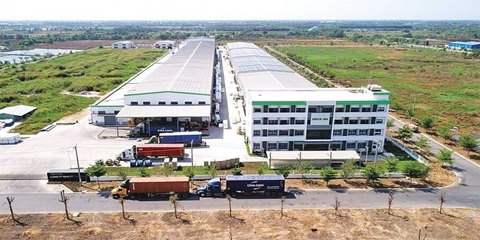
FOREIGN INVESTORS SEEKING A SYNCHRONISED MANUFACTURING ECOSYSTEM
Instead of focusing only on land costs and incentives as usual, foreign investors are seeking a synchronised manufacturing ecosystem, from stable power supply and logistics to shared infrastructure and the convenience of completing residence procedures for experts to serve their long-term investment in the country.

MEMBER CORNER / PROMOTIONS
SENTRYSAFE FHW40200 – PROTECT YOUR VALUABLES, ENJOY PEACE OF MIND!
Looking for a reliable solution to protect your important documents, cash, and valuables from fire and water damage? Genuine SENTRYSAFE - Reliable protection for your valuables and peace of mind! Contact Sen Wai Vietnam for more information and personalized product recommendations.
PROPERTY / INDUSTRIAL ZONE
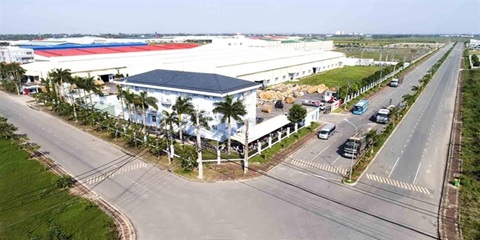
HCM CITY ATTRACTS US$5.7 BILLION INTO EXPORT PROCESSING AND INDUSTRIAL ZONES
HCM City attracted US$5.7 billion in domestic and foreign investment into its export processing and industrial zones during the first nine months of 2026. The figure exceeded the city's full-year target by 31 per cent, highlighting strong momentum in high-quality industrial investment under Resolution No.10-NQ/TW. Total investment reached 131 per cent of the 2026 target of $4.25 billion and represented a 29 per cent increase compared with the same period in 2025, according to the city's Export Processing and Industrial Zones Authority (HEPZA).
INFRASTRUCTURE / CONSTRUCTION / LOGISTIC / PORT
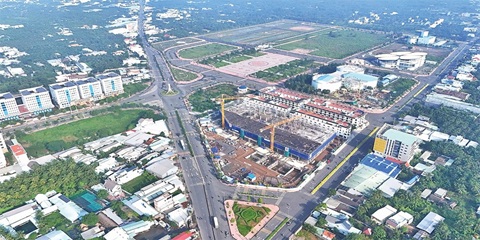
DONG THAP PROVINCE STEPS UP INDUSTRIAL EXPANSION AND INFRASTRUCTURE CONNECTIVITY
Accelerating public investment, strengthening inter-regional connectivity, and expanding industrial land are helping Dong Thap efficiently bolster competitiveness and drive economic growth. Following the 2025 merger of the former Dong Thap and Tien Giang provinces, the expanded Dong Thap province in the Mekong Delta faces mounting pressure to accelerate infrastructure development and strengthen connectivity among local economic zones, urban areas, industrial parks (IPs), and production centres.
Events Sponsors