Want to be in the loop?
subscribe to
our notification
Business News
ILO WELCOMES NEW LABOUR CODE
The International Labour Organization (ILO) has welcomed the new rights of workers and employers in Việt Nam from January 1 as the revised Labour Code adopted in 2019 takes effect.
“The new code will put Việt Nam on an accelerated track for decent work for all working women and men,” said ILO Việt Nam Director, Chang-Hee Lee.
“The new Labour Code makes numerous improvements which can bring benefits for workers and employers. But they will become a reality only when all are aware of their new rights and actively use them,” he said.
Key improvements
According to ILO, the first important change is the expanded coverage of the Labour Code to those who work but without written employment contracts. Certain legal protections under the new code can be applied to about 55 million people, instead of the current coverage of about 20 million workers with employment relations.
Secondly, the code has strengthened protections against gender discrimination and sexual harassment at work. Employers are now required to “ensure equal pay for work of equal value without discrimination based on sex” and provide maternity protection. Meanwhile, sexual harassment has been legally defined for the first time, and employers have an obligation to develop internal regulations and implement solutions to prevent sexual harassment in the workplace.
The retirement age will be gradually increased to 62 years for men (by three additional months per year) and 60 years for women (by adding four more months annually). It reduces gender gaps from five to two years while making the pension system more financially sustainable and responding to the demographic challenge of rapid ageing.
Thirdly, in line with modern labour laws of advanced countries, the code has created legal provisions for workers and employers to decide wages and working conditions through dialogue and negotiation, with the role of the State limited to defining legal minimum standards such as minimum wages and overtime caps. For example, employers no longer have to register their salary scales and tables but are required to consult with workers’ representative organisations.
Fourthly, the code allows workers to establish and join a workers’ representative organisation of their own choosing, which may or may not be affiliated with the Việt Nam General Confederation of Labour (VGCL). Workers’ organisations, which are not affiliated with VGCL, can be organised at the enterprise level and will have the same industrial relations rights and obligations equal to grassroots trade unions under the VGCL.
The code also ensures the protection of employers’ organisations and workers’ organisations against any acts of interference by each other, and that workers enjoy adequate protection against anti-union discrimination. Employers now have clearer obligations to avoid acts of anti-union discrimination and interference in the functions and activities of workers’ representative organisations before and after registration. Managerial employees cannot participate in the same workers’ organisations as rank-and-file workers. This will gradually end the prevailing situation where senior or middle managers dominate workers’ representative organisations at the enterprise level.
Under the new law, the mechanism for resolving labour disputes has been streamlined. If mediation fails to resolve a dispute, workers can choose whether to go to lawful strike or arbitration. Previously, more steps were required before workers could lawfully strike.
“The changes will create a solid foundation for the Government, workers’ and employers’ representative organisations to get on a more sustainable path towards shared prosperity, avoiding the middle-income trap. It will accelerate social and economic upgrading of Việt Nam,” Chang-Hee Lee said.
New challenges and opportunities ahead
The Government has issued Implementation Decree 135 on retirement age and new Decree 145 on employment conditions and industrial relations, giving effect to their related provisions. However, the Government has yet to issue a decree on the registration of workers’ representative organisations and another decree on collective bargaining. Without them, workers and employers cannot enjoy benefits of new rights created by the 2019 Labour Code.
“The Government should adopt the decrees on registration of workers’ representative organisations and collective bargaining as early as possible, to enable workers and employers to exercise their rights,” said ILO’s chief of the Freedom of Association Branch, Karen Curtis.
“All legal tools must be available to ensure that workers who take initiatives to exercise the newly created rights under the new code are fully protected, including from any forms of retaliation," she added
According to the ILO Việt Nam Director, labour inspection alone cannot guarantee the full compliance of the Labour Code.
“Ultimately, it is responsibilities of all, not only the Government, workers’ and employers’ representative organisations but also media, non-governmental organisations and courts to make all members of society enjoy the full benefits of the new Labour Code,” he said.
Source: VNS
Related News

CHARITY / EXHIBITION / OTHER EVENTS
INVESTMENT OPPORTUNITIES IN CA MAU PROVINCE: 96 PROJECTS AND 20 STRATEGIC PROJECTS
We are pleased to share with you information on investment projects currently seeking investors in Ca Mau Province. Should your esteemed company or association be interested, we kindly invite you to review the project information and complete the registration form via the links provided. The Ho Chi Minh City Investment and Trade Promotion Centre (ITPC) will consolidate the expressions of interest and facilitate connections with the leadership of Ca Mau Province at a meeting tentatively scheduled for 13 November 2026 in Ho Chi Minh City.

MEMBER CORNER / PROMOTIONS
BẰNG KIỀU LIVESHOW - A SYMPHONY OF LOVE UNDER THE GOLDEN GLOW
A masterclass in live music that takes the audience on a soulful journey through immortal love songs, guided by the peerless artistry and emotive storytelling of renowned singer Bằng Kiều. The highlight of the night is his seamless musical chemistry with special guest Triệu Hồng Ngọc, promising passionate and deeply resonant duets inside the magnificent Grand Ballroom.
INFRASTRUCTURE / CONSTRUCTION / LOGISTIC / PORT
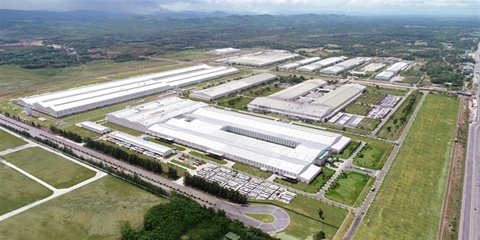
ĐÀ NẴNG GREEN-LIGHTS US$105 MILLION THAI DEVELOPMENT DEAL
The central city has approved an investment proposal by Thailand’s WHA Group to develop infrastructure for the 400ha WHA Đà Nẵng Industrial Park project on two communes of Thăng Bình and Đồng Dương, with an investment of more than VNĐ2.7 trillion (US$105 million). The city said it approved WHA Industrial Development International's status as an investor in the project, which is expected to take place between 2027 and 2034.
VIETNAM ECONOMY INVESTMENT
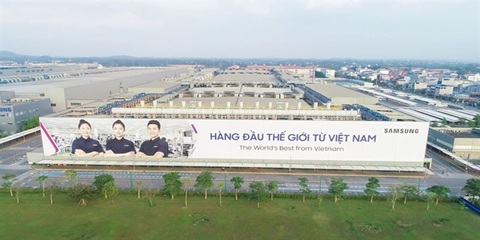
MOBILE PHONE EXPORTS RISE 20% TO $51.8 BILLION IN FIRST NINE MONTHS
Exports of mobile phones and components rose 20 per cent year-on-year to nearly US$51.8 billion in the first nine months of 2026, with China, the US and Republic of Korea accounting for more than half of the total. Shipments to the three markets reached a combined $26.18 billion, or 50.6 per cent of total exports of the product group during the period, according to data from the Vietnam Department of Customs under the Ministry of Finance.
INFRASTRUCTURE / CONSTRUCTION / LOGISTIC / PORT
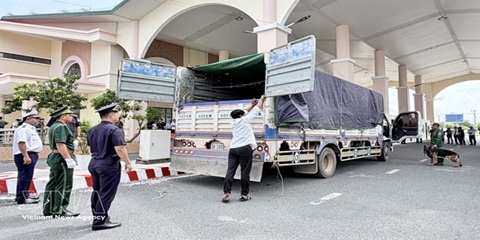
VIỆT NAM-CAMBODIA TRADE GATHERS PACE TOWARDS $20 BILLION TARGET
Trade between Việt Nam and Cambodia continues to grow, remaining a bright spot and a key pillar of bilateral cooperation as the two countries aim to raise two-way trade to US$20 billion in the coming years. After setting a record of more than $11.3 billion last year, bilateral trade reached about $8.7 billion in the first eight months of this year, up 8.3 per cent year on year.
VIETNAM ECONOMY INVESTMENT
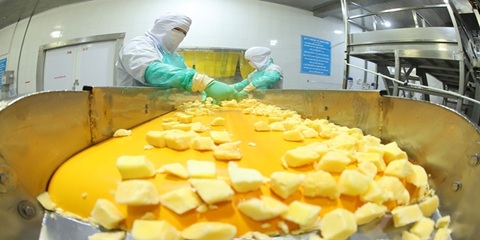
FRUIT AND VEGETABLE EXPORTS POISED TO HIT $10 BILLION IN 2026
Fruit and vegetable exports are on track to reach nearly US$10 billion in 2026, after rising 19.9 per cent year on year to nearly US$7.4 billion in the first nine months, driven by strong seasonal demand and abundant tropical fruit supplies. The Ministry of Agriculture and Environment said the growth reflected stronger international demand for fresh produce and processed agricultural products.
Events Sponsors






















