Want to be in the loop?
subscribe to
our notification
Business News
INVESTORS INCREASE HIGH-TECH ACTIVITIES
Vietnam’s prioritised semiconductor and high technology industries are on the radar of foreign investors, especially those from Japan and South Korea.
Meiko Electronics, an Apple supplier, is preparing procedures for its expanded printed circuit board (PCB) manufacturing facility in the northern province of Hoa Binh. The company aims to complete the procedures for the expansion in the second quarter and finish the construction of the expanded facility by the end of the year.
Previously, a representative of the company used to share at the groundbreaking ceremony in April 2024 that the first facilities have an investment of $200 million, and would be increased to $500 million for the second phase.
The new factory in Hoa Binh will produce ultra-small, energy-efficient PCBs for the iPhone. These products will meet the increasing technological demands of Apple’s new AI applications. Once finished, they will be exported to India for the next assembly step, which is a part of Apple’s strategy to diversify the supply chain.
At the same time, the company is also accelerating the construction of a $200 million PCB factory in an industrial zone in Hoa Binh.
In early April, LG Display reportedly finalised the sale of its large LCD panel and module plant in Guangzhou to TCL’s subsidiary, China Star Optoelectronics Technology.
The final sale price was confirmed at approximately $1.54 billion, exceeding initial expectations. This transaction marks LG Display’s complete exit from the large LCD business as it focuses on advancing its OLED operations. For LG Display, this move is part of a larger restructuring effort aimed at focusing on higher-margin products amidst a competitive global display market.
A source told VIR that LG Display will spend the money earned from the deal on expanding an OLED screen manufacturing facility in Haiphong, in northern Vietnam. Early this year, the group received approval from local authorities for the expanded factory, worth $1 billion. The new investment will bring its investment in Vietnam to $5.65 billion.
The venture is one of LG’s biggest investments in Vietnam. It currently has a monthly output of 14 million OLED display product units.
Elsewhere, Ho Chi Minh City is working with consular officials from major markets to boost foreign investment inflow in the high-tech sector.
In mid-April, the Ho Chi Minh City Centre for the Fourth Industrial Revolution, in collaboration with the External Relations Department, the Department of Science and Technology, and the Management Board of Saigon High-Tech Park, held a working session with delegations from the consulates general of the United States, Japan, and South Korea in Ho Chi Minh City to exchange information, explore opportunities, and discuss cooperation in scientific and technological research, as well as attract investment in high-tech fields.
“The city seeks extensive cooperation with these parties to develop advanced high-tech industries, establish semiconductor research centres, and train high-quality personnel,” said centre director Le Truong Duy. “We hope these three countries, together with Vietnam, will establish a technology exchange platform based on a public-private partnership model that meets international standards. This platform will serve as a hub to connect and share advanced technologies among participating countries.”
Nguyen Van Toan, vice chairman of the Vietnam’s Association of Foreign-invested Enterprises, said, “Foreign investors still trust Vietnam’s investment environment. At the time, the country needs to continue boosting institutional reforms, ensure fair competition, and support businesses capable of innovation and adopting high technology.”
According to the former Ministry of Planning and Investment, by the end of 2024, Vietnam attracted 174 registered foreign-invested projects in the semiconductor industry, with a total registered capital of nearly $11.6 billion. Most major players in this industry, such as Intel, Nvidia, Marvell Technology, Samsung, CoAsia SEMI, and Renesas, are already present in Vietnam.
Prof. Vo Xuan Vinh, dean of the Institute of Business Research at the University of Economics Ho Chi Minh City, said the semiconductor production process was complex, requiring the participation of companies from multiple countries.
“Currently, foreign-invested factories in Vietnam are performing well in semiconductor packaging and testing. Developing the semiconductor industry is not the task of a single nation,” Vinh said. “Thus, in its strategy to restructure investment attraction, Vietnam should focus on the capital inflow from diverse markets such as Europe and Africa, where the potential remains vast.”
“The smartest investment attraction strategy right now is to invite US investors into Vietnam, particularly in high-tech sectors. We could even establish dedicated technology clusters or industrial areas for them. Additionally, amidst global uncertainties, attracting funding from abroad, and from new markets is essential. This will help boost trade with new markets and reduce heavy reliance on the key markets.”
Source: VIR
Related News

CHARITY / EXHIBITION / OTHER EVENTS
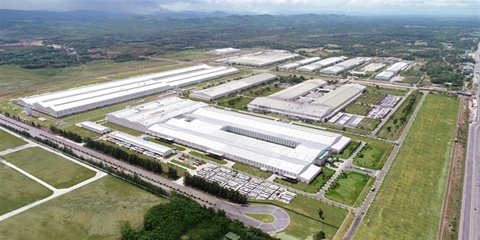
INVESTMENT OPPORTUNITIES IN CA MAU PROVINCE: 96 PROJECTS AND 20 STRATEGIC PROJECTS
We are pleased to share with you information on investment projects currently seeking investors in Ca Mau Province. Should your esteemed company or association be interested, we kindly invite you to review the project information and complete the registration form via the links provided. The Ho Chi Minh City Investment and Trade Promotion Centre (ITPC) will consolidate the expressions of interest and facilitate connections with the leadership of Ca Mau Province at a meeting tentatively scheduled for 13 November 2026 in Ho Chi Minh City.
MEMBER CORNER / PROMOTIONS
BẰNG KIỀU LIVESHOW - A SYMPHONY OF LOVE UNDER THE GOLDEN GLOW
A masterclass in live music that takes the audience on a soulful journey through immortal love songs, guided by the peerless artistry and emotive storytelling of renowned singer Bằng Kiều. The highlight of the night is his seamless musical chemistry with special guest Triệu Hồng Ngọc, promising passionate and deeply resonant duets inside the magnificent Grand Ballroom.
INFRASTRUCTURE / CONSTRUCTION / LOGISTIC / PORT
ĐÀ NẴNG GREEN-LIGHTS US$105 MILLION THAI DEVELOPMENT DEAL
The central city has approved an investment proposal by Thailand’s WHA Group to develop infrastructure for the 400ha WHA Đà Nẵng Industrial Park project on two communes of Thăng Bình and Đồng Dương, with an investment of more than VNĐ2.7 trillion (US$105 million). The city said it approved WHA Industrial Development International's status as an investor in the project, which is expected to take place between 2027 and 2034.
VIETNAM ECONOMY INVESTMENT
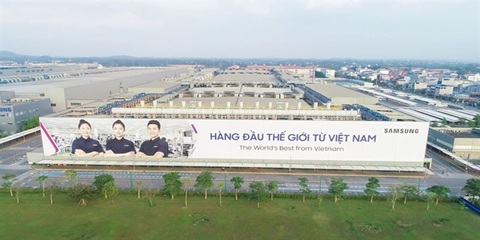
MOBILE PHONE EXPORTS RISE 20% TO $51.8 BILLION IN FIRST NINE MONTHS
Exports of mobile phones and components rose 20 per cent year-on-year to nearly US$51.8 billion in the first nine months of 2026, with China, the US and Republic of Korea accounting for more than half of the total. Shipments to the three markets reached a combined $26.18 billion, or 50.6 per cent of total exports of the product group during the period, according to data from the Vietnam Department of Customs under the Ministry of Finance.
INFRASTRUCTURE / CONSTRUCTION / LOGISTIC / PORT
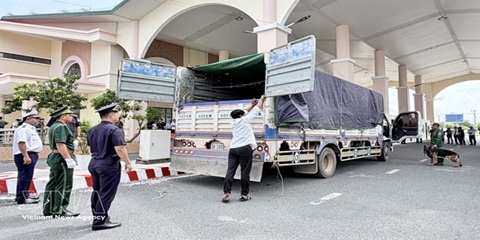
VIỆT NAM-CAMBODIA TRADE GATHERS PACE TOWARDS $20 BILLION TARGET
Trade between Việt Nam and Cambodia continues to grow, remaining a bright spot and a key pillar of bilateral cooperation as the two countries aim to raise two-way trade to US$20 billion in the coming years. After setting a record of more than $11.3 billion last year, bilateral trade reached about $8.7 billion in the first eight months of this year, up 8.3 per cent year on year.
VIETNAM ECONOMY INVESTMENT
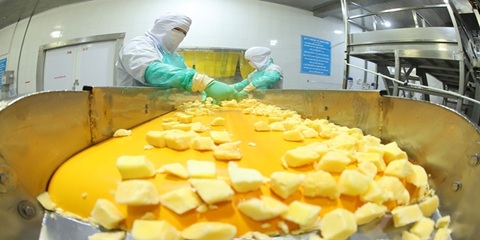
FRUIT AND VEGETABLE EXPORTS POISED TO HIT $10 BILLION IN 2026
Fruit and vegetable exports are on track to reach nearly US$10 billion in 2026, after rising 19.9 per cent year on year to nearly US$7.4 billion in the first nine months, driven by strong seasonal demand and abundant tropical fruit supplies. The Ministry of Agriculture and Environment said the growth reflected stronger international demand for fresh produce and processed agricultural products.
Events Sponsors






















