Want to be in the loop?
subscribe to
our notification
Business News
HO CHI MINH CITY URGES ON 32 LONG-DELAYED REAL ESTATE PROJECTS
At a recent meeting between Ho Chi Minh City People’s Committee and real estate developers, 32 long-delayed projects by 21 developers were discussed to bring about breakthroughs in development.
Projects from many giant developers were on the list, including Novaland Group, Him Lam Land, Quoc Cuong Gia Lai, SonKim Land, SaigonRes, and Hung Loc Phat which have been in a prolonged deadlock for various reasons.
Novaland had the largest number of projects under discussion by the central and local authorities, with 10 of the 32 projects bearing their logo. These projects include Co Giang apartment building in District 1, the officetel and apartment building at 151 Ben Van Don Street in District 4, a 30 hectare project in Binh Khanh commune of District 2, and seven other projects in Phu Nhuan district.
The Co Giang apartment building in District 1 was handed over land by Ho Chi Minh City People's Committee and the local Department of Construction has granted a construction licence for the project.
The officetel and apartment building at 151 Ben Van Don Street in District 4 has already been approved for land use right taxation.
In the 30ha project in Binh Khanh commune of District 2, legal procedures are being reviewed together with the larger project of Thu Thiem New Urban Area (where this project is located). At the same time, the local authorities are looking for solutions to help achieve a breakthrough at the project.
Seven other projects are being reviewed by local authorities.
Him Lam Land's Him Lam residential project in District 9 (Thu Duc City) and Saigonres' two projects were also on the agenda for having legal difficulties. Le Thanh Construction-Trading Co., Ltd. and Phu Long Real Estate Corporation have two projects each.
According to Le Hoang Chau, chairman of the Ho Chi Minh City Real Estate Association, the key problems of those projects are mainly related to the slow process of calculating land use rights. Because of this, developers cannot pay tax and be approved for construction and granting red books to buyers.
Representing the developers, Chau suggested Ho Chi Minh City People's Committee to issue guidelines to pave the way for projects which include public land. These projects have been delayed for a long time as they consist of small land plots under the management of the state and they cannot get the whole project cleared for construction.
“Local authorities should consider these projects case by case and submit their proposals to the committee to collect the public land plots and hand them over to developers,” Chau said.
Other solutions proposed included removing administrative procedures, setting out a priority list to grant red books to end-users as soon as possible.
He also suggested the committee to set up City Architect Consultant Bureau which can help solve prolonged delays.
The committee’s chairman Nguyen Thanh Phong assigned local authorities to submit a report on each project, talking with developers to ensure their projects can recommence at the soonest.
Source: VIR
Related News

BANKING / FINANCE / INSURANCE / TAX
REMITTANCES TO HCM CITY RISE NEARLY 40% IN Q3
Remittances to HCM City reached more than US$2.83 billion in the third quarter of this year, up 39.5 per cent from the previous quarter and 3.6 per cent year-on-year. This was the first quarter showing positive annual growth this year, helping narrow the decline in remittance inflows over the first nine months. According to the State Bank of Vietnam (SBV)’s Regional Branch 2, remittances transferred to HCM City through credit institutions and economic organisations totalled $2.835 billion in Q3, an increase of more than $802 million from the previous quarter.

TECHNOLOGY
TECH SECTOR GROWTH OPENS UP OPPORTUNITIES FOR VIỆT NAM TO GO GLOBAL
The growth of the electronics, semiconductor and high-tech sectors worldwide is opening up a variety of opportunities for Vietnamese enterprises to integrate more deeply into the global supply chain. However, to become suppliers for these corporations, domestic enterprises must meet rigorous standards regarding quality, technology, productivity and order fulfilment capabilities.
VIETNAM ECONOMY INVESTMENT
FOREIGN INVESTORS SEEKING A SYNCHRONISED MANUFACTURING ECOSYSTEM
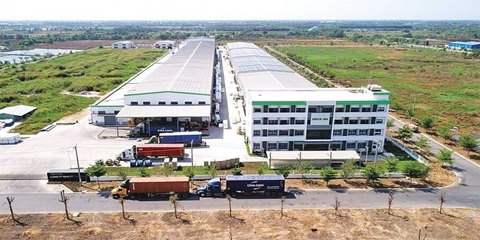
Instead of focusing only on land costs and incentives as usual, foreign investors are seeking a synchronised manufacturing ecosystem, from stable power supply and logistics to shared infrastructure and the convenience of completing residence procedures for experts to serve their long-term investment in the country.
MEMBER CORNER / PROMOTIONS
SENTRYSAFE FHW40200 – PROTECT YOUR VALUABLES, ENJOY PEACE OF MIND!
Looking for a reliable solution to protect your important documents, cash, and valuables from fire and water damage? Genuine SENTRYSAFE - Reliable protection for your valuables and peace of mind! Contact Sen Wai Vietnam for more information and personalized product recommendations.
PROPERTY / INDUSTRIAL ZONE
HCM CITY ATTRACTS US$5.7 BILLION INTO EXPORT PROCESSING AND INDUSTRIAL ZONES
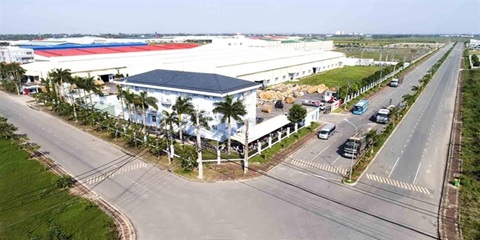
HCM City attracted US$5.7 billion in domestic and foreign investment into its export processing and industrial zones during the first nine months of 2026. The figure exceeded the city's full-year target by 31 per cent, highlighting strong momentum in high-quality industrial investment under Resolution No.10-NQ/TW. Total investment reached 131 per cent of the 2026 target of $4.25 billion and represented a 29 per cent increase compared with the same period in 2025, according to the city's Export Processing and Industrial Zones Authority (HEPZA).
INFRASTRUCTURE / CONSTRUCTION / LOGISTIC / PORT
DONG THAP PROVINCE STEPS UP INDUSTRIAL EXPANSION AND INFRASTRUCTURE CONNECTIVITY
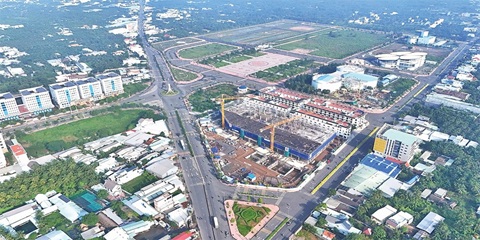
Accelerating public investment, strengthening inter-regional connectivity, and expanding industrial land are helping Dong Thap efficiently bolster competitiveness and drive economic growth. Following the 2025 merger of the former Dong Thap and Tien Giang provinces, the expanded Dong Thap province in the Mekong Delta faces mounting pressure to accelerate infrastructure development and strengthen connectivity among local economic zones, urban areas, industrial parks (IPs), and production centres.
Events Sponsors






















