Want to be in the loop?
subscribe to
our notification
Business News
HIGHER DEVELOPMENT STANDARDS TO PERPETUATE INVESTOR INTEREST
Despite a range of newly-established industrial zones being added to the market, many others have been delayed for a long time and are at the verge of being revoked due to the weakness of their developers.
Several industrial zones (IZs) across Vietnam stand under-occupied and under-utilised, such as Du Long and Phuoc Nam IZ located in Ninh Thuan province, Cai Lan IZ in Quang Ninh province and Trung Thanh IZ in Thai Nguyen province.
The lack of tenants in many of the country’s newer IZs is caused by slapdash development to capitalise on Vietnam’s much-improved global trade position, said Nguyen Tran Nam, chairman of the Vietnam Real Estate Association (VNREA). He explained that localities and developers heedlessly racing to construct IZs have often forgotten to carefully study their location or create unique advantages for tenants.
Coupled with the general trend of rising rents for industrial property, subpar IZs which are far removed from key transport infrastructure or were designed with weak internal infrastructure are drawing little attention from investors.
At the same time, authorities have been taking more stringent action regarding the many IZs that have been delayed for years due to weak developers or a bad location.
For instance, Chairman of Quang Nam People’s Committee Le Tri Thanh has warned Tam Anh 1 IZ invested by Chu Lai Float Glass JSC to have the project revoked if they cannot prove their capacity to continue implementation. The project was supposed to be put into operation in the first quarter of 2020 but to this day remains in the stage of land clearance and compensation. Unless material progress is reported soon, the chairman said, Tam Anh 1 IZ would be handed over to a new investor.
Also, at the end of 2020, Thai Binh province suggested reducing the area of two IZs which were unable to attract investors. The two 200-hectare projects are Phuc Khanh IZ and Song Tra IZ and would be reduced to 159 and 150 hectares, respectively.
According to Nguyen Tran Nam from the VNREA, some of these IZs are failing entirely due to the incapability of the developers. “Currently, industrial parks are doing brisk business due to the gold rush of foreign investors flocking to Vietnam. When supply is far below demand, there can be no other reasons for their failure,” Nam said.
He added that industrial property will see a great deal of business in Vietnam as the country had recently expanded its multi-national trade agreements with some of the largest deals in history. However, he added that many industrial zones are of a small scale with un-finished infrastructure, making it difficult to attract strategic enterprises and supportive manufacturers.
“To solve this problem the government must be very careful in choosing investors and developers who are capable of financing their projects, from land compensation to implementation,” Nam said.
Reviewing the land fund reserved for the construction of IZs to the end of 2020, the Ministry of Natural Resources and Environment said that industrial projects were implemented on 20,500ha less land area than planned.
Before that, to receive the relocation wave of manufacturing companies to Vietnam, in July 2020, the government had permitted to add more than 10,800ha of land to the IZ development fund.
According to the Ministry of Planning and Investment, at the end of 2020, there were 373 IZs set up nationwide with the total land area of 114,400ha, accounting for 56.9 per cent of the total allocated for industrial property development. These included 280 zones already in operation and 93 others under construction.
Source: VIR
Related News

BANKING / FINANCE / INSURANCE / TAX
REMITTANCES TO HCM CITY RISE NEARLY 40% IN Q3
Remittances to HCM City reached more than US$2.83 billion in the third quarter of this year, up 39.5 per cent from the previous quarter and 3.6 per cent year-on-year. This was the first quarter showing positive annual growth this year, helping narrow the decline in remittance inflows over the first nine months. According to the State Bank of Vietnam (SBV)’s Regional Branch 2, remittances transferred to HCM City through credit institutions and economic organisations totalled $2.835 billion in Q3, an increase of more than $802 million from the previous quarter.

TECHNOLOGY
TECH SECTOR GROWTH OPENS UP OPPORTUNITIES FOR VIỆT NAM TO GO GLOBAL
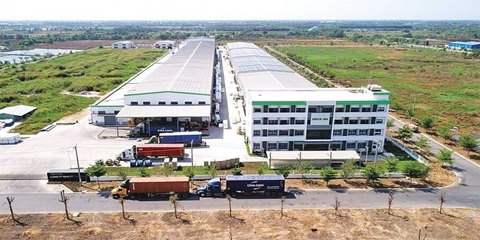
The growth of the electronics, semiconductor and high-tech sectors worldwide is opening up a variety of opportunities for Vietnamese enterprises to integrate more deeply into the global supply chain. However, to become suppliers for these corporations, domestic enterprises must meet rigorous standards regarding quality, technology, productivity and order fulfilment capabilities.
VIETNAM ECONOMY INVESTMENT
FOREIGN INVESTORS SEEKING A SYNCHRONISED MANUFACTURING ECOSYSTEM
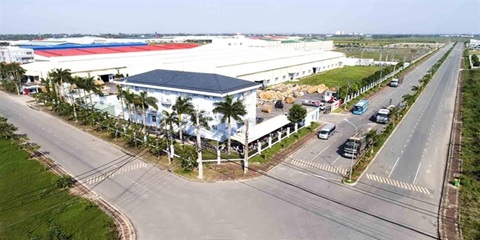
Instead of focusing only on land costs and incentives as usual, foreign investors are seeking a synchronised manufacturing ecosystem, from stable power supply and logistics to shared infrastructure and the convenience of completing residence procedures for experts to serve their long-term investment in the country.
MEMBER CORNER / PROMOTIONS
SENTRYSAFE FHW40200 – PROTECT YOUR VALUABLES, ENJOY PEACE OF MIND!
Looking for a reliable solution to protect your important documents, cash, and valuables from fire and water damage? Genuine SENTRYSAFE - Reliable protection for your valuables and peace of mind! Contact Sen Wai Vietnam for more information and personalized product recommendations.
PROPERTY / INDUSTRIAL ZONE
HCM CITY ATTRACTS US$5.7 BILLION INTO EXPORT PROCESSING AND INDUSTRIAL ZONES
HCM City attracted US$5.7 billion in domestic and foreign investment into its export processing and industrial zones during the first nine months of 2026. The figure exceeded the city's full-year target by 31 per cent, highlighting strong momentum in high-quality industrial investment under Resolution No.10-NQ/TW. Total investment reached 131 per cent of the 2026 target of $4.25 billion and represented a 29 per cent increase compared with the same period in 2025, according to the city's Export Processing and Industrial Zones Authority (HEPZA).
INFRASTRUCTURE / CONSTRUCTION / LOGISTIC / PORT
DONG THAP PROVINCE STEPS UP INDUSTRIAL EXPANSION AND INFRASTRUCTURE CONNECTIVITY
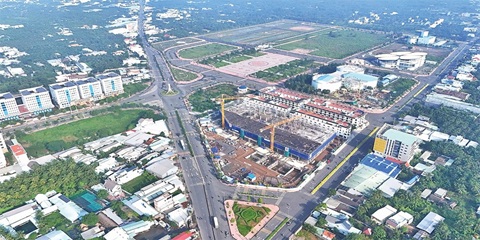
Accelerating public investment, strengthening inter-regional connectivity, and expanding industrial land are helping Dong Thap efficiently bolster competitiveness and drive economic growth. Following the 2025 merger of the former Dong Thap and Tien Giang provinces, the expanded Dong Thap province in the Mekong Delta faces mounting pressure to accelerate infrastructure development and strengthen connectivity among local economic zones, urban areas, industrial parks (IPs), and production centres.
Events Sponsors






















