Want to be in the loop?
subscribe to
our notification
Business News
HCMC TARGETS TRACEABILITY FOR 60% OF VEGETABLE FARMS BY 2030
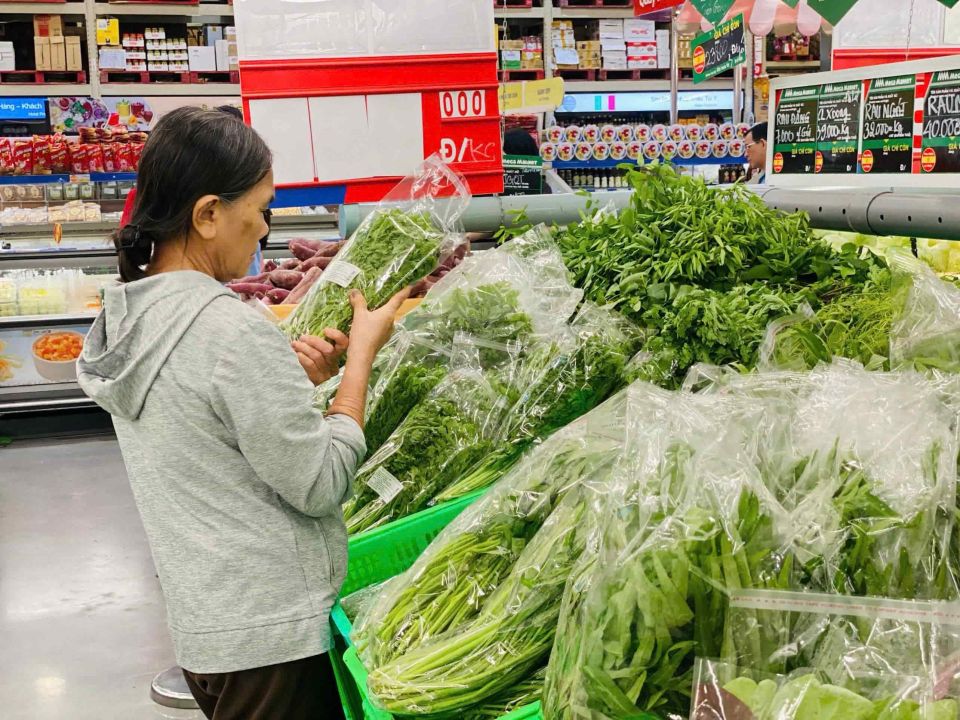
Vegetable products sold at a supermarket in HCMC - PHOTO: MINH THAO
HCMC – Ho Chi Minh City is accelerating its agricultural digitalization strategy by aiming to bring 60% of its vegetable cultivation area into monitored supply chains with planting area codes and clear product traceability by 2030.
Under a plan recently issued by the HCMC government on developing concentrated safe vegetable production zones through 2030, the city will maintain 5,500 hectares of vegetable farmland, equivalent to 35,000 hectares of cultivated area based on crop rotation, with expected output reaching around 880,000 tons annually.
A key focus of the plan is the transition toward high-tech agriculture, with 12,000 hectares of cultivation area expected to adopt advanced technologies. The city aims to raise average production value to VND800 million or VND1 billion per hectare per year, while increasing the share of high-tech vegetable products to 60-70% of the sector’s total value.
In terms of production planning, concentrated vegetable farming zones applying VietGAP, GlobalGAP and organic standards will continue to be developed in regions such as Cu Chi, Hoc Mon and Binh Chanh as well as areas in former Binh Duong and Ba Ria-Vung Tau provinces.
Alongside commonly cultivated vegetables, HCMC will prioritize preserving and developing local specialty products with strong economic value, including water spinach, water mimosa, taro and bamboo shoots. To achieve the target of ensuring all vegetable samples meet food safety standards and establishing 10-15 sustainable safe food supply chains, the city plans to implement a series of science, technology and management solutions.
Authorities will promote the application of the Internet of Things (IoT) and artificial intelligence (AI) in managing greenhouses and net houses, while supporting businesses and cooperatives in building quality management systems that comply with HACCP, ISO and GMP standards. At the same time, HCMC will strengthen linkages between farmers, food processors and modern distribution channels to reduce intermediary stages and tighten control over agricultural inputs.
On the market side, the city will support brand development and geographical indications associated with the OCOP program, while tightening the management and issuance of planting area codes to meet export requirements in major markets such as the U.S., Japan, the EU and China.
Source: The Saigon Times
Related News
BANKING / FINANCE / INSURANCE / TAX
REMITTANCES TO HCM CITY RISE NEARLY 40% IN Q3
Remittances to HCM City reached more than US$2.83 billion in the third quarter of this year, up 39.5 per cent from the previous quarter and 3.6 per cent year-on-year. This was the first quarter showing positive annual growth this year, helping narrow the decline in remittance inflows over the first nine months. According to the State Bank of Vietnam (SBV)’s Regional Branch 2, remittances transferred to HCM City through credit institutions and economic organisations totalled $2.835 billion in Q3, an increase of more than $802 million from the previous quarter.
TECHNOLOGY
TECH SECTOR GROWTH OPENS UP OPPORTUNITIES FOR VIỆT NAM TO GO GLOBAL
The growth of the electronics, semiconductor and high-tech sectors worldwide is opening up a variety of opportunities for Vietnamese enterprises to integrate more deeply into the global supply chain. However, to become suppliers for these corporations, domestic enterprises must meet rigorous standards regarding quality, technology, productivity and order fulfilment capabilities.
VIETNAM ECONOMY INVESTMENT
FOREIGN INVESTORS SEEKING A SYNCHRONISED MANUFACTURING ECOSYSTEM
Instead of focusing only on land costs and incentives as usual, foreign investors are seeking a synchronised manufacturing ecosystem, from stable power supply and logistics to shared infrastructure and the convenience of completing residence procedures for experts to serve their long-term investment in the country.
MEMBER CORNER / PROMOTIONS
SENTRYSAFE FHW40200 – PROTECT YOUR VALUABLES, ENJOY PEACE OF MIND!
Looking for a reliable solution to protect your important documents, cash, and valuables from fire and water damage? Genuine SENTRYSAFE - Reliable protection for your valuables and peace of mind! Contact Sen Wai Vietnam for more information and personalized product recommendations.
PROPERTY / INDUSTRIAL ZONE
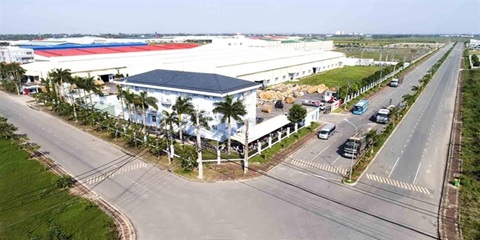
HCM CITY ATTRACTS US$5.7 BILLION INTO EXPORT PROCESSING AND INDUSTRIAL ZONES
HCM City attracted US$5.7 billion in domestic and foreign investment into its export processing and industrial zones during the first nine months of 2026. The figure exceeded the city's full-year target by 31 per cent, highlighting strong momentum in high-quality industrial investment under Resolution No.10-NQ/TW. Total investment reached 131 per cent of the 2026 target of $4.25 billion and represented a 29 per cent increase compared with the same period in 2025, according to the city's Export Processing and Industrial Zones Authority (HEPZA).
INFRASTRUCTURE / CONSTRUCTION / LOGISTIC / PORT
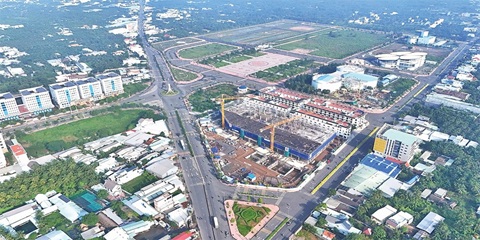
DONG THAP PROVINCE STEPS UP INDUSTRIAL EXPANSION AND INFRASTRUCTURE CONNECTIVITY
Accelerating public investment, strengthening inter-regional connectivity, and expanding industrial land are helping Dong Thap efficiently bolster competitiveness and drive economic growth. Following the 2025 merger of the former Dong Thap and Tien Giang provinces, the expanded Dong Thap province in the Mekong Delta faces mounting pressure to accelerate infrastructure development and strengthen connectivity among local economic zones, urban areas, industrial parks (IPs), and production centres.
Events Sponsors






















