Want to be in the loop?
subscribe to
our notification
Business News
HCMC GETS READY TO RESTART ECONOMY IN MAY POST-SOCIAL-DISTANCING
HCMC authorities plan to allow businesses and schools to restart in May with six stringent disease control measures in place.
City Party chief Nguyen Thien Nhan spelled out the six mandatory measures.
The first was wearing of masks in public places like schools, markets and public transport vehicles, for three to six months, a year or even longer.
People coming from pandemic-hit countries must be tested as soon as they arrive in Vietnam by air, rail or road and isolated for 14 days if they show symptoms.
When someone is diagnosed with coronavirus infection, those who came into contact with them (F1) and also those who interacted with F1 must be isolated for at least 14 days.
The minimum distance between people in public and workplaces and the scale of public events must be regulated.
People must wash their hands regularly and disinfect their personal vehicles periodically.
The city must set up a city-level rapid response team, a team in each of the 24 districts and 322 others at lower levels to monitor public compliance with disease prevention measures.
Compliance will be checked at traditional and wholesale markets, and those not wearing masks will be fined and kept out.
The city authorities are required to detect new cases as soon as possible, especially cases that do not display epidemiological factors, and implement measures to control the epidemic to prevent community transmissions.
The city must also quarantine and treat infected people in a timely manner, try and limit the number of deaths and continue with large-scale quarantining when needed, Nhan added.
City chairman Nguyen Thanh Phong said the city has kept the epidemic under control and proposed to the government it should end the social distancing campaign on April 23.
For 17 straight days the city has not diagnosed anyone with Covid-19. Only two people are under treatment now while 46 are being monitored at isolation facilities and 190 others at home.
Nhan said the city needs to have a suitable roadmap and loosen restrictions on travel and people’s contact with others and reopen schools.
"Without a vaccine, the infection cannot be eradicated, but Covid-19 can be controlled like we do other infectious diseases."
Companies and businesses must set codes of conduct and operation regulations to prevent the spread of infection, he said.
"Each person, office and business must accept that a number of policies will be different from before. The city needs to complete setting up these new policies in April so that they can be deployed in May."
Phong said the city would gradually resume some essential activities that are less risky. Small businesses would be allowed to reopen first on a trial basis and then larger ones, and a decision would be made based on the trajectory of the disease, he said.
The city is creating a set of safety guidelines for schools, he said.
"This also involves the responsibility of parents, schools and students as well as local authorities."
The city will also deploy public security forces in 24 districts to ensure that people practice social distancing until the government declares the end of the epidemic and that criminal activities are kept in check. Surveillance cameras and hotlines will be used to spot and fine people not wearing a mask.
After the social distancing campaign is lifted and travel and trade activities resume, the city will enter the third stage of the epidemic, which is going to be more challenging than the previous ones, according to the HCMC Center for Disease Control.
In this stage, new cases could occur any time and sometimes the source and epidemiological factors will not be known.
Anyone entering the country could bring the infection considering the virus has spread globally.
Last Wednesday the PM extended the social distancing campaign for a week until April 22 in Hanoi, HCMC and 10 other localities deemed to be at "high risk" of Covid-19 spread.
The 10 other localities are Lao Cai, Quang Ninh, Bac Ninh, and Ninh Binh provinces in the north; Da Nang City and Quang Nam, Binh Thuan, Khanh Hoa, and Ha Tinh provinces in the central region and Tay Ninh Province in the south.
Vietnam has gone for six days now without a new infection. Of its total of 268 cases so far, 52 are active while all the remaining patients have been discharged from hospitals.
Source: Vnexpress
Related News

CHARITY / EXHIBITION / OTHER EVENTS
INVESTMENT OPPORTUNITIES IN CA MAU PROVINCE: 96 PROJECTS AND 20 STRATEGIC PROJECTS
We are pleased to share with you information on investment projects currently seeking investors in Ca Mau Province. Should your esteemed company or association be interested, we kindly invite you to review the project information and complete the registration form via the links provided. The Ho Chi Minh City Investment and Trade Promotion Centre (ITPC) will consolidate the expressions of interest and facilitate connections with the leadership of Ca Mau Province at a meeting tentatively scheduled for 13 November 2026 in Ho Chi Minh City.

MEMBER CORNER / PROMOTIONS
BẰNG KIỀU LIVESHOW - A SYMPHONY OF LOVE UNDER THE GOLDEN GLOW
A masterclass in live music that takes the audience on a soulful journey through immortal love songs, guided by the peerless artistry and emotive storytelling of renowned singer Bằng Kiều. The highlight of the night is his seamless musical chemistry with special guest Triệu Hồng Ngọc, promising passionate and deeply resonant duets inside the magnificent Grand Ballroom.
INFRASTRUCTURE / CONSTRUCTION / LOGISTIC / PORT
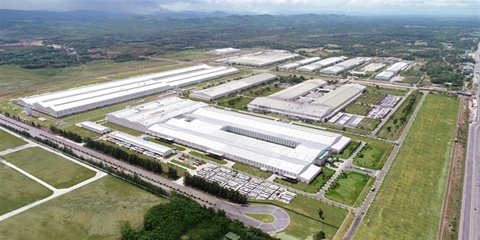
ĐÀ NẴNG GREEN-LIGHTS US$105 MILLION THAI DEVELOPMENT DEAL
The central city has approved an investment proposal by Thailand’s WHA Group to develop infrastructure for the 400ha WHA Đà Nẵng Industrial Park project on two communes of Thăng Bình and Đồng Dương, with an investment of more than VNĐ2.7 trillion (US$105 million). The city said it approved WHA Industrial Development International's status as an investor in the project, which is expected to take place between 2027 and 2034.
VIETNAM ECONOMY INVESTMENT
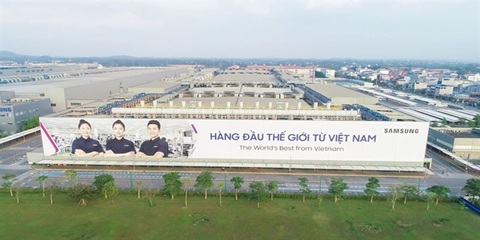
MOBILE PHONE EXPORTS RISE 20% TO $51.8 BILLION IN FIRST NINE MONTHS
Exports of mobile phones and components rose 20 per cent year-on-year to nearly US$51.8 billion in the first nine months of 2026, with China, the US and Republic of Korea accounting for more than half of the total. Shipments to the three markets reached a combined $26.18 billion, or 50.6 per cent of total exports of the product group during the period, according to data from the Vietnam Department of Customs under the Ministry of Finance.
INFRASTRUCTURE / CONSTRUCTION / LOGISTIC / PORT
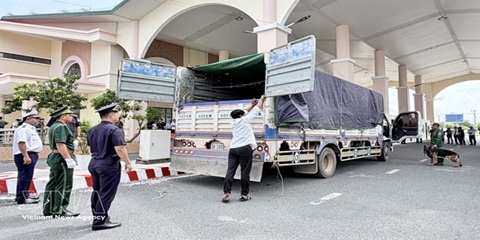
VIỆT NAM-CAMBODIA TRADE GATHERS PACE TOWARDS $20 BILLION TARGET
Trade between Việt Nam and Cambodia continues to grow, remaining a bright spot and a key pillar of bilateral cooperation as the two countries aim to raise two-way trade to US$20 billion in the coming years. After setting a record of more than $11.3 billion last year, bilateral trade reached about $8.7 billion in the first eight months of this year, up 8.3 per cent year on year.
VIETNAM ECONOMY INVESTMENT
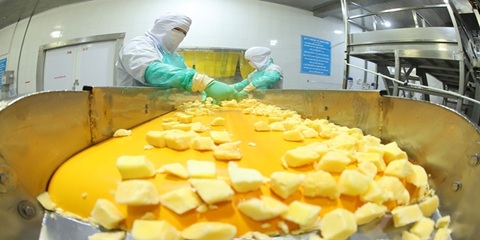
FRUIT AND VEGETABLE EXPORTS POISED TO HIT $10 BILLION IN 2026
Fruit and vegetable exports are on track to reach nearly US$10 billion in 2026, after rising 19.9 per cent year on year to nearly US$7.4 billion in the first nine months, driven by strong seasonal demand and abundant tropical fruit supplies. The Ministry of Agriculture and Environment said the growth reflected stronger international demand for fresh produce and processed agricultural products.
Events Sponsors






















