Want to be in the loop?
subscribe to
our notification
Business News
HCM CITY TO FOCUS ON ATTRACTING FDI INTO TECHNOLOGY-BASED SECTORS
HCM City will step up efforts to attract foreign direct investment by focusing on infrastructure and administrative procedures, with priority given to high-tech projects, a top city official has said.
Lê Thanh Liêm, standing vice chairman of the People’s Committee, said priority would be given to foreign investors in technology who have innovative and advanced management capabilities.
Việt Nam, especially HCM City, remains appealing to foreign investors who are continuing to make a beeline to the southern economic hub despite the Covid-19 pandemic.
Hứa Quốc Hưng, head of the HCM City Export Processing and Industrial Zones Authority (Hepza), said Việt Nam has done a good job in containing the outbreak, which has persuaded investors to move their production from abroad to the city, contributing to boosting production, creating more jobs, especially in the services, footwear, leather and textiles and garment industries.
The city is expected to receive a wave of investments post-pandemic when American, European and Japanese investors move their production lines to Việt Nam.
Experts said to welcome them, the city should set standards for foreign investors, saying priority should be given to high-tech projects.
He proposed establishing specialised industrial parks and attracting more investment in the production of materials, especially those used in major industrial sectors.
Besides, it is important to set up zones for support industries using the State budget to regulate land lease prices and attract investors to sectors targeted by the city and the central governments.
He also recommended existing industrial parks should attract intensive investment for sustainable development.
They should prioritise businesses with cutting-edge technologies and high added value while improving export capacity, he said.
HCM City also plans to offer competitive land rents and other incentives at industrial parks (IPs) and export processing zones (EPZs), and earmark more lands for building infrastructure to attract investment, according to Hưng.
The city would switch to newer models of IPs and EPZs to attract foreign investment, and ensure it has appropriate incentives during the transition process, he said.
There are 17 IPs and EPZs in the city, and they have an occupancy rate of 68 per cent, he said.
But only 120ha of land is available there in 2021 compared to 500-600ha a year in the last five years.
The city has sought the Government’s approval for a 380ha IP in Bình Chánh District, a specialised one prioritising innovative start-ups and producers and distributors in new industries.
The city is expected to have 23 EPZs and IZs with a total of 5,797.62ha in future.
HCM City received $3.81 billion worth of FDI in the first 11 months of the year, a drop of 30.5 year-on-year, according to the city Statistics Office. The city accounted for 14.4 per cent of the country’s total FDI in the period.
It took the lead with 865 FDI projects, followed by Hà Nội with 470 and Bắc Ninh Province with 136.
The Statistics Office attributed the drop in FDI to the fact that the pandemic is still unpredictable.
This year HCM City authorities have approved 3,401 cases of capital contribution and share purchase involving $2.83 billion, down 28.3 per cent and 13.6 per cent.
Experts have warned that foreign investors complain that traffic infrastructure and administrative procedures have not improved much.
Source: VNS
Related News

BANKING / FINANCE / INSURANCE / TAX
REMITTANCES TO HCM CITY RISE NEARLY 40% IN Q3
Remittances to HCM City reached more than US$2.83 billion in the third quarter of this year, up 39.5 per cent from the previous quarter and 3.6 per cent year-on-year. This was the first quarter showing positive annual growth this year, helping narrow the decline in remittance inflows over the first nine months. According to the State Bank of Vietnam (SBV)’s Regional Branch 2, remittances transferred to HCM City through credit institutions and economic organisations totalled $2.835 billion in Q3, an increase of more than $802 million from the previous quarter.
TECHNOLOGY
TECH SECTOR GROWTH OPENS UP OPPORTUNITIES FOR VIỆT NAM TO GO GLOBAL
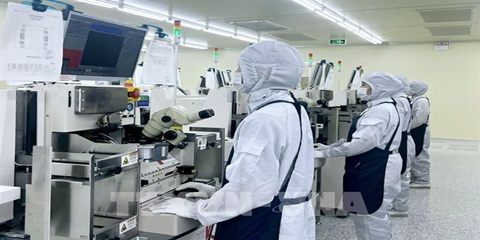
The growth of the electronics, semiconductor and high-tech sectors worldwide is opening up a variety of opportunities for Vietnamese enterprises to integrate more deeply into the global supply chain. However, to become suppliers for these corporations, domestic enterprises must meet rigorous standards regarding quality, technology, productivity and order fulfilment capabilities.
VIETNAM ECONOMY INVESTMENT
FOREIGN INVESTORS SEEKING A SYNCHRONISED MANUFACTURING ECOSYSTEM
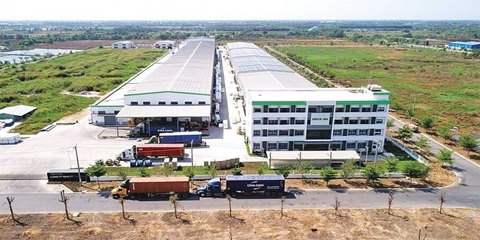
Instead of focusing only on land costs and incentives as usual, foreign investors are seeking a synchronised manufacturing ecosystem, from stable power supply and logistics to shared infrastructure and the convenience of completing residence procedures for experts to serve their long-term investment in the country.
MEMBER CORNER / PROMOTIONS
SENTRYSAFE FHW40200 – PROTECT YOUR VALUABLES, ENJOY PEACE OF MIND!
Looking for a reliable solution to protect your important documents, cash, and valuables from fire and water damage? Genuine SENTRYSAFE - Reliable protection for your valuables and peace of mind! Contact Sen Wai Vietnam for more information and personalized product recommendations.
PROPERTY / INDUSTRIAL ZONE
HCM CITY ATTRACTS US$5.7 BILLION INTO EXPORT PROCESSING AND INDUSTRIAL ZONES
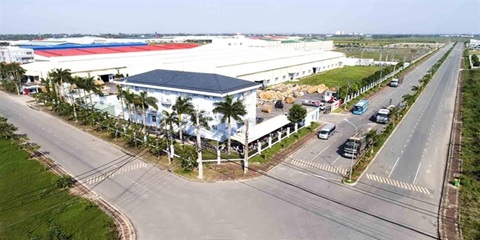
HCM City attracted US$5.7 billion in domestic and foreign investment into its export processing and industrial zones during the first nine months of 2026. The figure exceeded the city's full-year target by 31 per cent, highlighting strong momentum in high-quality industrial investment under Resolution No.10-NQ/TW. Total investment reached 131 per cent of the 2026 target of $4.25 billion and represented a 29 per cent increase compared with the same period in 2025, according to the city's Export Processing and Industrial Zones Authority (HEPZA).
INFRASTRUCTURE / CONSTRUCTION / LOGISTIC / PORT
DONG THAP PROVINCE STEPS UP INDUSTRIAL EXPANSION AND INFRASTRUCTURE CONNECTIVITY
Accelerating public investment, strengthening inter-regional connectivity, and expanding industrial land are helping Dong Thap efficiently bolster competitiveness and drive economic growth. Following the 2025 merger of the former Dong Thap and Tien Giang provinces, the expanded Dong Thap province in the Mekong Delta faces mounting pressure to accelerate infrastructure development and strengthen connectivity among local economic zones, urban areas, industrial parks (IPs), and production centres.
Events Sponsors






















