Want to be in the loop?
subscribe to
our notification
Business News
HCM CITY PROPOSES TO EASE HOUSE OWNERSHIP TO OVERSEAS VIETNAMESE
Hindrance on granting house ownership certificates to overseas Vietnamese should be removed to encourage the investment into the local real estate market, Ho Chi Minh City People’s Committee said.
Only 15 overseas Vietnamese and foreigners were granted house ownership certificates in Ho Chi Minh City during the past two years
Statistics of the municipal Department of Construction revealed that only 15 Viet kieu (overseas Vietnamese) and foreigners were granted house ownership certificates in the city during the past two years.
The figure was too modest compared to the number of overseas Vietnamese and foreigners who lived and worked in Ho Chi Minh City, the department said.
Experts said that this was caused by complicated procedures, as well as slow progress in identifying areas and projects, which cannot be sold to foreigners.
Only 15 overseas Vietnamese and foreigners were granted house ownership certificates in Ho Chi Minh City during the past two years.
Tran Hoa Phuong, Deputy Chairman of Ho Chi Minh City Overseas Vietnamese Committee, said that the most difficult procedure was still in identity confirmation.
The confirmation of identity for overseas Vietnamese was jointly conducted by the Vietnam embassies, the State Committee for Overseas Vietnamese Affairs and provincial/municipal judicial departments of foreign countries, Phuong said.
Phuong added that the money transfer from foreign countries to Vietnam also needed to be in compliance with the laws.
Expert, Nguyen Tri Hieu, said the regulations must be more open while the promotion of projects, which can be owned by foreigners, must be enhanced.
Deputy Chairman of the municipal People’s Committee, Tran Vinh Tuyen, in a document sent to relevant departments urged them to speed up the identification of areas which cannot be owned by foreigners, to ensure national security.
The Department of Construction must clarify the list of commercial housing projects, which cannot be sold to foreigners and make it public on the department’s e-portal, he said.
The legal framework for the Department of Natural Resources and Environment to grant ownership certificates to overseas Vietnamese and foreigners must also be improved, he added.
Statistics of the Ho Chi Minh City Real Estate Association revealed that around 22 per cent of remittances into the southern city flew into real estate.
Industry insiders believe that removing more barriers would create more interest in the local housing market.
Encouraged by fast economic growth, supportive government policies and low entry costs, housing prices in the country’s two largest cities, Ho Chi Minh City and Hanoi, have seen considerable growth in recent years.
Data from real estate firm Jones Lang LaSalle showed that in Ho Chi Minh City, new apartment prices grew 6.9 percent in the first quarter of 2017, and 7.3 percent in Hanoi.
It now forecasts 8 to 10 percent annual growth in residential value in the country’s major cities this year.
“On the back of its economic improvement and with a GDP target of 6.7 percent in 2017, market sentiment is very positive,” said Stephen Wyatt, the country head of JLL Vietnam.
“Foreign buyers typically like the new urban districts such as Ho Chi Minh City’s District 2 and District 7,” he said. “And many investors from mainland China are hoping to see these cities replicate the same growth as Beijing and Shanghai.”
There is also a trend to buy second homes in coastal areas such as Da Nang, he added.
Source: VIR
Related News

CHARITY / EXHIBITION / OTHER EVENTS
INVESTMENT OPPORTUNITIES IN CA MAU PROVINCE: 96 PROJECTS AND 20 STRATEGIC PROJECTS
We are pleased to share with you information on investment projects currently seeking investors in Ca Mau Province. Should your esteemed company or association be interested, we kindly invite you to review the project information and complete the registration form via the links provided. The Ho Chi Minh City Investment and Trade Promotion Centre (ITPC) will consolidate the expressions of interest and facilitate connections with the leadership of Ca Mau Province at a meeting tentatively scheduled for 13 November 2026 in Ho Chi Minh City.

MEMBER CORNER / PROMOTIONS
BẰNG KIỀU LIVESHOW - A SYMPHONY OF LOVE UNDER THE GOLDEN GLOW
A masterclass in live music that takes the audience on a soulful journey through immortal love songs, guided by the peerless artistry and emotive storytelling of renowned singer Bằng Kiều. The highlight of the night is his seamless musical chemistry with special guest Triệu Hồng Ngọc, promising passionate and deeply resonant duets inside the magnificent Grand Ballroom.
INFRASTRUCTURE / CONSTRUCTION / LOGISTIC / PORT
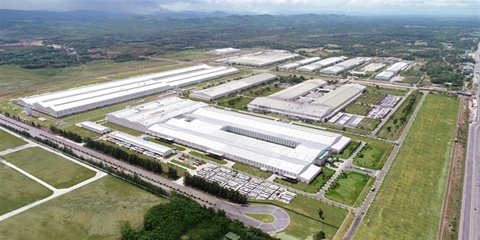
ĐÀ NẴNG GREEN-LIGHTS US$105 MILLION THAI DEVELOPMENT DEAL
The central city has approved an investment proposal by Thailand’s WHA Group to develop infrastructure for the 400ha WHA Đà Nẵng Industrial Park project on two communes of Thăng Bình and Đồng Dương, with an investment of more than VNĐ2.7 trillion (US$105 million). The city said it approved WHA Industrial Development International's status as an investor in the project, which is expected to take place between 2027 and 2034.
VIETNAM ECONOMY INVESTMENT
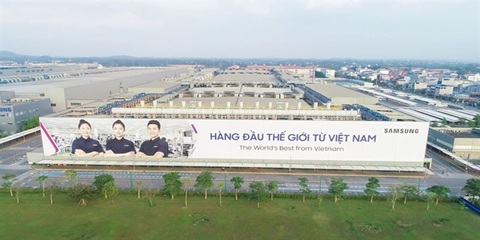
MOBILE PHONE EXPORTS RISE 20% TO $51.8 BILLION IN FIRST NINE MONTHS
Exports of mobile phones and components rose 20 per cent year-on-year to nearly US$51.8 billion in the first nine months of 2026, with China, the US and Republic of Korea accounting for more than half of the total. Shipments to the three markets reached a combined $26.18 billion, or 50.6 per cent of total exports of the product group during the period, according to data from the Vietnam Department of Customs under the Ministry of Finance.
INFRASTRUCTURE / CONSTRUCTION / LOGISTIC / PORT
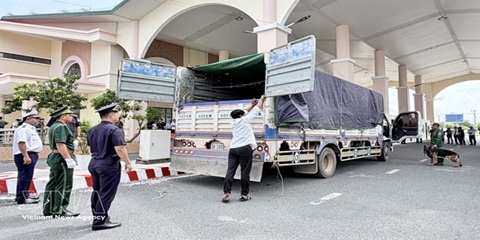
VIỆT NAM-CAMBODIA TRADE GATHERS PACE TOWARDS $20 BILLION TARGET
Trade between Việt Nam and Cambodia continues to grow, remaining a bright spot and a key pillar of bilateral cooperation as the two countries aim to raise two-way trade to US$20 billion in the coming years. After setting a record of more than $11.3 billion last year, bilateral trade reached about $8.7 billion in the first eight months of this year, up 8.3 per cent year on year.
VIETNAM ECONOMY INVESTMENT
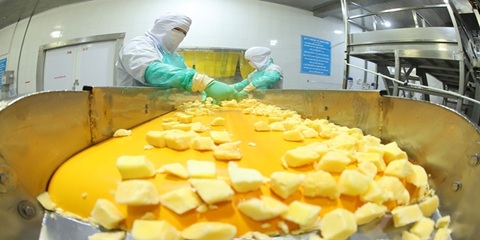
FRUIT AND VEGETABLE EXPORTS POISED TO HIT $10 BILLION IN 2026
Fruit and vegetable exports are on track to reach nearly US$10 billion in 2026, after rising 19.9 per cent year on year to nearly US$7.4 billion in the first nine months, driven by strong seasonal demand and abundant tropical fruit supplies. The Ministry of Agriculture and Environment said the growth reflected stronger international demand for fresh produce and processed agricultural products.
Events Sponsors






















