Want to be in the loop?
subscribe to
our notification
Business News
HCM CITY ISSUES QUARANTINE PROCEDURE FOR ARRIVALS IN FACE OF OMICRON
HCM City People’s Committee has just issued urgent guidelines for a five-step quarantine procedure for arriving passengers amid the emergence of the Omicron variant in Việt Nam.
According to the document, the self-quarantine area (including homes, hotels, offices, dormitories, guest houses) must meet the standards required by the Ministry of Health.
If the accommodation fails to meet these criteria, incoming passengers will have to go into centralised quarantine facilities.
The document also states that passengers arriving in Việt Nam at Tân Sơn Nhất International Airport must comply with a five-step procedure as follows:
Step 1: Register a ‘Personal QR code’, which can be created using the PC-COVID app or the HCM City COVID-19 Safety Portal at https://antoan-covid.tphcm.gov.vn.
It is advised that passengers should register for the code before boarding their plane to Việt Nam.
Step 2: Test for SARS-CoV-2 immediately upon arrival
Tân Sơn Nhất International Airport will set up a rapid-testing area for SARS-CoV-2, and coordinate with international airlines to instruct people to test for the coronavirus at the airport. The ‘Personal QR code’ will be used to provide information to the testing unit.
If the result is positive, the passenger will be taken for RT-PCR testing. HCM City Centre for Disease Control (CDC) will work with the 115 Emergency Centre to transport the patients to field hospitals for quarantine and treatment.
If the test result is negative, the airport and the airlines will guide the person to continue with the procedure to leave the airport for their residence.
Step 3: After arriving at the accommodation, passengers must strictly comply with the 5K regulations
The transporting vehicle must only include the driver and the passenger. In the case when there are people who come to pick up the passengers, they must not sit in the same vehicle (except for when the arrival is a foreigner who needs an interpreter).
The transporting vehicles for passengers must refrain from stopping and parking along the route. In case of emergency when the vehicle needs to pull up, safety measures for COVID-19 prevention and control must be taken.
Step 4: Monitor and declare health conditions on a daily basis
The place of accommodation must register the new arrivals’ ‘Personal QR Codes’ immediately upon arrival. Health declarations and confirmation of accommodation must be reported on a daily basis during the quarantine period.
New arrivals must also practise the 5K measures. If they experience symptoms of COVID-19 (cough, fever, difficulty in breathing, sore throat), they must immediately report to the local medical centre for treatment.
Regarding the period of quarantine:
For arriving passengers who are fully inoculated or recovered from COVID-19, they must monitor their own health status, refrain from coming into contact with other people, and must not leave their accommodation for three days after the arrival date.
For those who are not vaccinated or fully inoculated, they must stay in their accommodation for seven days after the arrival date.
For arriving passengers who are under 18 or over 65, pregnant women, or have underlying health conditions (but don’t have to be monitored and receive treatment from medical facilities), they can go into quarantine with their guardians/caretakers.
The guardians/caretakers must be fully vaccinated or recovered from COVID-19. They are also required to sign a statement on their voluntary quarantine after receiving an explanation on the risk of transmission.
They must also comply with the regulations on testing and pandemic prevention and control, the same as the new arrivals.
Step 5: Conduct RT-PCR testing during the quarantine period at the accommodation
If the test result returns negative for SARS-CoV-2, the person will have to continue monitoring their health status for 14 days after their arrival.
If the result returns positive, the testing unit must report to the HCM City CDC to transfer the sample to HCM City Pasteur Institute for genomic sequencing.
Local medical centres where the patients are in quarantine will also be notified to transfer the infected to Field Hospital No. 12 (for those with no to mild symptoms) or HCM City Hospital for Tropical Diseases (for those with signs of respiratory failure).
Việt Nam so far has reported 20 Omicron infections, all imported cases which were all immediately quarantined upon arrival and reportedly all asymptomatic or mild cases. Six of them, including five in HCM City and one in Hà Nội (Việt Nam's first confirmed Omicron patient) have been given the all-clear after testing negative for coronavirus.
Source: VNS
Related News

CHARITY / EXHIBITION / OTHER EVENTS
INVESTMENT OPPORTUNITIES IN CA MAU PROVINCE: 96 PROJECTS AND 20 STRATEGIC PROJECTS
We are pleased to share with you information on investment projects currently seeking investors in Ca Mau Province. Should your esteemed company or association be interested, we kindly invite you to review the project information and complete the registration form via the links provided. The Ho Chi Minh City Investment and Trade Promotion Centre (ITPC) will consolidate the expressions of interest and facilitate connections with the leadership of Ca Mau Province at a meeting tentatively scheduled for 13 November 2026 in Ho Chi Minh City.

MEMBER CORNER / PROMOTIONS
BẰNG KIỀU LIVESHOW - A SYMPHONY OF LOVE UNDER THE GOLDEN GLOW
A masterclass in live music that takes the audience on a soulful journey through immortal love songs, guided by the peerless artistry and emotive storytelling of renowned singer Bằng Kiều. The highlight of the night is his seamless musical chemistry with special guest Triệu Hồng Ngọc, promising passionate and deeply resonant duets inside the magnificent Grand Ballroom.
INFRASTRUCTURE / CONSTRUCTION / LOGISTIC / PORT
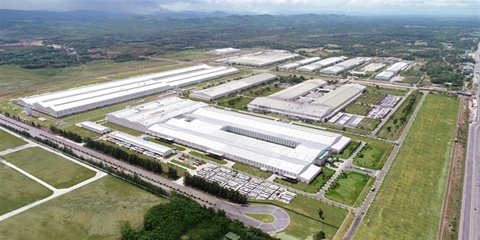
ĐÀ NẴNG GREEN-LIGHTS US$105 MILLION THAI DEVELOPMENT DEAL
The central city has approved an investment proposal by Thailand’s WHA Group to develop infrastructure for the 400ha WHA Đà Nẵng Industrial Park project on two communes of Thăng Bình and Đồng Dương, with an investment of more than VNĐ2.7 trillion (US$105 million). The city said it approved WHA Industrial Development International's status as an investor in the project, which is expected to take place between 2027 and 2034.
VIETNAM ECONOMY INVESTMENT
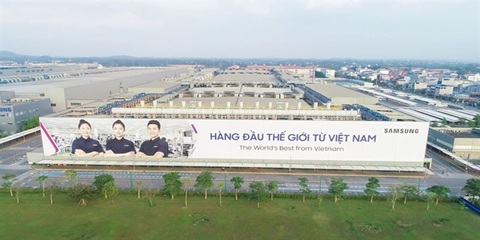
MOBILE PHONE EXPORTS RISE 20% TO $51.8 BILLION IN FIRST NINE MONTHS
Exports of mobile phones and components rose 20 per cent year-on-year to nearly US$51.8 billion in the first nine months of 2026, with China, the US and Republic of Korea accounting for more than half of the total. Shipments to the three markets reached a combined $26.18 billion, or 50.6 per cent of total exports of the product group during the period, according to data from the Vietnam Department of Customs under the Ministry of Finance.
INFRASTRUCTURE / CONSTRUCTION / LOGISTIC / PORT
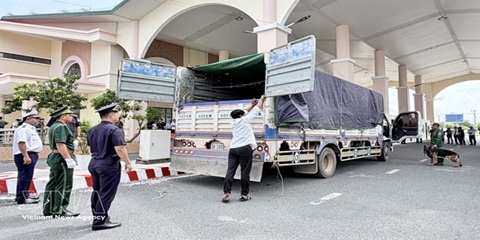
VIỆT NAM-CAMBODIA TRADE GATHERS PACE TOWARDS $20 BILLION TARGET
Trade between Việt Nam and Cambodia continues to grow, remaining a bright spot and a key pillar of bilateral cooperation as the two countries aim to raise two-way trade to US$20 billion in the coming years. After setting a record of more than $11.3 billion last year, bilateral trade reached about $8.7 billion in the first eight months of this year, up 8.3 per cent year on year.
VIETNAM ECONOMY INVESTMENT
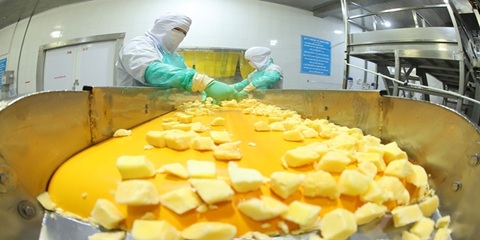
FRUIT AND VEGETABLE EXPORTS POISED TO HIT $10 BILLION IN 2026
Fruit and vegetable exports are on track to reach nearly US$10 billion in 2026, after rising 19.9 per cent year on year to nearly US$7.4 billion in the first nine months, driven by strong seasonal demand and abundant tropical fruit supplies. The Ministry of Agriculture and Environment said the growth reflected stronger international demand for fresh produce and processed agricultural products.
Events Sponsors






















