Want to be in the loop?
subscribe to
our notification
Business News
HCM CITY AIMS TO MATCH SINGAPORE IN STARTUP GROWTH, INNOVATION
HCM City aims to develop a startup and innovation environment on par with Singapore’s, so that investors no longer need to go abroad to launch their ventures, its Department of Science and Technology has said.
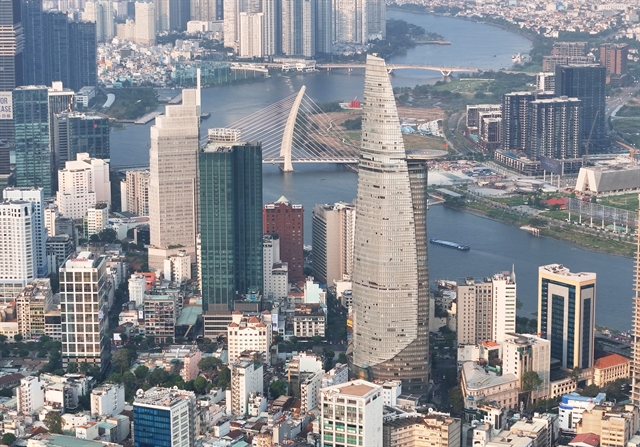
A view of HCM City, which aims to develop an investment and innovation startup environment comparable to Singapore’s. — VNA/VNA Photo
HCM CITY — HCM City aims to develop a startup and innovation environment on par with Singapore’s, so that investors no longer need to go abroad to launch their ventures, its Department of Science and Technology has said.
Lâm Đình Thắng, its director, said fostering entrepreneurship and innovation requires the coordinated involvement of four key groups: investors, academia, banks, and government.
From the government’s perspective, the city is making concerted efforts to improve its investment, business and startup climate.
The goal is to establish a startup and innovation ecosystem comparable to Singapore’s, and once that is achieved, investors will choose to invest and launch their ventures here instead of going to Singapore, he told the "Startup and Investment" talk show held in the city last week.
Thụy Mai, chairman of RainScales, board member of FreightVerify Inc., and a member of the GOOSE Investment Fund, said that beyond funding, building a sustainable business model is crucial to entrepreneurial success.
Startups must prepare scalable teams and establish links with global investor networks from their early stages, he said.
He said he has over 40 years of experience in managing businesses across various countries, including founding three technology companies and expanding operations in seven nations.
The most notable is DiCentral, a tech startup founded in Việt Nam that later expanded globally, he said.
“Việt Nam is facing a tremendous opportunity to rise on the global startup map, but to realise that, startups must change their mindset—not just solve domestic issues, but generate global value by leveraging trends such as AI, automation, and sustainability to lead the field.”
Associate Professor Dr Bùi Quang Hùng, vice president of the University of Economics HCM City, pointed out that entrepreneurship and investment do more than drive economic growth.
They also act as catalysts in strengthening the links between key players in the innovation ecosystem, he said.
In this context, universities, as public institutions, play a crucial role in bridging knowledge, policy and community, he added.
Recently, the 2025 Global Startup Ecosystem Index by StartupBlink ranked HCM City among the five most innovative startup ecosystems in Southeast Asia for the first time, and 110th globally - its highest ever position.
HCM City has moved up in the global rankings for four consecutive years, particularly in fintech, which has seen rapid growth.
It now ranks in the global top 30 for blockchain and second in Southeast Asia.
As Việt Nam’s most vibrant and dynamic startup hub, HCM City has made great strides in developing support infrastructure, and is increasingly recognised as an emerging destination in Asia’s startup landscape.
This success is driven by a dynamic entrepreneurial community, strong backing from city authorities, and an improving business environment.
Thắng said this year’s rise in the global rankings not only reflects the city’s sustained commitment to enhancing its startup ecosystem but also presents an opportunity to reassess and reposition itself within the global innovation landscape.
Looking ahead, the city plans to work with experts to develop a roadmap for strengthening its innovation-led startup ecosystem for the 2025–30 period.
This is a key preparatory step towards fulfilling the targets set out in Resolution 57-NQ/TW of the Politburo, which aims to position HCM City among the world’s 100 most dynamic startup ecosystems in the near future. — VNS
Source: VNS
Related News

BANKING / FINANCE / INSURANCE / TAX
REMITTANCES TO HCM CITY RISE NEARLY 40% IN Q3
Remittances to HCM City reached more than US$2.83 billion in the third quarter of this year, up 39.5 per cent from the previous quarter and 3.6 per cent year-on-year. This was the first quarter showing positive annual growth this year, helping narrow the decline in remittance inflows over the first nine months. According to the State Bank of Vietnam (SBV)’s Regional Branch 2, remittances transferred to HCM City through credit institutions and economic organisations totalled $2.835 billion in Q3, an increase of more than $802 million from the previous quarter.

TECHNOLOGY
TECH SECTOR GROWTH OPENS UP OPPORTUNITIES FOR VIỆT NAM TO GO GLOBAL
The growth of the electronics, semiconductor and high-tech sectors worldwide is opening up a variety of opportunities for Vietnamese enterprises to integrate more deeply into the global supply chain. However, to become suppliers for these corporations, domestic enterprises must meet rigorous standards regarding quality, technology, productivity and order fulfilment capabilities.

VIETNAM ECONOMY INVESTMENT
FOREIGN INVESTORS SEEKING A SYNCHRONISED MANUFACTURING ECOSYSTEM
Instead of focusing only on land costs and incentives as usual, foreign investors are seeking a synchronised manufacturing ecosystem, from stable power supply and logistics to shared infrastructure and the convenience of completing residence procedures for experts to serve their long-term investment in the country.

MEMBER CORNER / PROMOTIONS
SENTRYSAFE FHW40200 – PROTECT YOUR VALUABLES, ENJOY PEACE OF MIND!
Looking for a reliable solution to protect your important documents, cash, and valuables from fire and water damage? Genuine SENTRYSAFE - Reliable protection for your valuables and peace of mind! Contact Sen Wai Vietnam for more information and personalized product recommendations.

PROPERTY / INDUSTRIAL ZONE
HCM CITY ATTRACTS US$5.7 BILLION INTO EXPORT PROCESSING AND INDUSTRIAL ZONES
HCM City attracted US$5.7 billion in domestic and foreign investment into its export processing and industrial zones during the first nine months of 2026. The figure exceeded the city's full-year target by 31 per cent, highlighting strong momentum in high-quality industrial investment under Resolution No.10-NQ/TW. Total investment reached 131 per cent of the 2026 target of $4.25 billion and represented a 29 per cent increase compared with the same period in 2025, according to the city's Export Processing and Industrial Zones Authority (HEPZA).

INFRASTRUCTURE / CONSTRUCTION / LOGISTIC / PORT
DONG THAP PROVINCE STEPS UP INDUSTRIAL EXPANSION AND INFRASTRUCTURE CONNECTIVITY
Accelerating public investment, strengthening inter-regional connectivity, and expanding industrial land are helping Dong Thap efficiently bolster competitiveness and drive economic growth. Following the 2025 merger of the former Dong Thap and Tien Giang provinces, the expanded Dong Thap province in the Mekong Delta faces mounting pressure to accelerate infrastructure development and strengthen connectivity among local economic zones, urban areas, industrial parks (IPs), and production centres.
Events Sponsors






















