Want to be in the loop?
subscribe to
our notification
Business News
HANOI’S CONDO MARKET ATTRACTS FLOW OF FOREIGN CAPITAL
According to experts, Vietnam’s real estate market will continue to charm foreign investors thanks to high liquidity and alluring profit-making prospects. The latest report by CBRE, a leading real estate advisory firm, showed that a total of 8,800 new condos were put on sale in Hanoi’s realty market over the first quarter this year, 6,600 units of which have already found buyers.
CBRE also forecasted a 9-per cent jump in the volume of condos sold this year compared to 2017, reaching 28,000 units.
The plentiful supply aims to keep up with current burgeoning market demand, particularly from the soaring number of city dwellers, most of whom are young people.
In addition, young people in big cities like Hanoi often consider buying their own houses with their work savings or after getting married, leading to rising housing demand.
Favoured options are apartment units rather than landed properties due to both financial and comfort factors. That is because many developers are trying their best to provide prospective buyers with the utmost comfort by launching fully-furnished apartment building projects which feature a diverse range of accompanying facilities.
This helps young professionals relax amongst the hustle and bustle of the city with available convenient facilities. In addition, landed properties often carry a more costly price tag compared to apartment units, putting financial pressure on young buyers.
What is more, there is a surging growth in the middle-class population of Hanoi, which is set to continue rising amid the country’s rapid economic development. In combination with burgeoning demand for condos, buying prices and rental costs are expected to rise as well.
The value of property chiefly depends on key factors such as transport convenience, geographical position, and accompanying amenities. The investment opportunities at projects which satisfy these factors, therefore, are very appealing to foreign investors, particularly considering the record-high property prices in many foreign markets in the region.
Well aware of the trend, Terence Chan, director of Golden Emperor, one of Hong Kong’s leading outbound real estate firms, said that large-scale infrastructure projects and strong foreign capital flow are among the factors that have led to the booming economic development in Hanoi and stimulated the real estate market. In the condo sector, Gamuda Land with its award-winning condo project – the ZEN Residence (Gamuda Gardens in Hanoi’s Hoang Mai district) – holds distinct advantages complemented by a smart infrastructure system that connects with major roads.
“By virtue of a well-conceived development plan, the ZEN Residence will grow into a charming residential community, promising to deliver foreign investors a high leasing profit rate at about 7 per cent per annum,” Chan said.
Looking back on 2017 and the first half of 2018, Hanoi’s condo market has attracted many foreign investors after they have penetrated the Vietnamese market.
At present, foreign investors from Singapore, Hong Kong, Japan, and South Korea have reported a rapidly growing presence in the Vietnamese real estate market, whereas previously, their attention was mainly confined to simply seeking investment opportunities. Besides, their investments have also expanded outside of the commercial real estate sector into the private housing segment.
Source: VIR
Related News

CHARITY / EXHIBITION / OTHER EVENTS
INVESTMENT OPPORTUNITIES IN CA MAU PROVINCE: 96 PROJECTS AND 20 STRATEGIC PROJECTS
We are pleased to share with you information on investment projects currently seeking investors in Ca Mau Province. Should your esteemed company or association be interested, we kindly invite you to review the project information and complete the registration form via the links provided. The Ho Chi Minh City Investment and Trade Promotion Centre (ITPC) will consolidate the expressions of interest and facilitate connections with the leadership of Ca Mau Province at a meeting tentatively scheduled for 13 November 2026 in Ho Chi Minh City.

MEMBER CORNER / PROMOTIONS
BẰNG KIỀU LIVESHOW - A SYMPHONY OF LOVE UNDER THE GOLDEN GLOW
A masterclass in live music that takes the audience on a soulful journey through immortal love songs, guided by the peerless artistry and emotive storytelling of renowned singer Bằng Kiều. The highlight of the night is his seamless musical chemistry with special guest Triệu Hồng Ngọc, promising passionate and deeply resonant duets inside the magnificent Grand Ballroom.
INFRASTRUCTURE / CONSTRUCTION / LOGISTIC / PORT
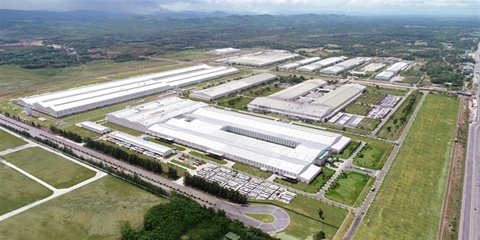
ĐÀ NẴNG GREEN-LIGHTS US$105 MILLION THAI DEVELOPMENT DEAL
The central city has approved an investment proposal by Thailand’s WHA Group to develop infrastructure for the 400ha WHA Đà Nẵng Industrial Park project on two communes of Thăng Bình and Đồng Dương, with an investment of more than VNĐ2.7 trillion (US$105 million). The city said it approved WHA Industrial Development International's status as an investor in the project, which is expected to take place between 2027 and 2034.
VIETNAM ECONOMY INVESTMENT
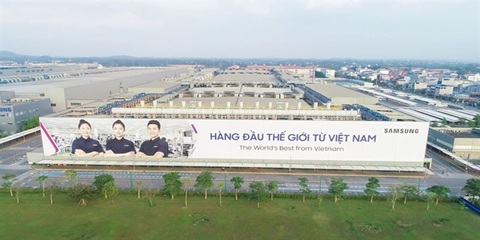
MOBILE PHONE EXPORTS RISE 20% TO $51.8 BILLION IN FIRST NINE MONTHS
Exports of mobile phones and components rose 20 per cent year-on-year to nearly US$51.8 billion in the first nine months of 2026, with China, the US and Republic of Korea accounting for more than half of the total. Shipments to the three markets reached a combined $26.18 billion, or 50.6 per cent of total exports of the product group during the period, according to data from the Vietnam Department of Customs under the Ministry of Finance.

INFRASTRUCTURE / CONSTRUCTION / LOGISTIC / PORT
VIỆT NAM-CAMBODIA TRADE GATHERS PACE TOWARDS $20 BILLION TARGET
Trade between Việt Nam and Cambodia continues to grow, remaining a bright spot and a key pillar of bilateral cooperation as the two countries aim to raise two-way trade to US$20 billion in the coming years. After setting a record of more than $11.3 billion last year, bilateral trade reached about $8.7 billion in the first eight months of this year, up 8.3 per cent year on year.
VIETNAM ECONOMY INVESTMENT
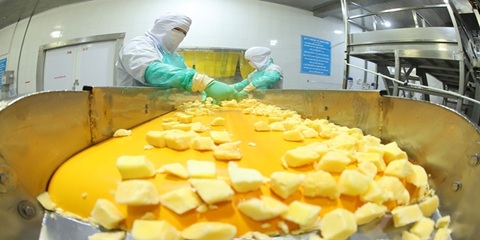
FRUIT AND VEGETABLE EXPORTS POISED TO HIT $10 BILLION IN 2026
Fruit and vegetable exports are on track to reach nearly US$10 billion in 2026, after rising 19.9 per cent year on year to nearly US$7.4 billion in the first nine months, driven by strong seasonal demand and abundant tropical fruit supplies. The Ministry of Agriculture and Environment said the growth reflected stronger international demand for fresh produce and processed agricultural products.
Events Sponsors






















