Want to be in the loop?
subscribe to
our notification
Business News
HÀ NỘI RELAXES SOCIAL DISTANCING, BUT BARS AND KARAOKE VENUES REMAIN CLOSED
The municipal authority of Hà Nội has agreed to further relax social distancing restrictions on public transport, including on planes, trains, buses and boats, after 25 days of no community transmission cases of COVID-19 reported in Việt Nam.
The instruction was included in an urgent document by Chairman of Hà Nội People's Committee Nguyễn Đức Chung sent to the city’s agencies.
Production, commercial and service establishments were allowed to reopen but had to strictly implement safety measures such as wearing masks and regularly disinfecting hands of both staff and customers.
Shops, shopping malls and supermarkets can open after 9am every day. Restaurants, food and vegetable markets, as well as petrol stations and drug stores can open earlier.
All acts of encroaching on pavements for sale of goods in any form are strictly prohibited.
However, bars and karaoke venues are not yet permitted to reopen until there is a new instruction from the Government, the document said.
Sporting activities are now allowed.
In the document, Chung asked departments, sectors, districts’ People’s Committees and relevant offices to continue measures controlling the COVID-19 pandemic.
The document noted that the city had entered a new phase of pandemic prevention and control while restarting economic development.
All levels, sectors, people and businesses needed to resume normal activities to gradually resume society.
It was necessary to resolutely prevent and control the disease sources from abroad.
All people entering the country must be quarantined for 14 days in centralised quarantine facilities, except in cases of investors, experts and skilled workers who would be given appropriate quarantine measures. This was the responsibility of their sponsors and local health workers to avoid the disease spreading in the community.
Medical checks for passengers at international and inland border gates must be strictly implemented.
Measures to respond to cases of relapse must also be ready.
The COVID-19 committees at all levels continued to maintain rapid response teams to promptly detect and isolate new cases.
Wearing masks in public areas is still required.
Health establishments must ensure pandemic prevention and control measures as per the instructions of the Health Ministry and be ready to receive COVID-19 patients.
Chung also asked People’s committees and relevant offices to remove difficulties for businesses and production establishments and introduce measures to restore domestic tourism, as well as plan to restart the international tourism market at an appropriate time.
The post-pandemic social security measures must be continued in accordance with the Government’s resolution 42/NQ-CP and the Prime Minister’s Decision 15/2020/QĐ-TTg on supporting people facing difficulties caused by the COVID-19 pandemic.
The social security measures must be implemented on the principle of equality, transparency and publicity.
Source: VNS
Related News

CHARITY / EXHIBITION / OTHER EVENTS
INVESTMENT OPPORTUNITIES IN CA MAU PROVINCE: 96 PROJECTS AND 20 STRATEGIC PROJECTS
We are pleased to share with you information on investment projects currently seeking investors in Ca Mau Province. Should your esteemed company or association be interested, we kindly invite you to review the project information and complete the registration form via the links provided. The Ho Chi Minh City Investment and Trade Promotion Centre (ITPC) will consolidate the expressions of interest and facilitate connections with the leadership of Ca Mau Province at a meeting tentatively scheduled for 13 November 2026 in Ho Chi Minh City.

MEMBER CORNER / PROMOTIONS
BẰNG KIỀU LIVESHOW - A SYMPHONY OF LOVE UNDER THE GOLDEN GLOW
A masterclass in live music that takes the audience on a soulful journey through immortal love songs, guided by the peerless artistry and emotive storytelling of renowned singer Bằng Kiều. The highlight of the night is his seamless musical chemistry with special guest Triệu Hồng Ngọc, promising passionate and deeply resonant duets inside the magnificent Grand Ballroom.
INFRASTRUCTURE / CONSTRUCTION / LOGISTIC / PORT
ĐÀ NẴNG GREEN-LIGHTS US$105 MILLION THAI DEVELOPMENT DEAL
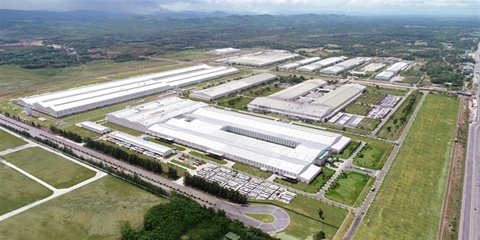
The central city has approved an investment proposal by Thailand’s WHA Group to develop infrastructure for the 400ha WHA Đà Nẵng Industrial Park project on two communes of Thăng Bình and Đồng Dương, with an investment of more than VNĐ2.7 trillion (US$105 million). The city said it approved WHA Industrial Development International's status as an investor in the project, which is expected to take place between 2027 and 2034.
VIETNAM ECONOMY INVESTMENT
MOBILE PHONE EXPORTS RISE 20% TO $51.8 BILLION IN FIRST NINE MONTHS
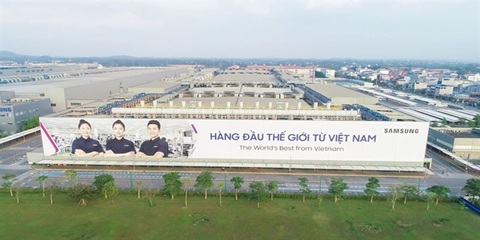
Exports of mobile phones and components rose 20 per cent year-on-year to nearly US$51.8 billion in the first nine months of 2026, with China, the US and Republic of Korea accounting for more than half of the total. Shipments to the three markets reached a combined $26.18 billion, or 50.6 per cent of total exports of the product group during the period, according to data from the Vietnam Department of Customs under the Ministry of Finance.
INFRASTRUCTURE / CONSTRUCTION / LOGISTIC / PORT
VIỆT NAM-CAMBODIA TRADE GATHERS PACE TOWARDS $20 BILLION TARGET
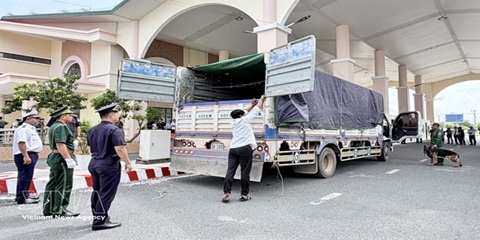
Trade between Việt Nam and Cambodia continues to grow, remaining a bright spot and a key pillar of bilateral cooperation as the two countries aim to raise two-way trade to US$20 billion in the coming years. After setting a record of more than $11.3 billion last year, bilateral trade reached about $8.7 billion in the first eight months of this year, up 8.3 per cent year on year.
VIETNAM ECONOMY INVESTMENT
FRUIT AND VEGETABLE EXPORTS POISED TO HIT $10 BILLION IN 2026
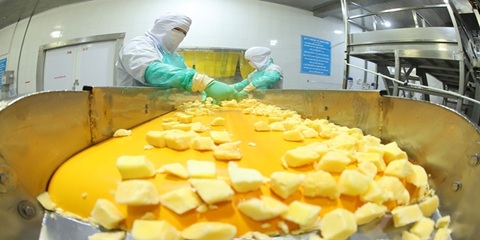
Fruit and vegetable exports are on track to reach nearly US$10 billion in 2026, after rising 19.9 per cent year on year to nearly US$7.4 billion in the first nine months, driven by strong seasonal demand and abundant tropical fruit supplies. The Ministry of Agriculture and Environment said the growth reflected stronger international demand for fresh produce and processed agricultural products.
Events Sponsors






















