Want to be in the loop?
subscribe to
our notification
Business News
FTAS FOSTER APPAREL AND FOOTWEAR EXPORTS
Vietnam's textile and garment industry have made great progress and managed to take advantage of free trade agreements (FTAs) such as Vietnam - Korea FTA, Vietnam-Eurasian Economic Union FTA (Vietnam - EAEU FTA), Comprehensive and Progressive Agreement for Trans-Pacific Partnership (CPTPP) and European-Vietnam FTA (EVFTA), according to a report released by the Ministry of Industry and Trade.
Vietnam's textile and garment export turnover reached US$28.1 billion in 2016 and soared to US$38.9 billion in 2019, an average growth of 9.55%.
In particular, the trade surplus increased rapidly, from US$11.1 billion in 2016 to US$16.9 billion in 2019. Vietnam's textile and garment export value ranked fourth in the world in 2016 after China, Bangladesh and India and ranked third in 2019 after surpassing India.
In 2020, due negative impacts of the Covid-19 pandemic from both supply and demand sides, the textile and garment industry was one of the most affected industries along with the tourism, aviation, and footwear industries. Given weakening consumer demand in the United States and Europe amid restriction measures to curb the pandemic, Vietnam’s textile and garment export was hard hit. The U.S. and European markets accounted for about 45% and 18% of Vietnam’s textile and garment export value, respectively.
The export value of the textile and garment industry declined 9.29% year on year to an estimated US$35.27 billion in 2020. This was indeed a good performance level given that the total world textile and apparel demand shrank by 25%.
In 2020, the leather and footwear industry also faced numerous difficulties because of Covid-19 pandemic impacts, especially when the pandemic developed complicatedly in major importers of Vietnamese footwear like the U.S. and the EU (accounting or 36% and 27% of Vietnam's footwear export value, respectively).
Vietnam's footwear and handbag exports valued US$22 billion in 2019 (up 12% over 2018) but declined to US$20 billion in 2020 due to the Covid-19 pandemic.
To restore and develop the textile and garment industry, in the coming time, the Ministry of Industry and Trade will carry out trade promotion and export support programs and diversify export markets, avoid risks and ensure rules of origin imposed by FTAs. It will support enterprises to find, connect and expand markets, give priority to tapping domestic consumption demand and avoid dependence on a single market.
The ministry will build and implement the garment and footwear industry development strategy to 2030, with a vision to 2035; work out the program on sustainable development of the garment and footwear industries in 2021-2030 in order to remove input supply bottlenecks, support human resource training, and apply Technology 4.0 to product design, and make the most effective use of new-generation FTAs such as EVFTA and CPTPP.
For the leather and footwear sector, the ministry will focus on solving internal difficulties, maintaining the export market in line with developing the domestic market and expanding sales channels to tap the domestic market. It will strengthen trade promotion programs for Vietnamese footwear products in the U.S. and EU markets and keep track of market developments to capture information in order to adjust production and business directions in a timely manner.
Source: VCCI
Related News
VIETNAM ECONOMY INVESTMENT
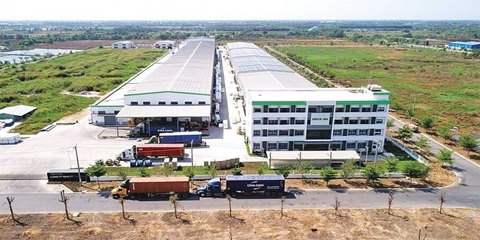
FOREIGN INVESTORS SEEKING A SYNCHRONISED MANUFACTURING ECOSYSTEM
Instead of focusing only on land costs and incentives as usual, foreign investors are seeking a synchronised manufacturing ecosystem, from stable power supply and logistics to shared infrastructure and the convenience of completing residence procedures for experts to serve their long-term investment in the country.
INFRASTRUCTURE / CONSTRUCTION / LOGISTIC / PORT
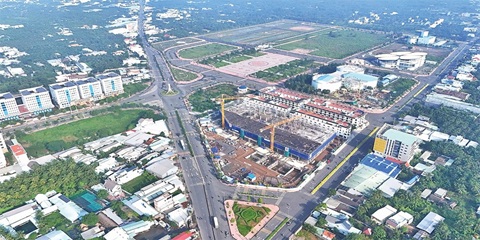
DONG THAP PROVINCE STEPS UP INDUSTRIAL EXPANSION AND INFRASTRUCTURE CONNECTIVITY
Accelerating public investment, strengthening inter-regional connectivity, and expanding industrial land are helping Dong Thap efficiently bolster competitiveness and drive economic growth. Following the 2025 merger of the former Dong Thap and Tien Giang provinces, the expanded Dong Thap province in the Mekong Delta faces mounting pressure to accelerate infrastructure development and strengthen connectivity among local economic zones, urban areas, industrial parks (IPs), and production centres.
PROPERTY / INDUSTRIAL ZONE
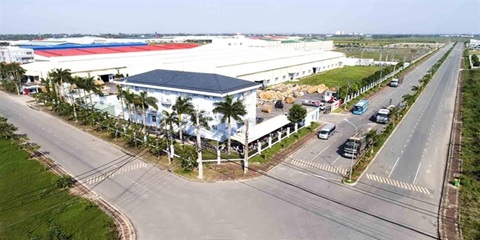
HCM CITY ATTRACTS US$5.7 BILLION INTO EXPORT PROCESSING AND INDUSTRIAL ZONES
HCM City attracted US$5.7 billion in domestic and foreign investment into its export processing and industrial zones during the first nine months of 2026. The figure exceeded the city's full-year target by 31 per cent, highlighting strong momentum in high-quality industrial investment under Resolution No.10-NQ/TW. Total investment reached 131 per cent of the 2026 target of $4.25 billion and represented a 29 per cent increase compared with the same period in 2025, according to the city's Export Processing and Industrial Zones Authority (HEPZA).

BANKING / FINANCE / INSURANCE / TAX
REMITTANCES TO HCM CITY RISE NEARLY 40% IN Q3
Remittances to HCM City reached more than US$2.83 billion in the third quarter of this year, up 39.5 per cent from the previous quarter and 3.6 per cent year-on-year. This was the first quarter showing positive annual growth this year, helping narrow the decline in remittance inflows over the first nine months. According to the State Bank of Vietnam (SBV)’s Regional Branch 2, remittances transferred to HCM City through credit institutions and economic organisations totalled $2.835 billion in Q3, an increase of more than $802 million from the previous quarter.
VIETNAM ECONOMY INVESTMENT
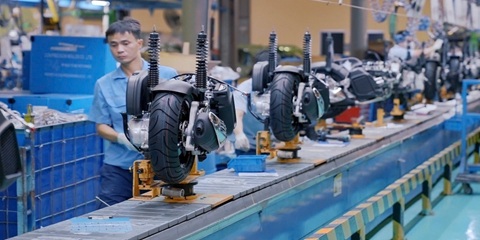
LOCALITIES REPORT BREAKTHROUGH RESULTS IN FDI IN FIRST NINE MONTHS
In Ho Chi Minh City, total registered capital reached $17.2 billion in the first nine months, up 4.2 times from the same period last year. The figure included more than $9.35 billion in newly registered capital and over $4.9 billion in additional capital for existing projects. Foreign investors also registered more than $2.9 billion through capital contributions and share purchases.

TECHNOLOGY
TECH SECTOR GROWTH OPENS UP OPPORTUNITIES FOR VIỆT NAM TO GO GLOBAL
The growth of the electronics, semiconductor and high-tech sectors worldwide is opening up a variety of opportunities for Vietnamese enterprises to integrate more deeply into the global supply chain. However, to become suppliers for these corporations, domestic enterprises must meet rigorous standards regarding quality, technology, productivity and order fulfilment capabilities.
Events Sponsors






















