Want to be in the loop?
subscribe to
our notification
Business News
FRESH POLICIES COME INTO FORCE SINCE APRIL
New regulations on tontine interest rates, registration fee prices of houses and land, and internal auditing shall take force from April, 2019.
Tontine interest rates
Under Decree 19/2019/ND-CP on tontine, since April 5, interest rate in interest-bearing tontine is agreed by the tontine members or offered by every tontine member but not exceeding 20% (Article 21).
Tontine member is a person aged at least 18 years of age. With regard to a person aged from fifteen to under eighteen, if the private property is real estate or movable property required for registration to participate in the tontine, he/she must obtain the consent of his legal representative (Article 5).
In addition, the tontine must be organized in compliance with basic rules of civil law in accordance with Article 3 of the Civil Code (Clause 1 Article 3).
Tontine holder is a person aged at least 18 years and must notify the local People’s Committee of commune in writing of organization of a tontine group which is at least VND 100 million (Articles 6 and 14).
The new Decree replaces Decree 144/2006/ND-CP, dated November 27, 2006.
New regulations on house, land, and car registration fees
Decree 20/2019/ND-CP shall come into effect from April 10 and replaces a number of articles of Decree 140/2016/ND-CP on registration fees.
Accordingly, since April 10, the registration fee calculation price for land is the land price in the land price list issued by the People's Committee of provinces and cities under central government in accordance with provisions of the law at the time of registration fee declaration.
Registration fee calculation price for a state-owned house sold to the lessee in accordance with provisions of the law on sale of the state-owned house, is the actual selling price stated on the invoice under the decision of the People's Committees of provinces and centrally-run cities.
The registration fee calculation price for cars and similar vehicles and motorcycles specified in Clause 6 and Clause 7, Article of the Decree (except for trailers or semi-trailers towed by cars) is the price in the Decision on registration fee calculation list issued by the Ministry of Finance.
The registration fee calculation price for used assets subject to registration fee payment (except for a used house, land and imported assets) is the remaining value calculated by the using time of these assets.
For used cars and motorcycles, which are not included in the registration fee calculation list, the registration fee calculation price is the remaining usage value of similar vehicle types specified in the registration fee calculation list.
Three types of enterprises subject to internal audits
Under the Government’s Decree 5/2019/NĐ-CP (Decree 5), three types of enterprises are subjected to internal audits including (1) those listed on the stock exchanges and public companies owned at least 50% by the State running their own subsidiaries. Other subjects to the new decree include government agencies, ministries, city and provincial people’s committees, public service government units and individuals and organizations involved in internal audits.
The decree aims to make sure companies’ internal control systems are well-established and run properly to help mitigate risks.
Those subject to the decree are required to complete necessary preparations within 24 months from April 1, 2019 to conduct an internal audit as outlined in Decree 5.
Source: VGP
Related News

BANKING / FINANCE / INSURANCE / TAX
REMITTANCES TO HCM CITY RISE NEARLY 40% IN Q3
Remittances to HCM City reached more than US$2.83 billion in the third quarter of this year, up 39.5 per cent from the previous quarter and 3.6 per cent year-on-year. This was the first quarter showing positive annual growth this year, helping narrow the decline in remittance inflows over the first nine months. According to the State Bank of Vietnam (SBV)’s Regional Branch 2, remittances transferred to HCM City through credit institutions and economic organisations totalled $2.835 billion in Q3, an increase of more than $802 million from the previous quarter.

TECHNOLOGY
TECH SECTOR GROWTH OPENS UP OPPORTUNITIES FOR VIỆT NAM TO GO GLOBAL
The growth of the electronics, semiconductor and high-tech sectors worldwide is opening up a variety of opportunities for Vietnamese enterprises to integrate more deeply into the global supply chain. However, to become suppliers for these corporations, domestic enterprises must meet rigorous standards regarding quality, technology, productivity and order fulfilment capabilities.
VIETNAM ECONOMY INVESTMENT
FOREIGN INVESTORS SEEKING A SYNCHRONISED MANUFACTURING ECOSYSTEM
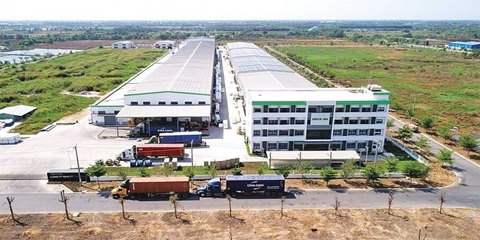
Instead of focusing only on land costs and incentives as usual, foreign investors are seeking a synchronised manufacturing ecosystem, from stable power supply and logistics to shared infrastructure and the convenience of completing residence procedures for experts to serve their long-term investment in the country.

MEMBER CORNER / PROMOTIONS
SENTRYSAFE FHW40200 – PROTECT YOUR VALUABLES, ENJOY PEACE OF MIND!
Looking for a reliable solution to protect your important documents, cash, and valuables from fire and water damage? Genuine SENTRYSAFE - Reliable protection for your valuables and peace of mind! Contact Sen Wai Vietnam for more information and personalized product recommendations.
PROPERTY / INDUSTRIAL ZONE
HCM CITY ATTRACTS US$5.7 BILLION INTO EXPORT PROCESSING AND INDUSTRIAL ZONES
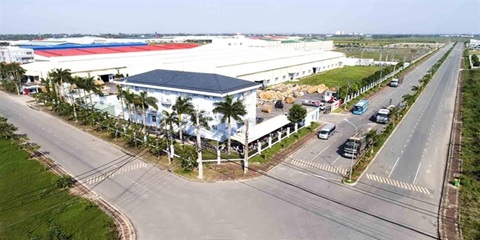
HCM City attracted US$5.7 billion in domestic and foreign investment into its export processing and industrial zones during the first nine months of 2026. The figure exceeded the city's full-year target by 31 per cent, highlighting strong momentum in high-quality industrial investment under Resolution No.10-NQ/TW. Total investment reached 131 per cent of the 2026 target of $4.25 billion and represented a 29 per cent increase compared with the same period in 2025, according to the city's Export Processing and Industrial Zones Authority (HEPZA).
INFRASTRUCTURE / CONSTRUCTION / LOGISTIC / PORT
DONG THAP PROVINCE STEPS UP INDUSTRIAL EXPANSION AND INFRASTRUCTURE CONNECTIVITY
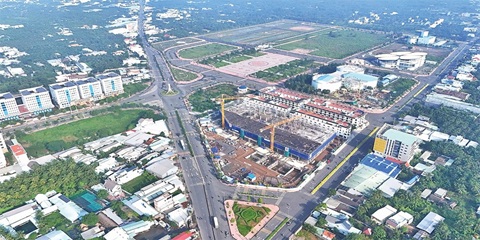
Accelerating public investment, strengthening inter-regional connectivity, and expanding industrial land are helping Dong Thap efficiently bolster competitiveness and drive economic growth. Following the 2025 merger of the former Dong Thap and Tien Giang provinces, the expanded Dong Thap province in the Mekong Delta faces mounting pressure to accelerate infrastructure development and strengthen connectivity among local economic zones, urban areas, industrial parks (IPs), and production centres.
Events Sponsors






















