Want to be in the loop?
subscribe to
our notification
Business News
FRESH POLICIES TAKE EFFECT IN MARCH
Cash payment bans
Under Decree No. 222/2013/ND-CP, dated December 31, 2013, on cash payment, organizations using funding from the State budget shall not be allowed to make payments in cash except for some cases as prescribed by the Ministry of Finance.
Meanwhile, organizations using State capital shall have to perform non-cash transactions except for some cases as regulated by the State Bank of Viet Nam.
Non-cash payments are also applicable to securities transactions on the Stock Exchange by organizations and individuals.
They do not make payments in cash for securities transactions registered and deposited at the Center of Securities Depository and not conducted through the transaction system of the Stock Exchange.
Enterprises shall not be allowed to conduct cash transactions in capital contribution; in purchase, sale and transfer of the capital parts contributed into enterprises. Enterprises which are not credit organizations shall not be allowed to use cash to borrow and lend to each other.
The Decree became effective on March 1, 2014
Exemption of duty on raw material gold
The Prime Minister on January 22, 2014 issued Decision 08/2014/QD-TTg on exemption of export and import duty on raw material gold.
Accordingly, the State Bank of Viet Nam raw material gold imported and exported by the State Bank of Viet Nam shall be exempted from export and import duty since March 15, 2014.
Incentives for poor households
The Ministry of Planning and Investment and the Ministry of Finance on February 12, 2014 issued a joint circular guiding capital allocation to realize the Program on supporting fast and sustainable poverty reduction for the poorest districts nationwide.
Under the joint circular, the State will share 50% of interest rates on the money that poor households borrow from commercial banks for afforestation.
A poor household would be able to borrow a maximum of VND 5 million (US$ 230) with zero percent interest rate in two years for purchase of farm or aquatic breeds.
In addition, poor households in border and far-reaching areas would receive 15 kilograms of rice per person per month when they are unable to feed themselves.
According to the joint circular which comes into force on March 28, 2014, each poor district would get VND 100 million (around US$ 4,700) to conduct trade promotion activities to introduce their products.
More preferential assistance for the handicapped
Joint Circular 42/2013/ TTLT-BGDDT-BLDTBXH-BTC on educational policy for the handicapped was co-issued by the Ministry of Education and Training, Ministry of Labor, Invalids and Social Affairs, and the Ministry of Finance.
Accordingly, people with disabilities who come from low-income families studying at educational establishments will receive a scholarship equivalent to 80% of the basic wage level in accordance with the Government’s regulations.
The disabled persons are financially supported by the State to purchase learning tools while studying at educational establishments.
They will also receive tuition fee exemption and assistance.
The disabled students may be exempted from some contents, subjects or activities and the evaluation of their studying results is conducted on the basis of encouraging their efforts.
Source: VGP
Related News
MEMBER CORNER / PROMOTIONS
KNIC EXCLUSIVE GATHERING & NETWORKING 2026: A NEW MEETING POINT FOR INDUSTRIAL INVESTMENT IN HANOI
On October 2, 2026, KN Industrial City (KNIC) will host KNIC Exclusive Gathering & Networking 2026 at the National Innovation Center (NIC) in Hanoi. Building on a series of business networking and investment promotion activities in Ho Chi Minh City and Dong Nai, the event marks a new opportunity for KNIC to connect with businesses, investors, and partners in Northern Vietnam.
MEMBER CORNER / PROMOTIONS
KNIC ENGAGES WITH GOVERNMENT AND HIGH-TECH BUSINESS COMMUNITIES IN CHINA
From Beijing to Shandong, KN Holdings and KN Industrial City are continuing to expand their engagement with government authorities, trade promotion organizations, and high-tech business communities in China. In Beijing, the delegation met with the Center for International Economic and Technological Cooperation under the Ministry of Industry and Information Technology (MIIT), exchanging perspectives on industrial and technology cooperation between the two markets.
VIETNAM ECONOMY INVESTMENT
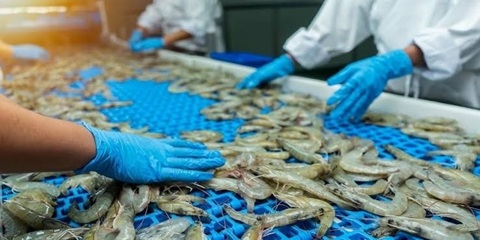
VIETNAM’S TRADE TOPS $825 BILLION BY MID-SEPTEMBER
Figures released on September 21 showed goods trade reached nearly $55 billion in the first 15 days of September alone, bringing cumulative turnover since the beginning of the year to more than $825 billion. The strong growth reflects robust trade flows, with demand for consumer goods and production inputs remaining high.

TECHNOLOGY
VIỆT NAM'S BUSINESSES MOVE TOWARDS AI AGENTS
Việt Nam’s AI landscape is entering a new phase as businesses move beyond generative AI (GenAI) tools designed to assist human users towards autonomous AI, agentic AI and AI agents that can take action with limited supervision, experts have said. The shift comes as Việt Nam seeks to accelerate science and technology, innovation and digital transformation under Politburo Resolution 57-NQ/TW, issued on December 22, 2024.
GARMENT / TEXTILE
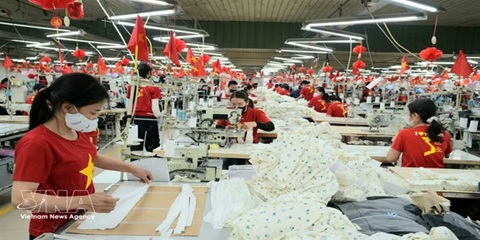
VIỆT NAM TARGETS $48 BILLION IN TEXTILE-GARMENT EXPORTS
Việt Nam’s textile and garment industry is facing both opportunities and challenges amid complex and unpredictable developments in the global market, prompting businesses to improve growth quality, optimise production costs and enhance adaptability in pursuit of an export turnover of about $48 billion this year. The target is considered an important milestone that requires concerted efforts from management agencies and the business community.
INFRASTRUCTURE / CONSTRUCTION / LOGISTIC / PORT
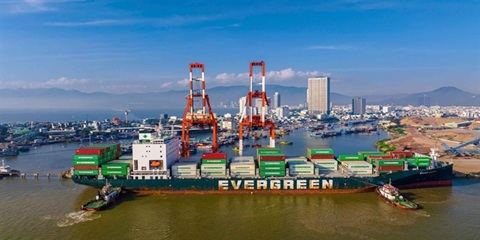
CUTTING LOGISTICS COSTS KEY TO BOOSTING EXPORTS
Reducing costs has become an increasingly urgent priority for import-export activities, particularly logistics costs, a conference in Hà Nội was told on Tuesday. According to Deputy General Director of the Ministry of Industry and Trade's Agency for Foreign Trade, Trần Thanh Hải, import-export activities has remained a bright spot for the economy in recent years, playing an important role and helping drive macroeconomic growth.
Events Sponsors






















