Want to be in the loop?
subscribe to
our notification
Business News
FOREIGN FUNDS FLOW INTO REAL ESTATE MARKET
Mergers and acquisitions (M&A) in the real estate sector have been very active in the past few years, despite positive macroeconomic impacts. According to real estate specialists, M&As will be still very vigorous in the coming time.
According to Savills Vietnam Co., Ltd, foreign investors are very interested in the property market in Vietnam. They will join the Vietnamese market mainly via M&As because this is the quickest and safest way to enter into this potential market. The Vietnamese market is expected to see a boom in M&A deals in 2017. In addition to traditional capital flows from Japanese investors, moves from South Korean, Singaporean and Hong Kong (China) investors are also exciting. Most recently, Keppel Land Co., Ltd., an enterprise that has gained a well-established foothold in the Vietnam property market with a wide range of real estate projects in Hanoi, Ho Chi Minh City, Dong Nai and Vung Tau, completed the full acquisition of about 16 per cent of stake in the Saigon Centre high-grade office and trade centre in Ho Chi Minh City from Southern Waterways Corporation (Sowatco). Japanese investors also demonstrated their financial strengths in M&As by taking over a number of important projects in Hanoi and Ho Chi Minh City.
Mr Masataka Sam Yoshida, Senior Managing Director of Recof Group - a Tokyo-based M&A consultancy, said that Japanese property investors were previously uninterested in the Vietnamese market but some have recently accepted risks to study and invest in this market. For example, Kajima, one of four largest investors and one of biggest overseas property developers of Japan, joined hands with Indochina Capital, an investor with many big property projects in Vietnam, to set up an US$1 billion equal investment joint venture in 10 years. At first, the venture will focus on residential, hotel and resort projects in major economic centres in Vietnam such as Hanoi, Ho Chi Minh City and Da Nang.
Mitsubishi, a world-renowned conglomerate of energy, metals, chemicals, machinery, food, finance and environment, also entered the Vietnamese real estate market by forming a joint venture cooperation with Bitexco Corporation to develop housing projects worth hundreds of millions of US dollars.
Mr Su Ngoc Khuong, Investment Director of Savills Vietnam, said the Vietnamese property market has generally witnessed a relatively successful period since 2015. In particular, Savills has successfully advised two big deals in Ho Chi Minh City in 2016. Meanwhile, domestic investors such as Vingroup, Sun Group, Van Thinh Phat and Novaland are showing their superior strengths against domestic peers by continuously buying up potential projects or land to develop professional products as good as foreign investors.
Mr Stephen Wyatt, General Director of Jones Lang Lasalle (JLL) Vietnam, said, property M&A developments will be more diverse and unpredictable in 2017. The greater interest of global investors may result in new M&A records on this market. Billions of US dollars is ready to flow into the property market of Vietnam in all segments but mid-market and affordable apartment, office, hotel and industrial park properties draw greater interests, he noted. Meanwhile, experienced market observers believe that M&A is a key to increase the liquidity of the property market and save money and time for investors.
Source: VCCI
Related News

CHARITY / EXHIBITION / OTHER EVENTS
INVESTMENT OPPORTUNITIES IN CA MAU PROVINCE: 96 PROJECTS AND 20 STRATEGIC PROJECTS
We are pleased to share with you information on investment projects currently seeking investors in Ca Mau Province. Should your esteemed company or association be interested, we kindly invite you to review the project information and complete the registration form via the links provided. The Ho Chi Minh City Investment and Trade Promotion Centre (ITPC) will consolidate the expressions of interest and facilitate connections with the leadership of Ca Mau Province at a meeting tentatively scheduled for 13 November 2026 in Ho Chi Minh City.

MEMBER CORNER / PROMOTIONS
BẰNG KIỀU LIVESHOW - A SYMPHONY OF LOVE UNDER THE GOLDEN GLOW
A masterclass in live music that takes the audience on a soulful journey through immortal love songs, guided by the peerless artistry and emotive storytelling of renowned singer Bằng Kiều. The highlight of the night is his seamless musical chemistry with special guest Triệu Hồng Ngọc, promising passionate and deeply resonant duets inside the magnificent Grand Ballroom.
INFRASTRUCTURE / CONSTRUCTION / LOGISTIC / PORT
ĐÀ NẴNG GREEN-LIGHTS US$105 MILLION THAI DEVELOPMENT DEAL
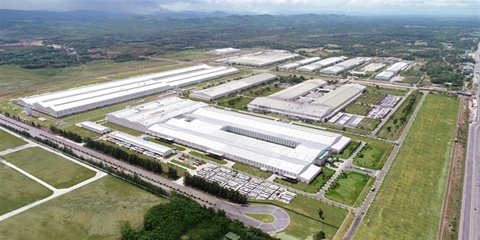
The central city has approved an investment proposal by Thailand’s WHA Group to develop infrastructure for the 400ha WHA Đà Nẵng Industrial Park project on two communes of Thăng Bình and Đồng Dương, with an investment of more than VNĐ2.7 trillion (US$105 million). The city said it approved WHA Industrial Development International's status as an investor in the project, which is expected to take place between 2027 and 2034.
VIETNAM ECONOMY INVESTMENT
MOBILE PHONE EXPORTS RISE 20% TO $51.8 BILLION IN FIRST NINE MONTHS
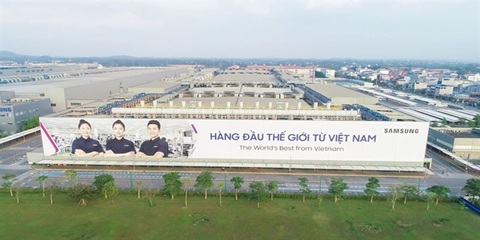
Exports of mobile phones and components rose 20 per cent year-on-year to nearly US$51.8 billion in the first nine months of 2026, with China, the US and Republic of Korea accounting for more than half of the total. Shipments to the three markets reached a combined $26.18 billion, or 50.6 per cent of total exports of the product group during the period, according to data from the Vietnam Department of Customs under the Ministry of Finance.

INFRASTRUCTURE / CONSTRUCTION / LOGISTIC / PORT
VIỆT NAM-CAMBODIA TRADE GATHERS PACE TOWARDS $20 BILLION TARGET
Trade between Việt Nam and Cambodia continues to grow, remaining a bright spot and a key pillar of bilateral cooperation as the two countries aim to raise two-way trade to US$20 billion in the coming years. After setting a record of more than $11.3 billion last year, bilateral trade reached about $8.7 billion in the first eight months of this year, up 8.3 per cent year on year.
VIETNAM ECONOMY INVESTMENT
FRUIT AND VEGETABLE EXPORTS POISED TO HIT $10 BILLION IN 2026
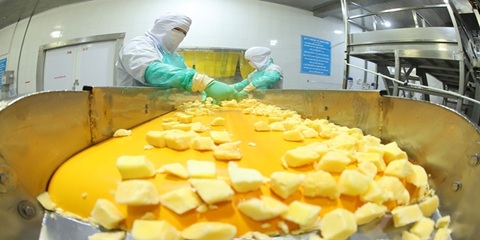
Fruit and vegetable exports are on track to reach nearly US$10 billion in 2026, after rising 19.9 per cent year on year to nearly US$7.4 billion in the first nine months, driven by strong seasonal demand and abundant tropical fruit supplies. The Ministry of Agriculture and Environment said the growth reflected stronger international demand for fresh produce and processed agricultural products.
Events Sponsors






















