Want to be in the loop?
subscribe to
our notification
Business News
FOREIGN DIRECT INVESTMENT CONTINUES TO POUR INTO VIỆT NAM
These figures underlined Việt Nam’s rising status as a top global investment destination, especially amid shifting global supply chains and increasing trends in capital relocation.
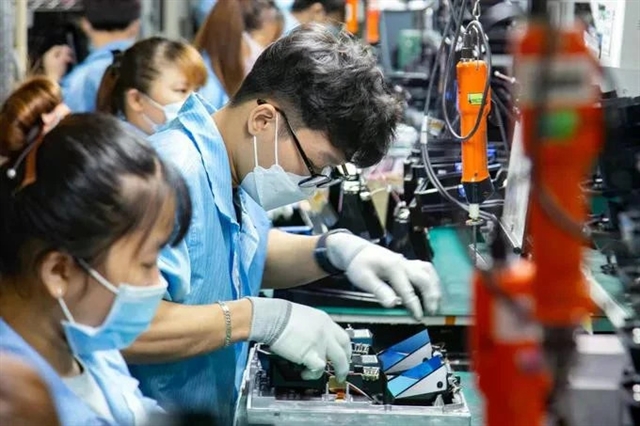
Assembling electronic equipment at Datalogic Việt Nam Factory. — Photo sggp.org.vn
HÀ NỘI — Việt Nam has attracted US$13.82 billion in newly registered foreign direct investment (FDI) since the beginning of this year, marking a nearly 40 per cent increase compared to the same period last year, while disbursed capital has reached $6.74 billion, the highest level recorded in the past five years, reflecting strong investor confidence in the Vietnamese market.
Surge in high-quality investment
These figures underlined Việt Nam’s rising status as a top global investment destination, especially amid shifting global supply chains and increasing trends in capital relocation.
Cấn Văn Lực, a member of the Prime Minister’s Policy Advisory Council, pointed out that Singapore currently leads among the 60 countries and territories investing in Việt Nam, with a total of $1.6 billion, accounting for 28.6 per cent of newly registered capital.
It is followed closely by China, which has invested $1.52 billion (27.1 per cent), and Japan, contributing $573.2 million (10.3 per cent). Within the disbursed capital structure, the manufacturing and processing industry dominated with 81 per cent, clearly aligning with Việt Nam’s policy to attract investment into high-tech and value-added sectors.
Beyond the increase in investment volume, economists are also noting a substantial improvement in the quality of FDI. Several large-scale, high-impact projects have been launched since the beginning of 2024.
Among these are Colourful Nylon Fiber synthetic yarn factory in Tây Ninh, estimated at $121 million; Tuyên Quang Erex biomass power plant from Japan, worth approximately $116 million; Sembcorp SIS Đình Vũ logistics centre (Phase 2) in Hải Phòng, valued at $49 million; and Mustang Battery factory in Long An, estimated at $47 million.
These projects span across diverse sectors, from renewable energy and supporting industries to logistics and advanced materials.
In HCM City, more than 13,600 FDI projects remain active, accounting for over 32 per cent of the country’s total and approximately 11.7 per cent of all registered FDI capital.
The city is aggressively planning 14 new industrial parks, covering a combined area of over 3,800 hectares, designed around modern, green, high-tech and specialised development models.
Gabor Fluit, Chairman of the European Chamber of Commerce in Việt Nam (EuroCham), noted that Việt Nam remains one of the most promising long-term markets in the region for European businesses. According to EuroCham’s latest Business Confidence Index (BCI), sentiment among European firms has improved, with the index rising to 46.3 points, reflecting a positive shift in investment outlook.
A separate survey by the Japan External Trade Organisation (JETRO) revealed that more than 56 per cent of Japanese companies operating in Việt Nam plan to expand their investments within the next one to two years. Stability in government policies and strong local support are key factors contributing to Japanese investors’ ongoing confidence in the Vietnamese market.
Foundation for investment expansion
Nguyễn Ngọc Hòa, Chairman of the HCM City Union of Business Associations (HUBA), emphasised that Việt Nam’s FDI achievements are closely tied to robust administrative reforms. These include simplifying investment procedures, embracing digital platforms to accelerate application processes and actively promoting favourable policies for investors.
Central and local authorities have worked together to implement reforms that build trust and reduce friction, laying a strong foundation for sustainable economic development.
Lực added that Việt Nam continues to strengthen its position through macroeconomic stability and institutional reforms. He highlighted the government’s four-pronged strategic approach, which includes digital transformation and science-technology development (Resolution 57), international economic integration (Resolution 59), institutional reform (Resolution 66) and private sector development (Resolution 68).
Of particular note, Resolution 68 aims to create more room for private enterprises by safeguarding three core rights: market access, resource access and property rights. These not only support domestic entrepreneurship but also help create a more attractive investment climate for foreign capital.
The Government is also pushing to resolve 2,200 delayed public investment projects, with a combined value nearing VNĐ5.9 quadrillion ($277.71 billion), equivalent to roughly 50 per cent of the country's GDP.
According to Lực, if these projects are successfully disbursed, GDP growth could receive an additional 1 to 2 percentage points. Faster public investment rollout not only boosts total demand but also generates a ripple effect that stimulates both the private sector's activities and FDI, particularly at a time when businesses are seeking stability in the aftermath of the COVID-19 pandemic and ongoing global trade tensions.
To maintain long-term competitiveness, Gabor Fluit stressed that Việt Nam must continue to simplify administrative procedures and invest in workforce development.
Streamlining investment licensing, customs clearance and other business processes would significantly improve operational efficiency. At the same time, strengthening training programmes for high-skilled labourers will be critical to meeting the growing demands of high-tech and modern manufacturing industries.
With solid macroeconomic fundamentals, an ambitious reform agenda and consistent support from administrations at all levels, Việt Nam is well-positioned to remain a strategic destination for global investment, particularly as supply chains continue to shift in the post-pandemic period. — VNS
Source: VNS
Related News
BANKING / FINANCE / INSURANCE / TAX
REMITTANCES TO HCM CITY RISE NEARLY 40% IN Q3
Remittances to HCM City reached more than US$2.83 billion in the third quarter of this year, up 39.5 per cent from the previous quarter and 3.6 per cent year-on-year. This was the first quarter showing positive annual growth this year, helping narrow the decline in remittance inflows over the first nine months. According to the State Bank of Vietnam (SBV)’s Regional Branch 2, remittances transferred to HCM City through credit institutions and economic organisations totalled $2.835 billion in Q3, an increase of more than $802 million from the previous quarter.
TECHNOLOGY
TECH SECTOR GROWTH OPENS UP OPPORTUNITIES FOR VIỆT NAM TO GO GLOBAL
The growth of the electronics, semiconductor and high-tech sectors worldwide is opening up a variety of opportunities for Vietnamese enterprises to integrate more deeply into the global supply chain. However, to become suppliers for these corporations, domestic enterprises must meet rigorous standards regarding quality, technology, productivity and order fulfilment capabilities.
VIETNAM ECONOMY INVESTMENT
FOREIGN INVESTORS SEEKING A SYNCHRONISED MANUFACTURING ECOSYSTEM
Instead of focusing only on land costs and incentives as usual, foreign investors are seeking a synchronised manufacturing ecosystem, from stable power supply and logistics to shared infrastructure and the convenience of completing residence procedures for experts to serve their long-term investment in the country.
MEMBER CORNER / PROMOTIONS
SENTRYSAFE FHW40200 – PROTECT YOUR VALUABLES, ENJOY PEACE OF MIND!
Looking for a reliable solution to protect your important documents, cash, and valuables from fire and water damage? Genuine SENTRYSAFE - Reliable protection for your valuables and peace of mind! Contact Sen Wai Vietnam for more information and personalized product recommendations.
PROPERTY / INDUSTRIAL ZONE
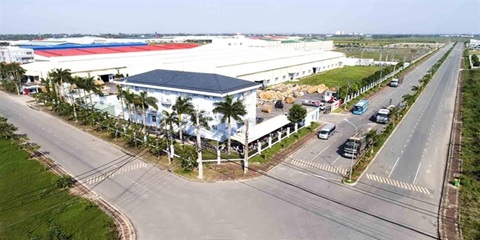
HCM CITY ATTRACTS US$5.7 BILLION INTO EXPORT PROCESSING AND INDUSTRIAL ZONES
HCM City attracted US$5.7 billion in domestic and foreign investment into its export processing and industrial zones during the first nine months of 2026. The figure exceeded the city's full-year target by 31 per cent, highlighting strong momentum in high-quality industrial investment under Resolution No.10-NQ/TW. Total investment reached 131 per cent of the 2026 target of $4.25 billion and represented a 29 per cent increase compared with the same period in 2025, according to the city's Export Processing and Industrial Zones Authority (HEPZA).
INFRASTRUCTURE / CONSTRUCTION / LOGISTIC / PORT
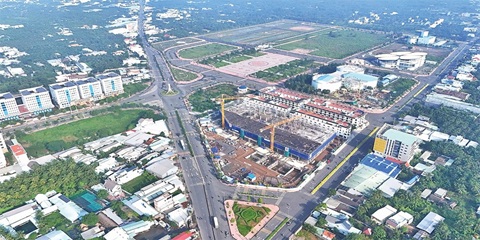
DONG THAP PROVINCE STEPS UP INDUSTRIAL EXPANSION AND INFRASTRUCTURE CONNECTIVITY
Accelerating public investment, strengthening inter-regional connectivity, and expanding industrial land are helping Dong Thap efficiently bolster competitiveness and drive economic growth. Following the 2025 merger of the former Dong Thap and Tien Giang provinces, the expanded Dong Thap province in the Mekong Delta faces mounting pressure to accelerate infrastructure development and strengthen connectivity among local economic zones, urban areas, industrial parks (IPs), and production centres.
Events Sponsors






















