Want to be in the loop?
subscribe to
our notification
Business News
FOCUSED IMPLEMENTATION OF PPP TRANSPORT PROJECTS
According to the Government's policy, expressways must be built in the investment form of public-private partnership (PPP) on the principle of harmonizing shared interests and risks among stakeholders, including the Government, investors and people.
Focused construction of dynamic highways
According to the Ministry of Transport, in the period 2011-2020, the country put into operation 1,163 km of expressways, expected to have 3,171 km more by 2025 and 5,000 km more by 2030.
On May 21, Prime Minister Pham Minh Chinh chaired a meeting on highway construction in 2021-2025 and to 2030, stressing that investors must pool investment resources rather than State funds, and speed up public-private partnership (PPP) forms.
He requested that new expressway construction must match the regional landscape but the focus needs to be given to dynamic regions. He asked the transport sector to determine goals on expressway construction to be achieved by 2025 and 2030, with a focus on the North-South expressway in the east, the South region, the Central Highlands and roads in Hanoi and Ho Chi Minh City.
PM Chinh unequivocally stated that wherever projects are, localities must take care of the budget and be responsible for site clearance.
Accelerating key PPP projects
At present, six out of 11 Eastern North-South expressway component projects (2017-2020) are under construction (Cao Bo - Mai Son, Mai Son - National Highway 45, Cam Lo - La Son, Vinh Hao - Phan Thiet, Phan Thiet - Dau Giay, My Thuan 2). The remaining five projects are being prepared for implementation as requested by the Government, with three to be launched in the PPP form in the second quarter of 2021.
On May 6, Nha Trang - Cam Lam section of the North-South Expressway, the first to be invested in the PPP form signed between the Ministry of Transport with Son Hai Group Co., Ltd and Nha Trang - Cam Lam Expressway Construction Investment Co., Ltd. The section is 50 km in length, costing a total of VND5,524 billion. The fund will come from the investor (VND2,556 billion, the investor's equity accounts for 20%) and VND2,967 billion from the government. The construction period will last until 2023 and the payback period is 16 years and 4 months.
Cam Lam - Vinh Hao section was handed over by Ninh Thuan province for 99% of site clearance. The BOT project, 78.5km in length, with 61.5 km in Ninh Thuan with six lanes, costs VND8,925.48 billion of investment capital, of which VND3,786.20 billion from the investor and VND5,139.28 billion from the government, including VND4,199.16 billion from viability gap funding (VGF) and VND940.12 billion from competent governmental agencies.
Dien Chau - Bai Vot section cost over VND11,157 billion for construction in the form of PPP investment. Started in late May 2021, the project has a total length of more than 49 km. The highway also has a 1.1 km tunnel and big bridges. Of the investment fund, the government will fund VND6,067 billion and mobilized resources will make up more than VND5,090 billion.
Source: VCCI
Related News

BANKING / FINANCE / INSURANCE / TAX
REMITTANCES TO HCM CITY RISE NEARLY 40% IN Q3
Remittances to HCM City reached more than US$2.83 billion in the third quarter of this year, up 39.5 per cent from the previous quarter and 3.6 per cent year-on-year. This was the first quarter showing positive annual growth this year, helping narrow the decline in remittance inflows over the first nine months. According to the State Bank of Vietnam (SBV)’s Regional Branch 2, remittances transferred to HCM City through credit institutions and economic organisations totalled $2.835 billion in Q3, an increase of more than $802 million from the previous quarter.
TECHNOLOGY
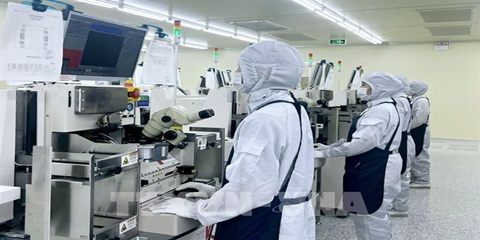
TECH SECTOR GROWTH OPENS UP OPPORTUNITIES FOR VIỆT NAM TO GO GLOBAL
The growth of the electronics, semiconductor and high-tech sectors worldwide is opening up a variety of opportunities for Vietnamese enterprises to integrate more deeply into the global supply chain. However, to become suppliers for these corporations, domestic enterprises must meet rigorous standards regarding quality, technology, productivity and order fulfilment capabilities.
VIETNAM ECONOMY INVESTMENT
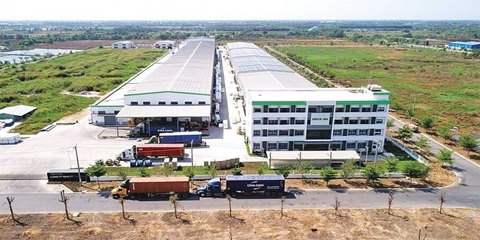
FOREIGN INVESTORS SEEKING A SYNCHRONISED MANUFACTURING ECOSYSTEM
Instead of focusing only on land costs and incentives as usual, foreign investors are seeking a synchronised manufacturing ecosystem, from stable power supply and logistics to shared infrastructure and the convenience of completing residence procedures for experts to serve their long-term investment in the country.
MEMBER CORNER / PROMOTIONS
SENTRYSAFE FHW40200 – PROTECT YOUR VALUABLES, ENJOY PEACE OF MIND!
Looking for a reliable solution to protect your important documents, cash, and valuables from fire and water damage? Genuine SENTRYSAFE - Reliable protection for your valuables and peace of mind! Contact Sen Wai Vietnam for more information and personalized product recommendations.
PROPERTY / INDUSTRIAL ZONE
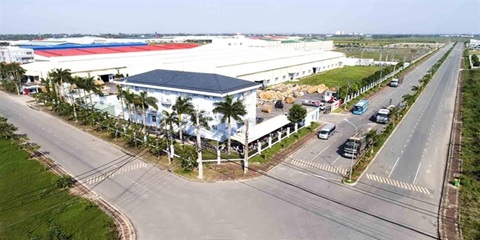
HCM CITY ATTRACTS US$5.7 BILLION INTO EXPORT PROCESSING AND INDUSTRIAL ZONES
HCM City attracted US$5.7 billion in domestic and foreign investment into its export processing and industrial zones during the first nine months of 2026. The figure exceeded the city's full-year target by 31 per cent, highlighting strong momentum in high-quality industrial investment under Resolution No.10-NQ/TW. Total investment reached 131 per cent of the 2026 target of $4.25 billion and represented a 29 per cent increase compared with the same period in 2025, according to the city's Export Processing and Industrial Zones Authority (HEPZA).
INFRASTRUCTURE / CONSTRUCTION / LOGISTIC / PORT
DONG THAP PROVINCE STEPS UP INDUSTRIAL EXPANSION AND INFRASTRUCTURE CONNECTIVITY
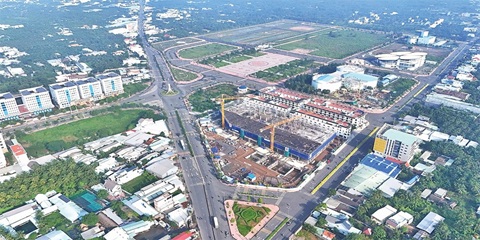
Accelerating public investment, strengthening inter-regional connectivity, and expanding industrial land are helping Dong Thap efficiently bolster competitiveness and drive economic growth. Following the 2025 merger of the former Dong Thap and Tien Giang provinces, the expanded Dong Thap province in the Mekong Delta faces mounting pressure to accelerate infrastructure development and strengthen connectivity among local economic zones, urban areas, industrial parks (IPs), and production centres.
Events Sponsors






















