Want to be in the loop?
subscribe to
our notification
Business News
EXPORT TURNOVER OF TIMBER AND WOODEN PRODUCTS REMAINS ON STRONG FOOTING
The recovery in global demand will fuel the robust growth of timber and wooden exports in 2025.
Vietnam targets raising the export value of wood and timber products to $18 billion in 2025 from $16.25 billion last year, according to the Ministry of Agriculture and Rural Development (MARD). The target was set with markets like the US, China, Japan, South Korea, and the European Union all recovering, thereby boosting purchasing power.
The production and export of the timber and wooden product sector has already been bustling since the turn of the year, according to some company leaders.
Tran Lam Son, CEO of Thien Minh Furniture Company, said orders, mainly from the EU and the US, have increased massively since the middle of the last quarter.
“Customers require accelerated delivery to meet the increased demand during the spring-summer shopping season of 2025, so manufacturers like our company must continuously work overtime to keep up with the schedule,” Son said.
“Transport often accounts for a large part of the production cost, thus, to maximise costs and efficiency, the Handicraft and Wood Industry Association of Ho Chi Minh City has recently gathered export enterprises, counted output from each market, negotiated freight rates with shipping lines to get the best prices, and increased competitiveness for Vietnamese wooden furniture and interiors,” Son continued. “If there are no unexpected fluctuations, the wooden furniture and interiors industry can continue to achieve export growth of 20 per cent, and many enterprises have even set a growth target of 20-30 per cent.”
Huynh Thanh Van, chairman of the board at S Furniture Company, believes that setting the industry’s export turnover goal of over $18 billion for this year is feasible.
“Currently, the order signals of enterprises have also shown to be much more positive than in 2024. Particularly for S Furniture, we expect to get growth of 25-30 per cent in export value in 2025,” Van said.
“To meet the needs of importers from the US, EU, and UK, manufacturers must achieve certificates such as BSCI, SMETA, or FSC, which are for regulations and standards when exporting goods to demanding markets. If these standards are not achieved, the opportunity to export goods to this very potential market will be lost,” added Van.
According to the MARD’s Department of Forestry, in 2024 the US was the largest market for wood and wood products in Vietnam, accounting for over half of the market share. China and Japan are the next two largest markets. Compared to the same period last year, the export value of wood and wood products to the US and China markets both grew strongly, at double digits. The Japanese market only increased slightly.
Of the 15 main export markets, the export value of wood and wood products increased the most in Spain, with an increase of over 63 per cent. In addition, certain export products increased well, such as wood chips (up nearly 38 per cent), as well as timber and wood products (up over 20 per cent).
An MBS Research report, published in early January, showed that the strong recovery of the US market will be a factor encouraging the robust growth of timber and wooden products exports this year. Projected US Federal Reserve interest rate cuts in 2025 will decrease 30-year mortgage rates, thereby revitalising the US housing market and driving demand for wood and related products.
Furthermore, MBS Research anticipates that the new administration’s tax policies could support long-term growth in Vietnam’s wooden product exports as US consumers shift their preferences.
Phung Quoc Man, chairman of the HAWA, said, “The global furniture market is valued at more than $516 billion, while the export of Vietnamese enterprises is only $16 billion. This indicates that the industry has a lot of room for development, but competition will also be fierce.”
The current issue is to continue to encourage links and cooperation to exploit the potential and advantages of each region of Vietnam to create a closed furniture supply chain, capable of conquering the world market, Man said.
Tran Quang Bao, director general of the Department of Forestry, aims to promote Vietnam’s Timber Legality Assurance System, strengthen links across the supply chain from forest growers to processing and export enterprises, and support businesses in engaging in international trade fairs to both secure contracts and boost Vietnamese wood products.
“The green factor will be one of the major impacts on Vietnam’s wood export trends in the long run, when many regulations of the markets are being implemented and enforced, such as the EU’s Deforestation Regulation or the Carbon Border Adjustment Mechanism,” Bao said.
Source: VIR
Related News

BANKING / FINANCE / INSURANCE / TAX
REMITTANCES TO HCM CITY RISE NEARLY 40% IN Q3
Remittances to HCM City reached more than US$2.83 billion in the third quarter of this year, up 39.5 per cent from the previous quarter and 3.6 per cent year-on-year. This was the first quarter showing positive annual growth this year, helping narrow the decline in remittance inflows over the first nine months. According to the State Bank of Vietnam (SBV)’s Regional Branch 2, remittances transferred to HCM City through credit institutions and economic organisations totalled $2.835 billion in Q3, an increase of more than $802 million from the previous quarter.

TECHNOLOGY
TECH SECTOR GROWTH OPENS UP OPPORTUNITIES FOR VIỆT NAM TO GO GLOBAL
The growth of the electronics, semiconductor and high-tech sectors worldwide is opening up a variety of opportunities for Vietnamese enterprises to integrate more deeply into the global supply chain. However, to become suppliers for these corporations, domestic enterprises must meet rigorous standards regarding quality, technology, productivity and order fulfilment capabilities.
VIETNAM ECONOMY INVESTMENT
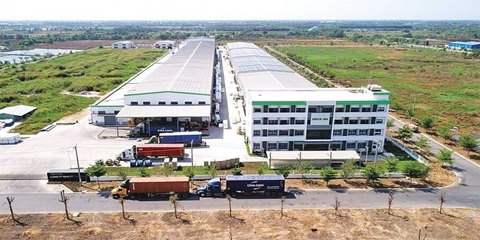
FOREIGN INVESTORS SEEKING A SYNCHRONISED MANUFACTURING ECOSYSTEM
Instead of focusing only on land costs and incentives as usual, foreign investors are seeking a synchronised manufacturing ecosystem, from stable power supply and logistics to shared infrastructure and the convenience of completing residence procedures for experts to serve their long-term investment in the country.

MEMBER CORNER / PROMOTIONS
SENTRYSAFE FHW40200 – PROTECT YOUR VALUABLES, ENJOY PEACE OF MIND!
Looking for a reliable solution to protect your important documents, cash, and valuables from fire and water damage? Genuine SENTRYSAFE - Reliable protection for your valuables and peace of mind! Contact Sen Wai Vietnam for more information and personalized product recommendations.
PROPERTY / INDUSTRIAL ZONE
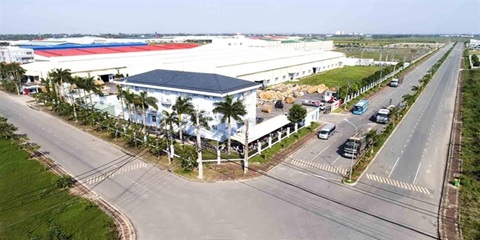
HCM CITY ATTRACTS US$5.7 BILLION INTO EXPORT PROCESSING AND INDUSTRIAL ZONES
HCM City attracted US$5.7 billion in domestic and foreign investment into its export processing and industrial zones during the first nine months of 2026. The figure exceeded the city's full-year target by 31 per cent, highlighting strong momentum in high-quality industrial investment under Resolution No.10-NQ/TW. Total investment reached 131 per cent of the 2026 target of $4.25 billion and represented a 29 per cent increase compared with the same period in 2025, according to the city's Export Processing and Industrial Zones Authority (HEPZA).
INFRASTRUCTURE / CONSTRUCTION / LOGISTIC / PORT
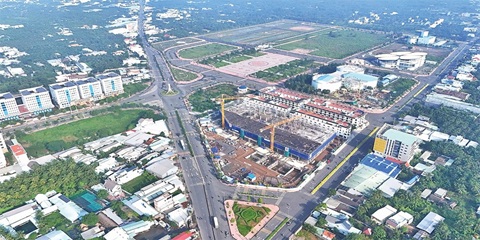
DONG THAP PROVINCE STEPS UP INDUSTRIAL EXPANSION AND INFRASTRUCTURE CONNECTIVITY
Accelerating public investment, strengthening inter-regional connectivity, and expanding industrial land are helping Dong Thap efficiently bolster competitiveness and drive economic growth. Following the 2025 merger of the former Dong Thap and Tien Giang provinces, the expanded Dong Thap province in the Mekong Delta faces mounting pressure to accelerate infrastructure development and strengthen connectivity among local economic zones, urban areas, industrial parks (IPs), and production centres.
Events Sponsors






















