Want to be in the loop?
subscribe to
our notification
Business News
EXPERTS PROPOSE FULLY REOPENING BORDERS BEFORE APRIL 30
Experts have proposed fully reopening the country’s borders to welcome back international tourists before Reunification Day (April 30) and International Labor Day (May 1).
At a seminar to discuss a roadmap to resume international travel, held by the Ministry of Culture, Sports and Tourism on January 24, Hanoi Vice Chairman Nguyen Manh Quyen said the city failed to meet targets for the tourism sector last year due to the impact of the pandemic. Meanwhile, the city’s vaccination rate is high.
Therefore, the city suggested reopening the country’s borders on April 1.
Dinh Viet Son, deputy head of the Civil Aviation Authority of Vietnam, under the Ministry of Transport, in October last year, said the ministry studied the resumption of international air routes but they were not resumed until December last year.
He also suggested reopening the country to foreign tourists before April 30 as the 31st SEA Games will be held in Vietnam in May, so local competent agencies would need time to prepare for the event.
According to Trinh Hong Quang, deputy general director of Vietnam Airlines, the Ministry of Culture, Sports and Tourism should propose the Government resume inbound tourism from February 1, not place international visitors under quarantine and apply visa waiver policy as in 2019. The Ministry of Health should work out a process to handle Covid infections among foreign tourists.
Meanwhile, Nguyen Trung Khanh, head of the Vietnam National Administration of Tourism, said as of January 23, or two months after welcoming back international tourists on a trial basis, Vietnam has received more than 8,500 tourists from Eastern Europe and Southeast Asia to Kien Giang, Khanh Hoa and Quang Nam.
During the period, 27 tourists were found infected with Covid-19 and treated at hotels, posing no risk of community transmission.
Therefore, the administration proposed resuming international tourism services at the earliest, including inbound and outbound tours.
It suggested that until April 30, localities continue to conduct the second phase of the plan to pilot the resumption of international tourism. From May 1, the country’s borders should be reopened completely.
By May 1, the relevant agencies will have enough time to amend or issue appropriate regulations and enterprises can prepare their tourism products and services.
Sharing the view, representatives of many tourism firms and the Ministries of Transport, National Defense and Foreign Affairs also threw their support behind the plan to restart international tourism from May 1.
Speaking at the seminar, Minister of Culture, Sports and Tourism Nguyen Van Hung said enterprises and the authorities of localities had striven to come up with feasible solutions to resume the tourism sector.
Localities have been willing to welcome back international tourists, while the Government approved the resumption of air routes to 10 markets. Vietnam now ranks sixth in the world in terms of the Covid vaccination pace.
Therefore, he proposed the prime minister quickly allow the reopening of the country’s border, announce the specific reopening time and assign specific tasks to the relevant ministries and agencies.
Source: The Saigon Times
Related News

VIETNAM ECONOMY INVESTMENT
VIỆT NAM SEEKS INVESTMENT IN HIGH-QUALITY, LOW-EMISSION RICE VALUE CHAIN
Việt Nam is seeking to attract more foreign investment to develop high-quality, low-emission rice value chain which is expected to support the country’s transition towards greener and more sustainable agriculture. The push is highlighted at a forum on foreign direct investment (FDI) promotion in agriculture and rural development held in Cần Thơ City on November 23, as part of the second Vietnam International Rice Industry Festival 2026 organised by the Ministry of Agriculture and Environment and the Cần Thơ People's Committee.
GARMENT / TEXTILE
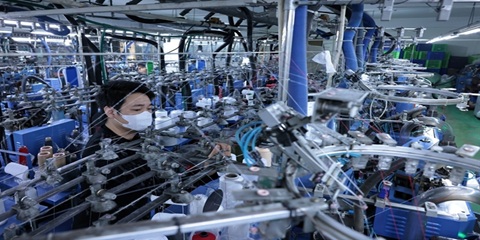
SUSTAINABLE PRODUCTION ESSENTIAL FOR VIỆT NAM'S TEXTILE AND GARMENT INDUSTRY
Việt Nam's National Action Plan on Sustainable Production and Consumption for 2021-2030, approved under Prime Ministerial Decision 889/QD-TTg issued on June 24, 2020, targets a 7-10 per cent reduction in raw material, fuel and supply consumption from 2026 to 2030 across key manufacturing industries, including textiles and garments.
VIETNAM ECONOMY INVESTMENT
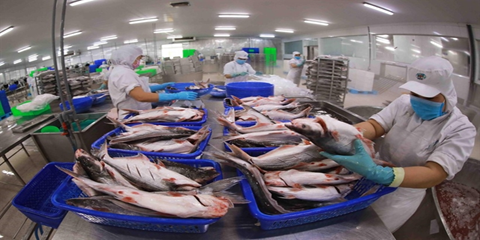
RISING PANGASIUS PRICES BRING HIGHER PROFITS, BUT STABLE SUPPLY NEEDED
Prices of raw pangasius in the Mekong Delta are rising, bringing higher profits to fish farmers. To sustain growth and maintain its export market share in 2027, this billion-dollar industry needs to secure a stable supply of raw materials, strengthen disease control and increase the value of processed products. Pangasius farmers in several provinces across the Mekong Delta are welcoming record-high prices for market-ready fish, currently at around VNĐ38,000 (US$1.50) per kilogramme after recent periods of market volatility.
PROPERTY / INDUSTRIAL ZONE
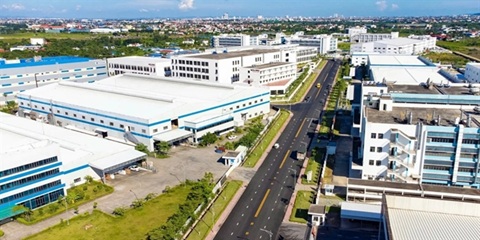
HẢI PHÒNG EARMARKS 466 HECTARES OF INDUSTRIAL LAND FOR PRIORITY BUSINESSES
The northern port city of Hải Phòng has earmarked 465.89 hectares of industrial land for high-tech firms, small and medium-sized enterprises (SMEs) and innovative start-ups across 32 industrial parks, the city's Economic Zones Management Board said on Tuesday. The land allocation is intended to help priority business groups secure production sites and expand operations in the city.
PROPERTY / INDUSTRIAL ZONE
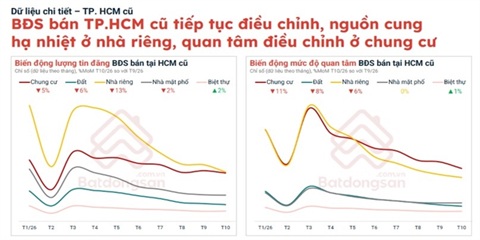
HCM CITY PROPERTY MARKET SEES MIXED SALES AND RENTAL TRENDS
The HCM City residential property market saw subdued buying interest in October, with searches declining across most major segments, particularly apartments, land plots, and private houses, according to data from property technology platform Batdongsan.com.vn. In the former HCM City area, property sale listings fell across almost all segments.
VIETNAM ECONOMY INVESTMENT
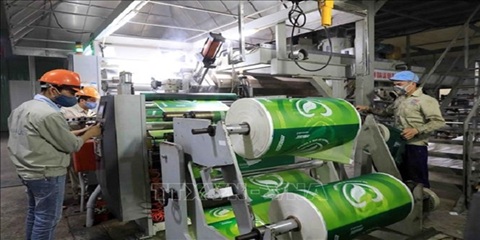
VIỆT NAM DISCUSSES OPPORTUNITIES TO PROMOTE PACKAGING EXPORTS
At a trade promotion conference organised by the Ministry of Industry and Trade on November 18, Lê Hoàng Tài, deputy director of the Vietnam Trade Promotion Agency, said packaging is an important supporting industry for manufacturing, processing and exports across sectors ranging from food and beverages to agriculture, textiles, electronics and consumer goods.
Events Sponsors