Want to be in the loop?
subscribe to
our notification
Business News
EVFTA: THE DOOR IS WIDE OPEN BUT CHALLENGES REMAIN
The first concern of enterprises is the awareness of EVFTA commitments, particularly rules of origin and conditions, to enjoy export tariff preferences. The next is about import procedures and other necessary documents they carry out to enjoy preferential treatments when importing goods from the European Union (EU). Besides, they are also concerned about whether labor and environmental standards will increase to raise barriers to businesses after the EU - Vietnam Free Trade Agreement (EVFTA) comes into effect.
This is one of the latest remarks by Dr. Nguyen Thi Thu Trang, Director of the WTO and Integration Center under the Vietnam Chamber of Commerce and Industry (VCCI) on difficulties faced by Vietnamese companies upon the enforcement of EVFTA commitments.
Despite being widely known to have lower tariffs, according to most Vietnamese enterprises, this trade pact raises a lot of technical barriers to trade and tightens phytosanitary measures. Besides, it is not easy to fully meet rules of origin to enjoy preferential tariffs, especially for agricultural products imported for processing.
For example, for rice, the EU imposes strict regulations on product quality and environmental standards, according to the Ministry of Agriculture and Rural Development. It is mandatory to provide proof of origin when completing customs procedures. The EU is a very "fastidious" market for strain and traceability. The certification illustrates the quality, prestige, value and brand of Vietnamese rice. Exporters must have GlobalGAP certification, adapt to new cultivation methods, build a production, processing and consumption chain that meets international standards (e.g. ISO and HACCP). When exporting fragrant rice to the EU, to be exempt from quota-based import duties, exporters must have certification of a registered variety issued by a competent Vietnamese agency.
Therefore, according to experts, enterprises need to research, improve technology and have closed production lines meeting international quality standards such as HACPP, HALAL or BRC to export products to demanding markets like the EU. Besides, obtaining other popular certificates in the EU will give them more opportunities to export rice to this market.
For seafood, one strong export of Vietnam, exporters need to have ASC-certified farming areas to enjoy preferential tariffs on shrimp in the EU. This international certification certifies that seafood is raised responsibly, with the least adverse impacts on the environment, the ecosystem, the community and ensuring good labor laws. This standard is achieved by very few businesses. Even when certified, the cultured area is not very large because of strict regulations on land and water sources from the Aquaculture Stewardship Council (ASC) and is subject to irregular inspections by this agency every year.
Besides, the European Commission's (EC) imposition of “yellow card” on Vietnam's seafood in recent years has troubled the seafood industry and entangled many shipments with paperwork on input source certification owing to failure to fully meet EC’s Illegal, unreported and unregulated (IUU) fishing regulations.
For fruits, enterprises need to have certificates like GlobalGAP farming areas, ISO 9001:2015 and HACCP factories, SMETA social certificate and environment certificates to start negotiations on exports to the EU, according to Vina T&T Group Company, a strong fruit exporter that has shipped its products to many countries in the world. Then, they need to maintain their certifications and fulfill their commitments. When making inroads into Europe, almost 100% of orders will be checked for pesticide residues. If violations are found, shipments will be canceled and prohibited from exporting into this market.
These requirements, if met, can only be achieved by businesses with good financial health because GlobalGAP certification costs VND200 million per growing area code of a fruit variety. Meanwhile, these certificates are not valid forever, but only for a limited time, and must be renewed every year. This means that every year they spend the same amount as the original and must meet approval requirements.
A representative of Vina T&T Group admitted that this extremely arduous journey distresses many companies in terms of finance, effort and energy. Without determination and passion and without a relatively good financial capacity and technological foundation, it is very difficult to reach the destination to take advantage of EVFTA tariff preferences.
Besides, according to trade experts, when tariff barriers are no longer an effective tool to protect businesses, importers often tend to apply anti-dumping, anti-subsidy or safeguard measures to protect domestic production.
As a result, enterprises must first understand general requirements and then carry out right and complete requirements, depending on individual conditions of each importing partner. In the event that their human resources lack legal knowledge, fulfilling commitments becomes an insurmountable barrier. Let alone, commitments on technical measures to trade relating to labor, environment and fair competition require them to update and comply in detail.
To deal with these matters, according to the Vietnam SMEs Association, the Government needs to further accelerate administrative procedure reforms, review and perfect institutions and policies, submit proposals to changes to the National Assembly for quick ratification of important laws such as the Law on Investment, the Law on Enterprises, the Law on Environmental Protection, the Labor Code and tax laws to match EVFTA requirements.
In addition, the Government should direct relevant ministries and sectors to actively strengthen communications on EVFTA contents and instruct how to fulfill EVFTA commitments and regulations through training courses to raise understanding and awareness and help them effectively implement the pact.
Source: VCCI
Related News

BANKING / FINANCE / INSURANCE / TAX
REMITTANCES TO HCM CITY RISE NEARLY 40% IN Q3
Remittances to HCM City reached more than US$2.83 billion in the third quarter of this year, up 39.5 per cent from the previous quarter and 3.6 per cent year-on-year. This was the first quarter showing positive annual growth this year, helping narrow the decline in remittance inflows over the first nine months. According to the State Bank of Vietnam (SBV)’s Regional Branch 2, remittances transferred to HCM City through credit institutions and economic organisations totalled $2.835 billion in Q3, an increase of more than $802 million from the previous quarter.

TECHNOLOGY
TECH SECTOR GROWTH OPENS UP OPPORTUNITIES FOR VIỆT NAM TO GO GLOBAL
The growth of the electronics, semiconductor and high-tech sectors worldwide is opening up a variety of opportunities for Vietnamese enterprises to integrate more deeply into the global supply chain. However, to become suppliers for these corporations, domestic enterprises must meet rigorous standards regarding quality, technology, productivity and order fulfilment capabilities.
VIETNAM ECONOMY INVESTMENT
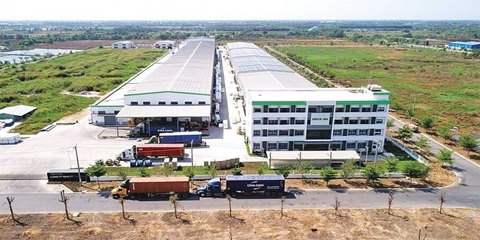
FOREIGN INVESTORS SEEKING A SYNCHRONISED MANUFACTURING ECOSYSTEM
Instead of focusing only on land costs and incentives as usual, foreign investors are seeking a synchronised manufacturing ecosystem, from stable power supply and logistics to shared infrastructure and the convenience of completing residence procedures for experts to serve their long-term investment in the country.
MEMBER CORNER / PROMOTIONS
SENTRYSAFE FHW40200 – PROTECT YOUR VALUABLES, ENJOY PEACE OF MIND!
Looking for a reliable solution to protect your important documents, cash, and valuables from fire and water damage? Genuine SENTRYSAFE - Reliable protection for your valuables and peace of mind! Contact Sen Wai Vietnam for more information and personalized product recommendations.
PROPERTY / INDUSTRIAL ZONE
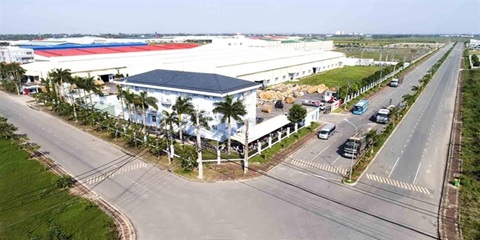
HCM CITY ATTRACTS US$5.7 BILLION INTO EXPORT PROCESSING AND INDUSTRIAL ZONES
HCM City attracted US$5.7 billion in domestic and foreign investment into its export processing and industrial zones during the first nine months of 2026. The figure exceeded the city's full-year target by 31 per cent, highlighting strong momentum in high-quality industrial investment under Resolution No.10-NQ/TW. Total investment reached 131 per cent of the 2026 target of $4.25 billion and represented a 29 per cent increase compared with the same period in 2025, according to the city's Export Processing and Industrial Zones Authority (HEPZA).
INFRASTRUCTURE / CONSTRUCTION / LOGISTIC / PORT
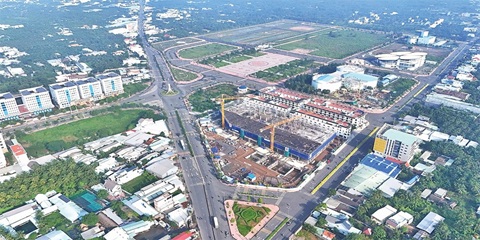
DONG THAP PROVINCE STEPS UP INDUSTRIAL EXPANSION AND INFRASTRUCTURE CONNECTIVITY
Accelerating public investment, strengthening inter-regional connectivity, and expanding industrial land are helping Dong Thap efficiently bolster competitiveness and drive economic growth. Following the 2025 merger of the former Dong Thap and Tien Giang provinces, the expanded Dong Thap province in the Mekong Delta faces mounting pressure to accelerate infrastructure development and strengthen connectivity among local economic zones, urban areas, industrial parks (IPs), and production centres.
Events Sponsors






















