Want to be in the loop?
subscribe to
our notification
Business News
EUROPEAN FDI CONTINUES TO FLOW INTO VIETNAM AMID ECONOMIC UNCERTAINTIES
European companies expect foreign direct investment (FDI) to continue to flow into Vietnam although their confidence in the local business environment decreased slightly amid global economic uncertainties.
During the second quarter of 2022, European business stakeholders' confidence in Vietnam's investment environment declined slightly, according to the Business Climate Index (BCI) released by the European Chamber of Commerce in Vietnam (EuroCham) and conducted by YouGov Vietnam.
Following a first-quarter rise, the BCI dropped 4.4 points in the second quarter to 68.8 points. In contrast with earlier in the year, compounding factors such as the continuing war in Ukraine, commodity price spikes, and the ripple effect of China's zero-COVID policy have dampened expectations among Vietnam's European business community.
Although the BCI has fallen, it remains 7.6 points higher than in the fourth quarter of 2021, when it measured 61 points.
Vietnam's potential growth is also being viewed with less favour by European business leaders. About 60 per cent of respondents predicted that the Vietnamese economy would stabilise or improve in the third quarter of 2022, compared with 69 per cent who held this belief entering the second quarter.
Despite the challenges, 45 per cent of respondents were significantly or moderately satisfied with Vietnam's efforts to attract and retain FDI, while 76 per cent expected their company to increase FDI to Vietnam before the end of the third quarter.
This may be due to the fact that 55 per cent of respondents said Vietnam improved its FDI attraction and retention capabilities since the first quarter.
Positive views were expressed about Vietnam's prospects for green growth as well. A total of 79 per cent of participants said their assessment of Vietnam's green development potential improved from the first quarter.
Regarding the link between green growth and FDI, nearly 90 per cent of respondents believed Vietnam should increase green sector development to attract more foreign investment.
Furthermore, the survey identified barriers to European investment in Vietnam and trade between the two. About 35 per cent of respondents cited reducing administrative barriers as the most effective way to increase FDI, while 24 per cent pointed to infrastructure development.
Likewise, 45 per cent of participants said administrative procedures impede their ability to utilise the EU-Vietnam Free Trade Agreement, demonstrating the difficulty foreign companies face in navigating Vietnam's bureaucratic processes.
Commenting on the BCI, EuroCham chairman Alain Cany said, “Although the outlook for European business leaders has decreased since the last quarter, the factors affecting it are mostly beyond the Vietnamese government's control. A perfect storm of external factors is contributing to global economic instability. This problem is not unique to Vietnam.”
Cany added, “With this BCI, Vietnam's path to improving its investment and business environment is clearly outlined. Green growth is the way of the future, not just because it will help build a prosperous foundation for Vietnam's economy and people, but also because it will support the country’s transformation into one of the world's strongest markets. Prime Minister Pham Minh Chinh's COP26 commitments and the government's National Green Growth Strategy show that the government is serious about making the changes necessary for a green transition. Therefore, despite the global economic uncertainty, it is an incredibly exciting and promising time to do business in this country.”
The BCI is the leading indicator of the European business and investment community in Vietnam.
To better understand the Vietnamese market, EuroCham invites its more than 1,200 members, representing virtually every sector of the Vietnamese economy, to provide quarterly updates on Vietnam's business environment and forecasts for their own businesses in Vietnam.
Researchers from YouGov Vietnam conduct the BCI research and compile the data.
Source: VIR
Related News
BANKING / FINANCE / INSURANCE / TAX
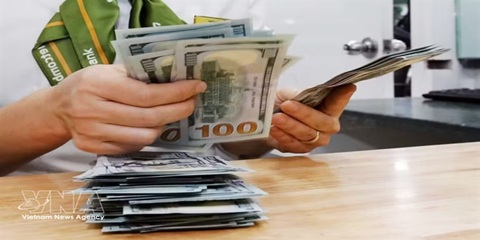
REMITTANCES TO HCM CITY RISE NEARLY 40% IN Q3
Remittances to HCM City reached more than US$2.83 billion in the third quarter of this year, up 39.5 per cent from the previous quarter and 3.6 per cent year-on-year. This was the first quarter showing positive annual growth this year, helping narrow the decline in remittance inflows over the first nine months. According to the State Bank of Vietnam (SBV)’s Regional Branch 2, remittances transferred to HCM City through credit institutions and economic organisations totalled $2.835 billion in Q3, an increase of more than $802 million from the previous quarter.
TECHNOLOGY
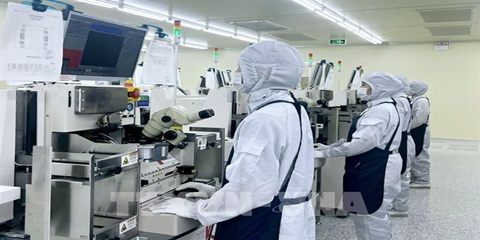
TECH SECTOR GROWTH OPENS UP OPPORTUNITIES FOR VIỆT NAM TO GO GLOBAL
The growth of the electronics, semiconductor and high-tech sectors worldwide is opening up a variety of opportunities for Vietnamese enterprises to integrate more deeply into the global supply chain. However, to become suppliers for these corporations, domestic enterprises must meet rigorous standards regarding quality, technology, productivity and order fulfilment capabilities.
VIETNAM ECONOMY INVESTMENT
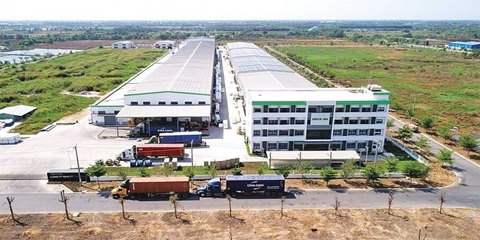
FOREIGN INVESTORS SEEKING A SYNCHRONISED MANUFACTURING ECOSYSTEM
Instead of focusing only on land costs and incentives as usual, foreign investors are seeking a synchronised manufacturing ecosystem, from stable power supply and logistics to shared infrastructure and the convenience of completing residence procedures for experts to serve their long-term investment in the country.
MEMBER CORNER / PROMOTIONS
SENTRYSAFE FHW40200 – PROTECT YOUR VALUABLES, ENJOY PEACE OF MIND!
Looking for a reliable solution to protect your important documents, cash, and valuables from fire and water damage? Genuine SENTRYSAFE - Reliable protection for your valuables and peace of mind! Contact Sen Wai Vietnam for more information and personalized product recommendations.
PROPERTY / INDUSTRIAL ZONE
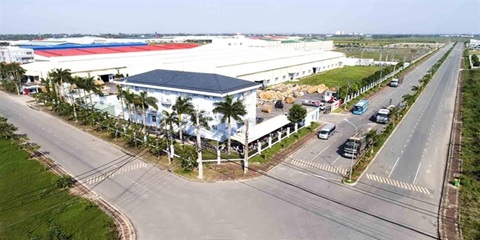
HCM CITY ATTRACTS US$5.7 BILLION INTO EXPORT PROCESSING AND INDUSTRIAL ZONES
HCM City attracted US$5.7 billion in domestic and foreign investment into its export processing and industrial zones during the first nine months of 2026. The figure exceeded the city's full-year target by 31 per cent, highlighting strong momentum in high-quality industrial investment under Resolution No.10-NQ/TW. Total investment reached 131 per cent of the 2026 target of $4.25 billion and represented a 29 per cent increase compared with the same period in 2025, according to the city's Export Processing and Industrial Zones Authority (HEPZA).
INFRASTRUCTURE / CONSTRUCTION / LOGISTIC / PORT
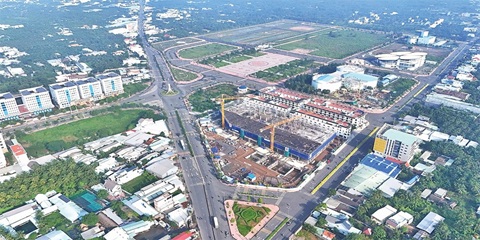
DONG THAP PROVINCE STEPS UP INDUSTRIAL EXPANSION AND INFRASTRUCTURE CONNECTIVITY
Accelerating public investment, strengthening inter-regional connectivity, and expanding industrial land are helping Dong Thap efficiently bolster competitiveness and drive economic growth. Following the 2025 merger of the former Dong Thap and Tien Giang provinces, the expanded Dong Thap province in the Mekong Delta faces mounting pressure to accelerate infrastructure development and strengthen connectivity among local economic zones, urban areas, industrial parks (IPs), and production centres.
Events Sponsors