Want to be in the loop?
subscribe to
our notification
Business News
EMERGING TRENDS IN VIETNAM’S REAL ESTATE MARKET 2025
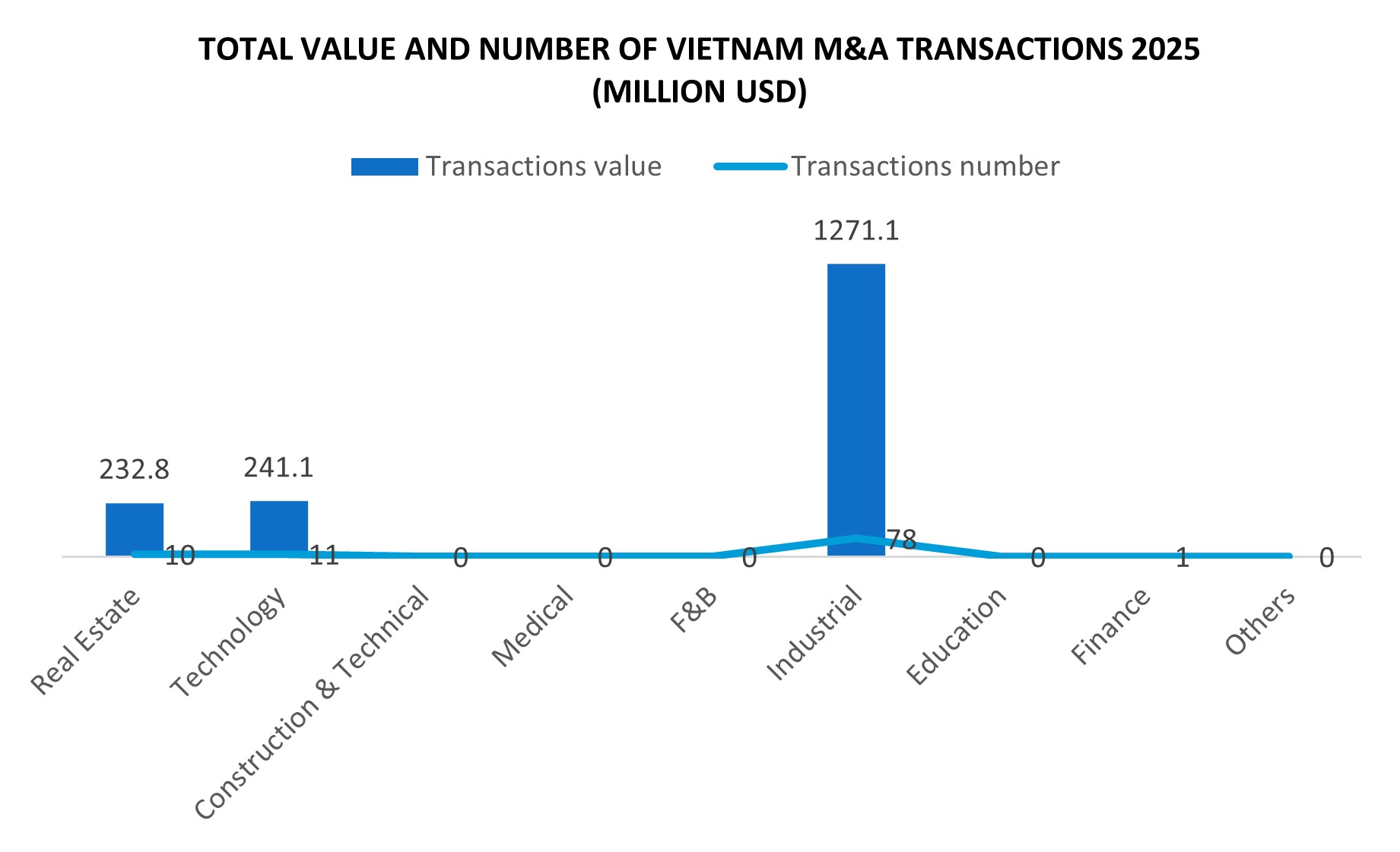
Source: Capital IQ, Grant Thornton.
Vietnam has set an ambitious GDP growth target of 8.3–8.5% for 2025, expected to drive strong momentum across the green economy, digital economy, and digital transformation, particularly in mergers and acquisitions (M&A).
The “Emerging Real Estate Trends in Vietnam 2025” report, recently released by Indochina Strategic—the real estate advisory arm of Indochina Capital (ICC)—highlights 10 emerging trends shaping Vietnam’s real estate M&A market.
Rapid expansion accelerates corporate investment, diversification, and market consolidation. Domestic firms look to scale operations while foreign investors seek faster entry, making M&A a natural growth channel. In the first eight months of 2025, total registered FDI reached US$26.14 billion, up 27.3% year-on-year, with manufacturing accounting for 37% of capital contributions and share purchases, at nearly US$1.7 billion.
High growth projections suggest improving consumer demand, rising capital inflows, and stronger investor confidence. This encourages M&A as companies seek modern technologies, entry into high-potential sectors, and supply chain resilience. Key drivers include favorable macroeconomic conditions and the new Land Law, effective from August 2024, which enhanced transparency and created growth momentum. In August alone, 18 transactions were recorded with a value of US$2.23 billion, mainly in industrial, technology, real estate, and financial services. Domestic investors dominated in deal count, while international investors led large-scale transactions.
Ten trends shaping Vietnam’s real estate market in 2025
Trend #1: Lower Rates, Higher Dealflow
By August 2025, real estate credit showed recovery, supported by improved market conditions and government measures, though challenges remained with large bond maturities and high developer costs. The State Bank of Vietnam raised its credit growth target to stimulate the economy, focusing lending on priority sectors such as affordable housing. Banks lowered lending rates to 7–9%, improving access for both borrowers and investors. Over the past two years, new credit has mainly flowed to developers, funding acquisitions, restructuring, and rollouts after M&A. For buyers, stronger access to credit enables them to target land banks with clear legal status but limited capital or to acquire equity stakes in existing projects, while developers unable to secure financing turned to M&A as an indirect capital-raising tool.
Robust credit growth is a catalyst for restructuring, empowering strong developers to consolidate the market. Foreign investment has also rebounded strongly in H1 2025, further reinforcing confidence in Vietnam’s real estate market. Regionally, global financing remains pressured by high U.S. rates, but Vietnam’s macro stability and improving credit access support renewed M&A activity.
Trend #2: Banks Driving Asset Repricing
Across Asia-Pacific, lenders are pressing asset owners to reprice, reduce leverage, and inject equity, forcing many to lower asking prices. Vietnam contrasts with accommodative policies since 2023, stabilizing deposit rates and reducing lending costs. By August 2025, credit expanded by 9.9% year-on-year, with a 16% annual target. Average lending rates remain favorable at 7–9%, supporting acquisitions and project execution. However, this supportive environment is challenged by inflation (around 3–3.3%) and exchange rate volatility caused by gold price surge and the appreciation of the U.S. dollar, narrowing space for further easing. Overall, credit policies create pressure and opportunity for repricing and consolidation.
Trend #3: Industry Leads, Real Estate and Tech Remain Strong
Legal reforms and supportive policies, including the new Land Law, have stabilized credit conditions, improved transparency, and supported growth. In August, 18 deals valued at US$2.23 billion far exceeded July’s US$786 million, despite fewer transactions. Industrial real estate leads M&A, supported by an 8.9% rise in the industrial production index. Vietnam’s strategic location and China+1 strategy attract global manufacturers and logistics players. Major infrastructure projects—bridges, airports, and high-speed rail—strengthen connectivity, while reforms shorten project timelines. Industrial real estate continues to attract FDI, driving rental growth and M&A.
Trend #4: Resilience of Hospitality Market
Vietnam welcomed 12.2 million international visitors in the first eight months of 2025, up 22.5% year-on-year, with tourism projected to reach US$31.84 billion by 2030. Visa reforms extended stays to 45 days and introduced a 10-year Golden Visa. National celebrations, such as the 50th anniversary of Unification Day and the 80th anniversary of the August Revolution and National Day, boosted tourism. Hanoi alone generated US$85.8 trillion in tourism revenue. Nationwide hotel occupancy averaged 59%, indicating that Vietnam’s hospitality market is steadily “heating up”.
Examples like Indochina Capital’s Wink Hotel chain highlight growth potential. In just six years, its portfolio has expanded to six operating hotels across Vietnam. Reforms, including the 2024 Land Law and Resolution 68/NQ-CP, provided legal frameworks for condotels and resort villas, removing bottlenecks and restoring confidence. Former provinces like Phu Yen, Binh Dinh, and Quang Nam–Danang City are emerging hubs for resorts, while Hanoi and HCMC lead in urban hotels.
Trend #5: Social Housing and Residential
By mid-2025, 692 social housing projects were underway, totaling 633,559 units. Of these, 146 were completed, 124 under construction, and 422 approved, according to the Ministry of Construction. This progress reached nearly 60% of the 2021–2030 target of one million units. Social housing increases supply, reduces price pressure, stabilizes the market, and supports productivity and investment attraction.
Trend #6: High Return Expectations Across Investor Groups
Return expectations vary by investor type. Global funds show the highest appetite, with 20% targeting elevated returns. Regional funds and developers are more moderate at around 15%, balancing yields with stability. Japanese institutional investors are most conservative, with only 10% seeking high returns, reflecting their preference for low-risk, stable income assets.
Trend #7: New Economy Assets in Favour
Alternative assets continue attracting capital, with data centers among the most active segments. Rising digitalization and demand for cloud services fuel growth. Vietnam is increasingly competitive due to its young population, FDI in technology, and renewable energy capacity. Though nascent compared to peers, Vietnam’s data center sector has significant growth potential. Rental real estate has also grown steadily since 2017 and will likely continue through 2029, driven by urbanization and foreign professionals. Together, digital infrastructure and rental housing reflect dual growth drivers: urban development and digital transformation.
Trend #8: Rising construction costs
Across Asia-Pacific, construction and labor costs are rising sharply, delaying projects. Vietnam, however, has maintained relatively stable costs, with limited growth in labor and materials. Developers benefit from competitive tendering, giving Vietnam an edge for foreign investors in a region constrained by high development costs.
Trend #9: AI – Digital Real Estate Revolution
Artificial Intelligence (AI) is transforming project development and management, enabling tailored projects and enhancing smart city operations. In Vietnam, pilot programs include AI for project management, smart building automation, VR customer experiences, and brokerage support. In industrial real estate, AI helps with energy management, security, and cost savings. AI also shortens M&A deal timelines, opening potential for faster transactions. To maximize AI benefits, Vietnam needs a clear legal framework on data privacy and protection. At the same time, the technological shift poses challenges for the real estate workforce, requiring continuous upskilling to adapt to an increasingly digitalized environment.
Trend #10: Sustainability as a top priority
Sustainability is now central to investment decisions. ESG-driven capital is flowing into green projects, industrial parks, and housing. Vietnam targets net-zero emissions by 2050, and over 85% of the country’s fastest-growing firms have ESG commitments. Decree 80/2024/ND-CP on Direct Power Purchase Agreements supports renewable energy. Administrative mergers and infrastructure upgrades unlock new development opportunities in areas like Haiphong and peri-urban Hanoi and HCMC.
Challenges include valuation gaps, regulatory complexity, and integration risks, but fundamentals—urbanization, young demographics, housing demand, and resilient FDI—position Vietnam as one of Asia’s most attractive real estate M&A markets, where sustainability is a necessity.
Source: The Saigon Times
Related News

MEMBER CORNER / PROMOTIONS
AN ELECTRIFYING NIGHT WITH THE "QUEEN OF DANCE" THU MINH AT THE GRAND HO TRAM!
The stage at The Grand Ballroom is set to catch fire as Vietnam’s undisputed "Queen of Dance," Thu Minh, takes the spotlight. Renowned for her powerhouse vocals, magnetic stage presence, and sultry, high-energy performances, Thu Minh promises an evening of pure musical euphoria. The energy escalates with an exclusive appearance by special guest and The Voice champion, Vu Thao My.
HR / LABOUR/ EMPLOYMENT
HIGH-QUALITY HUMAN RESOURCES NEEDED TO ATTRACT NEW TECH INVESTMENT CAPITAL
Besides infrastructure, Việt Nam must also rapidly develop a highly skilled workforce to attract investment in AI, semiconductors and advanced manufacturing, experts have said. Don Lam, CEO and co-founder of investment management company VinaCapital, said that global technology investors were increasingly looking at the readiness of the entire ecosystem, with high-quality human resources a decisive factor.

HR / LABOUR/ EMPLOYMENT
HIRING OUTLOOK STRENGTHENS IN Q4 AS SKILLS SHORTAGES PERSIST
Hiring intentions among employers in Việt Nam strengthened in the fourth quarter, with 52 per cent of surveyed companies planning to increase headcount between October and December, according to a ManpowerGroup survey released this week. Việt Nam's hiring outlook was stronger than the Asia Pacific and Middle East (APME) regional average of 33 per cent and the global average of 29 per cent, ranking third in the region and 11th globally among 42 markets surveyed.

BANKING / FINANCE / INSURANCE / TAX
LARGE BANKS FORECAST TO GAIN HIGHER PROFITABILITY IN H2 2026
The return on average assets (ROAA) of the banking sector will likely remain stable at around 1.5 per cent in the second half of 2026, but profitability divergence among banks will increase, with large banks outperforming peers on stronger margins and diversified earnings, analysts forecast. In a recent report on the banking sector, analysts from the Vietnam Investors Service Rating said the sector’s ROAA rose by 10 basis points quarter-on-quarter to 1.51 per cent in the first half of this year, driven by net interest margin (NIM) improvements at some State-owned banks and large private banks.
GARMENT / TEXTILE
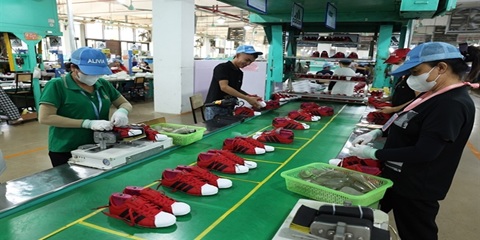
VIỆT NAM'S FOOTWEAR, BAG EXPORTS TO US TOP $8 BILLION IN EIGHT MONTHS
Việt Nam's exports of footwear and handbags to the US exceeded US$8 billion in the first eight months of 2026, as the US and EU remained the country's biggest markets despite sluggish growth in footwear shipments. Exports from Việt Nam's leather and footwear sector reached more than $2.45 billion in August, down 9 per cent from July but up 3 per cent from a year earlier, according to preliminary statistics.
VIETNAM ECONOMY INVESTMENT
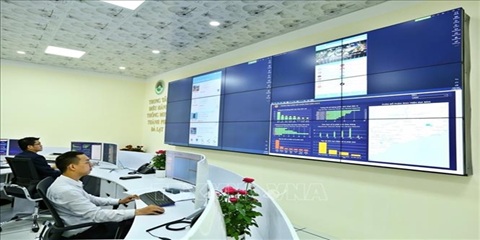
LÂM ĐỒNG TARGETS DIGITAL ECONOMY TO ACCOUNT FOR 30 PER CENT OF GRDP BY 2030
Lâm Đồng Province aims to raise the digital economy’s contribution to around 30 per cent of its gross regional domestic product (GRDP) by 2030, as part of a five-year plan to develop digital economy and society issued recently. Under Plan No. 15358/KH-UBND, the province targets more than 60 per cent of small- and medium-sized enterprises (SMEs) to adopt digital technologies by 2030 while increasing the value of cashless payments to 30 times its GRDP.
Events Sponsors






















