Want to be in the loop?
subscribe to
our notification
Business News
ELEVEN LAWS COME INTO FORCE SINCE JANUARY 1, 2021
Eleven laws coming into effect since January 1, 2021 include nine laws approved by the National Assembly in 2020.
Labor Code 2019
The retirement age of Vietnamese workers in normal working conditions will be raised to 62 for men by 2028 and 60 for women by 2035.
From 2021 and onwards, the retirement age will be increased by three months for a male employee in normal working conditions, and four months for a female employee annually.
Employees will enjoy two fully-paid days off on the Independence Day (September 2).
The Labor Code regulates working hours shall not exceed 8 hours per day or 48 hours per week.
The total normal working hours and the overtime hours shall not exceed 12 hours in a day, less than 40 hours in a month, and not more than 200 hours in a year.
2020 Investment Law
2020 Investment Law contains several significant new regulations, including:
- Business of debt collection services is officially banned.
-The number of conditional business lines is reduced to 227.
- More business lines eligible for investment incentives are added.
- Additional investment incentives are regulated.
- New regulations on special investment incentive and assistance policies are set out;
- List of business lines restricted to foreign investors will be issued.
- Four cases in which investors are exempted from the requirement for placement of deposits as security for project execution obligations.
2020 Law on Enterprises
The 2020 Law on Enterprises officially abolishes regulations regarding the notice of corporate stamp specimens before use.
The Law adds more entities prohibited from establishing businesses, shortens time limit for prior notice of temporary business suspension from 2021 and changes the “state enterprise” definition.
Construction Law 2020
The 2020 Law on Amendments to Construction Law contains some following significant new regulations such as:
-Nine types of construction works are exempted from the construction permit requirement.
-The duration of processing of application for construction permits is shortened to 20 days.
-In order to build homes with seven or more stories in rural areas, application for construction permits is required.
-Regulations on management of investment costs of construction works are amended.
-A lot of new regulations regarding construction permits are set out.
Law on Securities 2019
The 2019 Securities Law consists of several remarkable new regulations mentioned as follows:
-Establishing Viet Nam Securities Depository and Clearing Corporation (formerly, Viet Nam Securities Depositories).
-Supplementing more prohibited acts of services related to securities and securities markets.
-Listing or registering transactions of stocks on stock exchanges after an offering.
-Public companies only allow more public offerings if profits are earned.
2020 Law on Judicial Expertise
The Law includes such new regulations as follows:
- Expanding the scope of judicial expertise
- Supplementing regulations on issuance and revocation of judicial expert’s identity cards and appointment and dismissal of judicial experts
- The Supreme People’s Procuracy can run another additional Criminal Expertise Technology Division
- Requirements for opening of Judicial Expertise Services.
- Maximum time limit for judicial expertise is not over four months.
- Providing more cases of dismissal of judicial experts
- Regulations on judicial expertise conclusions are amended to make them more specific
2020 Law on Mediation or Dialogue at Court
The 2020 Law on Mediation or Dialogue at Court defines requirements for appointment of mediators.
The Law stipulates that the term of office of a mediator is 3 years from the date of appointment.
Seven cases of non-conduct of mediation or dialogue at court and issues relevant to confidentiality are stipulated in the Law.
2020 Youth Law
The 2020 Youth Law, consisting of policies for youngsters aged from 16-18, defines some new regulations, including:
- Rights and obligations of the youth are not regulated in detail as they are also Vietnamese citizens whose rights and obligations are regulated under the Constitution of Viet Nam.
- Clearly regulating seven rules of assurance of rights and obligations of the youth.
- Regulating the Youth's Month which is the March each year for the first time.
- Specifying state policies granted to the youth which are classified by six groups of sectors.
- Adding more regulations on state support policies granted to youth organizations with respect to the participation in construction and implementation of policies and laws applied to the youth.
2020 Law on Public – Private Partnership Investment
The 2020 Law on Public – Private Partnership Investment stipulates new projects that apply BT contracts will be halted in 2021.
2020 Law on Issuance of Legislative Documents
The 2020 Amended Law on Issuance of Legislative Documents contains several significant regulations such as adding more legislative documents to the system; amending regulations on the effective time of legislative documents.
2020 Law on National Assembly Organization
The 2020 amended Law on National Assembly Organization regulates the amalgamation of Offices of National Assembly Delegations and Offices of People’s Councils while Offices of provincial People’s Committees are kept unchanged.
The Law defines seven standards of the National Assembly’s deputies.
Source: VGP
Related News

CHARITY / EXHIBITION / OTHER EVENTS
INVESTMENT OPPORTUNITIES IN CA MAU PROVINCE: 96 PROJECTS AND 20 STRATEGIC PROJECTS
We are pleased to share with you information on investment projects currently seeking investors in Ca Mau Province. Should your esteemed company or association be interested, we kindly invite you to review the project information and complete the registration form via the links provided. The Ho Chi Minh City Investment and Trade Promotion Centre (ITPC) will consolidate the expressions of interest and facilitate connections with the leadership of Ca Mau Province at a meeting tentatively scheduled for 13 November 2026 in Ho Chi Minh City.

MEMBER CORNER / PROMOTIONS
BẰNG KIỀU LIVESHOW - A SYMPHONY OF LOVE UNDER THE GOLDEN GLOW
A masterclass in live music that takes the audience on a soulful journey through immortal love songs, guided by the peerless artistry and emotive storytelling of renowned singer Bằng Kiều. The highlight of the night is his seamless musical chemistry with special guest Triệu Hồng Ngọc, promising passionate and deeply resonant duets inside the magnificent Grand Ballroom.
INFRASTRUCTURE / CONSTRUCTION / LOGISTIC / PORT
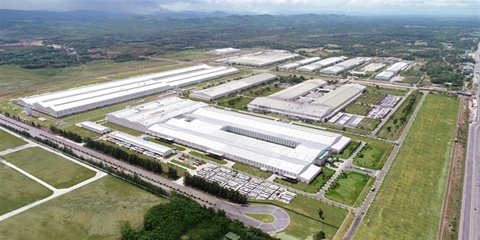
ĐÀ NẴNG GREEN-LIGHTS US$105 MILLION THAI DEVELOPMENT DEAL
The central city has approved an investment proposal by Thailand’s WHA Group to develop infrastructure for the 400ha WHA Đà Nẵng Industrial Park project on two communes of Thăng Bình and Đồng Dương, with an investment of more than VNĐ2.7 trillion (US$105 million). The city said it approved WHA Industrial Development International's status as an investor in the project, which is expected to take place between 2027 and 2034.

VIETNAM ECONOMY INVESTMENT
MOBILE PHONE EXPORTS RISE 20% TO $51.8 BILLION IN FIRST NINE MONTHS
Exports of mobile phones and components rose 20 per cent year-on-year to nearly US$51.8 billion in the first nine months of 2026, with China, the US and Republic of Korea accounting for more than half of the total. Shipments to the three markets reached a combined $26.18 billion, or 50.6 per cent of total exports of the product group during the period, according to data from the Vietnam Department of Customs under the Ministry of Finance.

INFRASTRUCTURE / CONSTRUCTION / LOGISTIC / PORT
VIỆT NAM-CAMBODIA TRADE GATHERS PACE TOWARDS $20 BILLION TARGET
Trade between Việt Nam and Cambodia continues to grow, remaining a bright spot and a key pillar of bilateral cooperation as the two countries aim to raise two-way trade to US$20 billion in the coming years. After setting a record of more than $11.3 billion last year, bilateral trade reached about $8.7 billion in the first eight months of this year, up 8.3 per cent year on year.
VIETNAM ECONOMY INVESTMENT
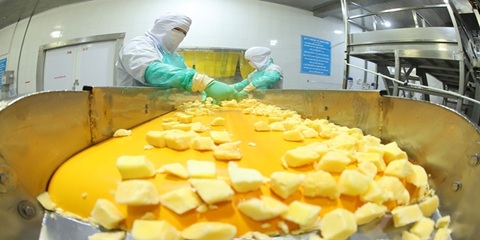
FRUIT AND VEGETABLE EXPORTS POISED TO HIT $10 BILLION IN 2026
Fruit and vegetable exports are on track to reach nearly US$10 billion in 2026, after rising 19.9 per cent year on year to nearly US$7.4 billion in the first nine months, driven by strong seasonal demand and abundant tropical fruit supplies. The Ministry of Agriculture and Environment said the growth reflected stronger international demand for fresh produce and processed agricultural products.
Events Sponsors






















