Want to be in the loop?
subscribe to
our notification
Business News
ECONOMIC UNCERTAINTY WEIGHS ON VIETNAMESE BUSINESSES
Heightened economic uncertainty amidst the coronavirus spread has affected sentiment among Vietnamese companies.
According to Grant Thornton International Business Report for the first half of 2021, despite the strong increase in business optimism, economic uncertainty remains an issue globally with 61 per cent of firms citing ongoing uncertainty as a constraint to business.
In Vietnam, economic uncertainty has risen to its highest level on record with 68 per cent of companies identifying this as a constraint to growth, whilst a shortage of orders has been cited as a concern by 65 per cent of the companies.
The report indicates that optimism is up 8 percentage points with 58 per cent of mid-market companies now feeling optimistic, which is lower than the 64 per cent in ASEAN. Whilst revenue and profit expectations have fallen by 5 and 4 percentage points, respectively, over 63 per cent of the companies expect yearly increases in both. Whilst a little disappointing, this is still above the ASEAN averages.
Kenneth Atkinson, founder and senior adviser of Grant Thornton Vietnam said: “In Vietnam, whilst mid-market companies displayed amazing levels of health, at the beginning of the pandemic compared to other countries in our survey this has been slowly deteriorating over the last 12 months. In the last six months companies have been impacted by worsening barriers to growth, primarily related to economic uncertainty and demand constraints, largely due to the continued outbreaks of COVID-19. There is some improvement in the general outlook but the elements are mixed with economic optimism and investment intentions strengthening and growth expectations weakening.”

Vietnam has shown historic strength in export expectations but the most recent results have shown growth expectations falling by 10 percentage points. This could be due to the timing of the survey which was conducted during the start of the most recent outbreak and the export expectations had increased by 7 percentage points in the second half of 2020.
In terms of the impact of COVID-19 on Vietnamese companies, 59 per cent reported a decrease in sales, whilst 54 per cent cited a loss of business opportunities probably due to the continuing barriers to travel. 41 per cent of companies had faced difficulties because of supply chain interruptions and 40 per cent had experienced work force issues. Another popular challenge citied by 45 per cent of the companies was challenges managing stakeholders.
When looking at COVID-19 impact on earnings before interest, taxes, depreciation, and amortisation (EBITDA), 39 per cent of companies had experienced no change or an increase in 2020. A decrease of 1-9 per cent in EBITDA was reported by 23 per cent of the companies and 18 per cent reported a decrease of 10-19 per cent. 15 per cent reported a negative impact of 20 per cent or greater.
Approximately 90 per cent of companies stated that they would be making major new investments in the coming 12 months. The top four categories for operating system investment were IT security management (55 per cent), companywide IT infrastructure (49 per cent), supply chain (46 per cent), and sales optimisation and accuracy (44 per cent). Interestingly, 33 per cent of companies were going to make investments into enterprise resource planning (ERP) systems.
Vietnam saw a record number of mergers and acquisitions (M&A) transactions last year and 53 per cent of the companies stated that they were considering M&A as a way of strengthening their business whilst 26 per cent were considering M&A as a means of exiting the business.
Source: VIR
Related News

BANKING / FINANCE / INSURANCE / TAX
REMITTANCES TO HCM CITY RISE NEARLY 40% IN Q3
Remittances to HCM City reached more than US$2.83 billion in the third quarter of this year, up 39.5 per cent from the previous quarter and 3.6 per cent year-on-year. This was the first quarter showing positive annual growth this year, helping narrow the decline in remittance inflows over the first nine months. According to the State Bank of Vietnam (SBV)’s Regional Branch 2, remittances transferred to HCM City through credit institutions and economic organisations totalled $2.835 billion in Q3, an increase of more than $802 million from the previous quarter.
TECHNOLOGY
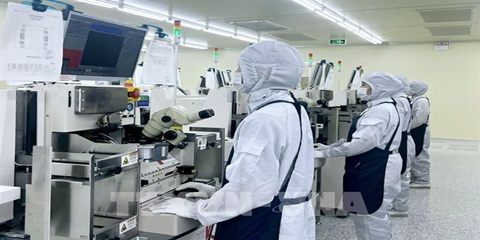
TECH SECTOR GROWTH OPENS UP OPPORTUNITIES FOR VIỆT NAM TO GO GLOBAL
The growth of the electronics, semiconductor and high-tech sectors worldwide is opening up a variety of opportunities for Vietnamese enterprises to integrate more deeply into the global supply chain. However, to become suppliers for these corporations, domestic enterprises must meet rigorous standards regarding quality, technology, productivity and order fulfilment capabilities.
VIETNAM ECONOMY INVESTMENT
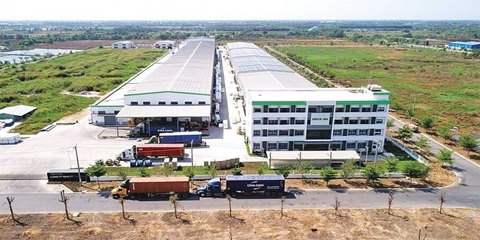
FOREIGN INVESTORS SEEKING A SYNCHRONISED MANUFACTURING ECOSYSTEM
Instead of focusing only on land costs and incentives as usual, foreign investors are seeking a synchronised manufacturing ecosystem, from stable power supply and logistics to shared infrastructure and the convenience of completing residence procedures for experts to serve their long-term investment in the country.
MEMBER CORNER / PROMOTIONS
SENTRYSAFE FHW40200 – PROTECT YOUR VALUABLES, ENJOY PEACE OF MIND!
Looking for a reliable solution to protect your important documents, cash, and valuables from fire and water damage? Genuine SENTRYSAFE - Reliable protection for your valuables and peace of mind! Contact Sen Wai Vietnam for more information and personalized product recommendations.
PROPERTY / INDUSTRIAL ZONE
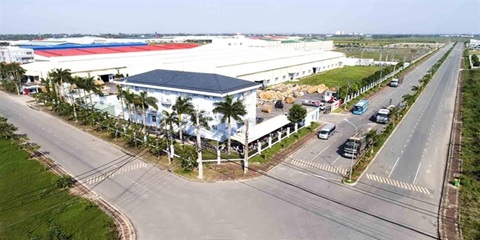
HCM CITY ATTRACTS US$5.7 BILLION INTO EXPORT PROCESSING AND INDUSTRIAL ZONES
HCM City attracted US$5.7 billion in domestic and foreign investment into its export processing and industrial zones during the first nine months of 2026. The figure exceeded the city's full-year target by 31 per cent, highlighting strong momentum in high-quality industrial investment under Resolution No.10-NQ/TW. Total investment reached 131 per cent of the 2026 target of $4.25 billion and represented a 29 per cent increase compared with the same period in 2025, according to the city's Export Processing and Industrial Zones Authority (HEPZA).
INFRASTRUCTURE / CONSTRUCTION / LOGISTIC / PORT
DONG THAP PROVINCE STEPS UP INDUSTRIAL EXPANSION AND INFRASTRUCTURE CONNECTIVITY
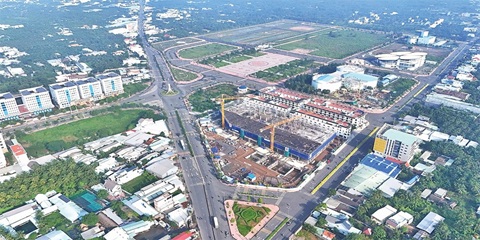
Accelerating public investment, strengthening inter-regional connectivity, and expanding industrial land are helping Dong Thap efficiently bolster competitiveness and drive economic growth. Following the 2025 merger of the former Dong Thap and Tien Giang provinces, the expanded Dong Thap province in the Mekong Delta faces mounting pressure to accelerate infrastructure development and strengthen connectivity among local economic zones, urban areas, industrial parks (IPs), and production centres.
Events Sponsors






















