Want to be in the loop?
subscribe to
our notification
Business News
DOMESTIC GROUPS PREPARE FOR FUTURE WITH M&A TRANSACTIONS
While some foreign funds have stopped considering new investments in the Vietnamese market, domestic real estate businesses are actively acquiring projects and increasing land funds to prepare to invite overseas partners when the pandemic is finally under control.
EXS Capital Group, a specialist private equity fund into real estate business and platforms across Asia, announced that it has put its investment into Vietnamese real estate on hold for now.
Eric Solberg, chairman and CEO of EXS, did not disclose the reason for the move, but it was assumed by market observers that COVID-19 developments have hindered activities in Vietnam and consideration of more investment.
Since it entered the Vietnamese real estate market, EXS has so far poured in more than $200 million into SonKim Land, one of the leading high-end real estate developments in the country.
Meanwhile, Truong Van Viet, vice chairman of Hung Thinh Corporation, told VIR that the company is now calling on other partners to co-develop Hai Giang Merry Land Quy Nhon, the largest tourism complex in the central province of Binh Dinh. However, due to the pandemic, only international partners with offices in Vietnam can reach the corporation to discuss in-depth cooperation. Other significant partners are continuing to wait for re-opening air routes to visit and negotiate for ventures.
In the first half of the year, the real estate market witnessed several exciting mergers and acquisitions (M&A) deals in the land fund and corporate equity.
According to economist Le Minh Hoang, domestic investors have recently been actively expanding their portfolios by M&A deals to prepare for the post-pandemic period.
“This expanded land fund will be a crucial factor for those developers to ensure a stable development strategy in the coming time, and after COVID-19 is fully controlled, foreign partners can resume their investment in Vietnam,” Hoang said.
At the beginning of June, Phat Dat Corporation announced it had completed the purchase of 99.5 per cent shares of Binh Duong Building Development and Investment Real Estate JSC. Phat Dat has the right to own and develop the Binh Duong Tower apartment project located on a 4.5-hectare land plot in Thuan An city, about 20km from Ho Chi Minh City.
Vo Quoc Khanh, CEO of TTC Land, released that the company is carrying out M&A procedures for 300ha of land on Phu Quoc Island. The project could take up the company’s development activities into the next five years.
Currently, TTC Land is developing 11 projects with a total of more than 32ha, located mainly in Ho Chi Minh City, Danang, and Lam Dong province. By 2025, TTC Land wants to expand its portfolios to Dong Nai, Long An, and Phu Quoc.
More M&A deals are expected later this year within domestic groups to ensure a large enough land fund for development.
An Gia Group, for example, plans to spend VND3-5 trillion ($130-215 million) to find land fund for projects in the next three years through M&A, prioritising clean land fund, clear legality, and fast implementation times.
Nam Long Group, meanwhile, expects to spend about VND2 trillion ($86.9 million) each year expanding land funds. The strategic locations that Nam Long targets besides Ho Chi Minh City and its neighbouring provinces are Hanoi, Haiphong, and Can Tho.
Novaland also has an ambitious plan to add around 10,000ha into its current of 5,500ha size in the next decade.
Trang Bui, JLL Vietnam senior director of Markets, said that the real estate market is growing strongly in many areas. Despite being affected by COVID-19, M&A activities are still active, especially from large domestic investors. They focus on collecting land for future development in many segments such as housing, residential areas, and commercial real estate.
For foreign investors, according to Bui, Vietnam is still a strategic market full of growth potential. Some famous developers and investors in Vietnam such as Keppel Land, CapitaLand, Frasers Property, and Gamuda Land are still committed to looking for new projects.
Previously, they focused on investing mainly in the commercial and residential segments, but they are expanding through the industrial zones (IZs) and logistics segments.
Bui forecasts that IZs, warehouses, and factories will continue to have large M&A deals in the second half of the year. “Due to the impact of the pandemic with the policy of distancing and restricting travel, the implementation of M&A deals with foreign funds may take longer to complete, compared to 3-6 months of negotiation as before,” she said.
Source: VIR
Related News

BANKING / FINANCE / INSURANCE / TAX
REMITTANCES TO HCM CITY RISE NEARLY 40% IN Q3
Remittances to HCM City reached more than US$2.83 billion in the third quarter of this year, up 39.5 per cent from the previous quarter and 3.6 per cent year-on-year. This was the first quarter showing positive annual growth this year, helping narrow the decline in remittance inflows over the first nine months. According to the State Bank of Vietnam (SBV)’s Regional Branch 2, remittances transferred to HCM City through credit institutions and economic organisations totalled $2.835 billion in Q3, an increase of more than $802 million from the previous quarter.

TECHNOLOGY
TECH SECTOR GROWTH OPENS UP OPPORTUNITIES FOR VIỆT NAM TO GO GLOBAL
The growth of the electronics, semiconductor and high-tech sectors worldwide is opening up a variety of opportunities for Vietnamese enterprises to integrate more deeply into the global supply chain. However, to become suppliers for these corporations, domestic enterprises must meet rigorous standards regarding quality, technology, productivity and order fulfilment capabilities.
VIETNAM ECONOMY INVESTMENT
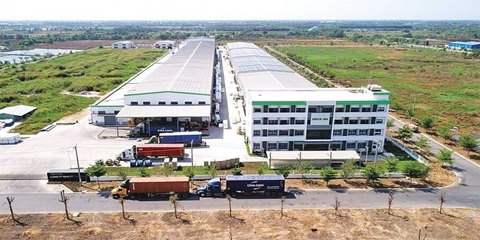
FOREIGN INVESTORS SEEKING A SYNCHRONISED MANUFACTURING ECOSYSTEM
Instead of focusing only on land costs and incentives as usual, foreign investors are seeking a synchronised manufacturing ecosystem, from stable power supply and logistics to shared infrastructure and the convenience of completing residence procedures for experts to serve their long-term investment in the country.
MEMBER CORNER / PROMOTIONS
SENTRYSAFE FHW40200 – PROTECT YOUR VALUABLES, ENJOY PEACE OF MIND!
Looking for a reliable solution to protect your important documents, cash, and valuables from fire and water damage? Genuine SENTRYSAFE - Reliable protection for your valuables and peace of mind! Contact Sen Wai Vietnam for more information and personalized product recommendations.
PROPERTY / INDUSTRIAL ZONE
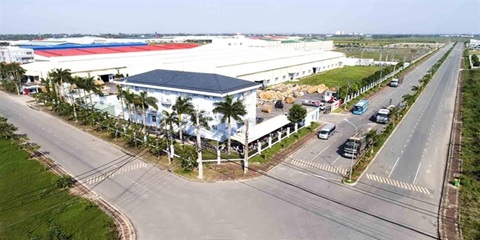
HCM CITY ATTRACTS US$5.7 BILLION INTO EXPORT PROCESSING AND INDUSTRIAL ZONES
HCM City attracted US$5.7 billion in domestic and foreign investment into its export processing and industrial zones during the first nine months of 2026. The figure exceeded the city's full-year target by 31 per cent, highlighting strong momentum in high-quality industrial investment under Resolution No.10-NQ/TW. Total investment reached 131 per cent of the 2026 target of $4.25 billion and represented a 29 per cent increase compared with the same period in 2025, according to the city's Export Processing and Industrial Zones Authority (HEPZA).
INFRASTRUCTURE / CONSTRUCTION / LOGISTIC / PORT
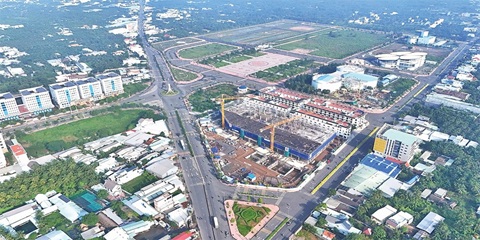
DONG THAP PROVINCE STEPS UP INDUSTRIAL EXPANSION AND INFRASTRUCTURE CONNECTIVITY
Accelerating public investment, strengthening inter-regional connectivity, and expanding industrial land are helping Dong Thap efficiently bolster competitiveness and drive economic growth. Following the 2025 merger of the former Dong Thap and Tien Giang provinces, the expanded Dong Thap province in the Mekong Delta faces mounting pressure to accelerate infrastructure development and strengthen connectivity among local economic zones, urban areas, industrial parks (IPs), and production centres.
Events Sponsors






















