Want to be in the loop?
subscribe to
our notification
Business News
DOMESTIC CONSUMPTION DRIVES INDUSTRIAL PRODUCTION GROWTH IN HCM CITY
HCM City’s Index of Industrial Production (IIP) rose by 8.2 per cent in the first five months of 2025 compared to the same period last year, marking the highest five-month growth rate in the past seven years, according to the municipal Department of Industry and Trade.
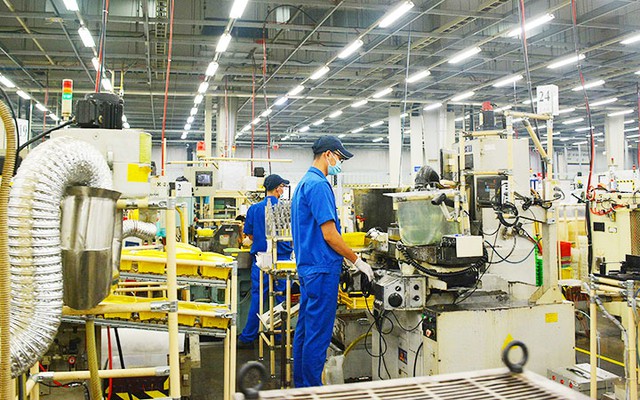
HCM City’s industrial production in the first five months of 2025 reached its highest growth in seven years. — Photo courtesy of chinhphu.vn
HCM CITY — HCM City’s Index of Industrial Production (IIP) rose by 8.2 per cent in the first five months of 2025 compared to the same period last year, marking the highest five-month growth rate in the past seven years, according to the municipal Department of Industry and Trade.
In May alone, the IIP increased by 5.1 per cent over the previous month and 9.4 per cent year-on-year.
Bùi Tá Hoàng Vũ, director of the department, said that in the early months of 2025, rising domestic consumption supported growth in the food production and consumer goods sectors. Meanwhile, the US’s temporary 90-day suspension of reciprocal tariffs helped boost export orders in key sectors such as textiles and garments, footwear, electronics, and processing and manufacturing, contributing to the city’s industrial growth.
Notably, the processing and manufacturing sector grew by 8.4 per cent during the period, continuing to serve as the main driver of industrial expansion. The water supply and waste treatment sector increased by 2 per cent, while the electricity production and distribution sector remained stable with a 0.7 per cent rise, ensuring no power shortages occurred.
Many industrial enterprises have also adopted rooftop solar power systems to reduce operational costs, leverage renewable energy, and meet green standards required by international partners.
The city’s four key industrial sectors rose by 8.2 per cent, matching the overall industrial production growth rate. Within this group, electronics manufacturing led with a 20.5 per cent increase, followed by pharmaceuticals and chemicals (12.6 per cent), mechanical engineering (5 per cent), and food and food processing (1.1 per cent).
According to the city Statistics Office, 23 out of 29 level-two industrial sectors recorded year-on-year increases in their industrial production index during the first five months of 2025.
Several sectors posted particularly strong growth, including printing and reproduction of recorded media (up 58.1 per cent), furniture manufacturing (up 38.2 per cent), production of electrical equipment (up 36 per cent), and the manufacturing of rubber and plastic products (up 24.2 per cent).
In terms of employment, the labour index at industrial enterprises in May 2025 rose by just 0.6 per cent from the previous month and by 2.6 per cent year-on-year. Cumulatively, the index increased by 2.2 per cent over the five-month period.
The Statistics Office noted a structural shift in the city’s workforce from low-skilled jobs to positions requiring higher-level skills. This trend is particularly evident in foreign direct investment enterprises, where an increase in the adoption of technology and automation has resulted in relatively modest labour growth despite increased production. — VNS
Source: VNS
Related News

BANKING / FINANCE / INSURANCE / TAX
REMITTANCES TO HCM CITY RISE NEARLY 40% IN Q3
Remittances to HCM City reached more than US$2.83 billion in the third quarter of this year, up 39.5 per cent from the previous quarter and 3.6 per cent year-on-year. This was the first quarter showing positive annual growth this year, helping narrow the decline in remittance inflows over the first nine months. According to the State Bank of Vietnam (SBV)’s Regional Branch 2, remittances transferred to HCM City through credit institutions and economic organisations totalled $2.835 billion in Q3, an increase of more than $802 million from the previous quarter.
TECHNOLOGY
TECH SECTOR GROWTH OPENS UP OPPORTUNITIES FOR VIỆT NAM TO GO GLOBAL
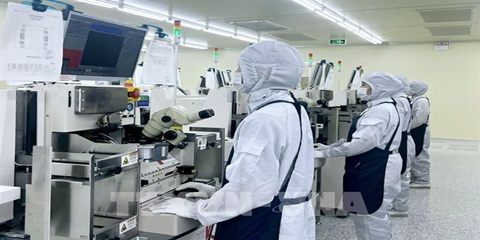
The growth of the electronics, semiconductor and high-tech sectors worldwide is opening up a variety of opportunities for Vietnamese enterprises to integrate more deeply into the global supply chain. However, to become suppliers for these corporations, domestic enterprises must meet rigorous standards regarding quality, technology, productivity and order fulfilment capabilities.
VIETNAM ECONOMY INVESTMENT
FOREIGN INVESTORS SEEKING A SYNCHRONISED MANUFACTURING ECOSYSTEM
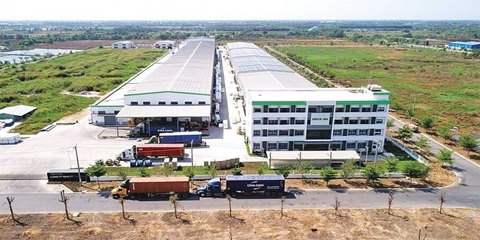
Instead of focusing only on land costs and incentives as usual, foreign investors are seeking a synchronised manufacturing ecosystem, from stable power supply and logistics to shared infrastructure and the convenience of completing residence procedures for experts to serve their long-term investment in the country.

MEMBER CORNER / PROMOTIONS
SENTRYSAFE FHW40200 – PROTECT YOUR VALUABLES, ENJOY PEACE OF MIND!
Looking for a reliable solution to protect your important documents, cash, and valuables from fire and water damage? Genuine SENTRYSAFE - Reliable protection for your valuables and peace of mind! Contact Sen Wai Vietnam for more information and personalized product recommendations.
PROPERTY / INDUSTRIAL ZONE
HCM CITY ATTRACTS US$5.7 BILLION INTO EXPORT PROCESSING AND INDUSTRIAL ZONES
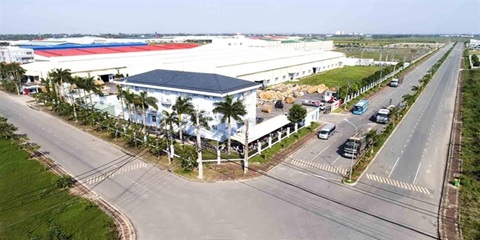
HCM City attracted US$5.7 billion in domestic and foreign investment into its export processing and industrial zones during the first nine months of 2026. The figure exceeded the city's full-year target by 31 per cent, highlighting strong momentum in high-quality industrial investment under Resolution No.10-NQ/TW. Total investment reached 131 per cent of the 2026 target of $4.25 billion and represented a 29 per cent increase compared with the same period in 2025, according to the city's Export Processing and Industrial Zones Authority (HEPZA).
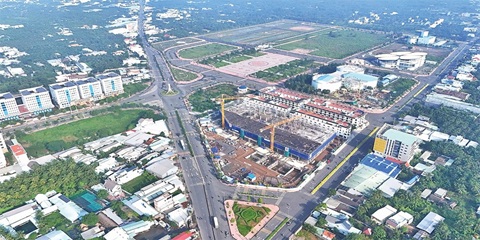
INFRASTRUCTURE / CONSTRUCTION / LOGISTIC / PORT
DONG THAP PROVINCE STEPS UP INDUSTRIAL EXPANSION AND INFRASTRUCTURE CONNECTIVITY
Accelerating public investment, strengthening inter-regional connectivity, and expanding industrial land are helping Dong Thap efficiently bolster competitiveness and drive economic growth. Following the 2025 merger of the former Dong Thap and Tien Giang provinces, the expanded Dong Thap province in the Mekong Delta faces mounting pressure to accelerate infrastructure development and strengthen connectivity among local economic zones, urban areas, industrial parks (IPs), and production centres.
Events Sponsors






















