Want to be in the loop?
subscribe to
our notification
Business News
DECREE FOR FINTECH SANDBOX TO BE SUBMITTED IN Q4
The Government has issued a resolution to create a sandbox for financial technology (fintech) in the country’s banking sector.
According to the resolution, the Government assigned the State Bank of Việt Nam (SBV) to coordinate with ministries and agencies to form a decree that complies with the provisions of the Law on Promulgation of Legal Documents amended and supplemented in 2020 to submit to the Government in the fourth quarter of 2021.
As fintech is platform for creative and modern technologies applied to the financial and banking sector in payment services, money transfer, peer-to-peer lending and asset management, it is considered better for the local industry with improved financial transparency, efficiency and convenience at a lower cost than traditional financial services.
In the country, fintech activities include peer-to-peer lending, new payment models, cross-border money transfers, sharing user data through application programming interfaces and open APIs.
Earlier this year, an SBV leader told local media the central bank would focus on creating favourable conditions for fintech development this year to boost the digital economy.
The country saw strong fintech development in 2020, partly fuelled by the COVID-19 pandemic which forced people to shift to cashless payments.
According to the Vietnam Fintech Report 2020 by Fintech News Singapore, the strong development of fintech in Việt Nam was driven by the rapid growth of e-commerce platforms and Government efforts to accelerate digital transformation and cashless payments to cope with the impact of the pandemic.
Electronic payments increased by 76 per cent with the total transaction value increasing by 124 per cent in the first quarter of 2020 compared to the same period in 2019, said the report, adding that visits to e-commerce apps reached 12.7 million in the second quarter of 2020 when social distancing was imposed, a rise of 43 per cent.
The report also pointed out that the number of fintech start-ups in Việt Nam increased nearly three times, from 44 in 2017 to 120 in 2020.
About 31 per cent of them operated in payments, 17 per cent in peer-to-peer lending and 13 per cent in blockchain/crypto, while the rest were in wealth management, comparison, data management, crowdfunding, digital banking and SME financing.
The report said that international investors were optimistic about the potential of Việt Nam’s fintech market and had poured millions of dollars into domestic fintech start-ups. However, the investment was mostly disbursed in 2019.
Major deals were VNPay raising US$300 million from Softbank’s Vision Fund and Singapore’s GIC fund and MoMo raising US$100 million in its Series funding C round from Warburg Pincus.
Key players in the e-wallet market were MoMo, Payoo, Moca, Zalo Pay and Viettel Pay, while three outstanding companies in B3B were VNPay, Trusting Social and Kilimo Finance.
The central bank is focusing on promoting digital transformation in the banking sector and developing the legal framework for fintech, including regulations about eKYC, mobile money and cross-border money transfers.
According to Nguyễn Bá Diệp, deputy chairman of e-wallet Momo, the cooperation between banks and fintech companies was of significant importance to create benefits and value for users, adding that this was also an important factor for fintech development in 2021.
However, there had been no specific legal regulations to regulate those activities, said SBV adding that the emergence and rapid development of fintech had caused national regulators many difficulties and challenges in management and supervision due to many risks including money laundering, terrorist financing and risks related to security, information confidentiality and unauthorized use of personal information.
Therefore, the central bank said regulator tasks were to simultaneously ensure the goal of supporting innovation promotion while maintaining the stability and safety of financial markets and supporting economic growth.
They said the examples of Uber and Grab in the transport market were lessons for the banking industry in responding to rapid changes in technology. Without a timely legal corridor, there could be many uncontrolled situations when fintech companies expand their scope of activities.
According to the Government, a decree on a sandbox for the fintech ecosystem in the country was urgent and necessary for Việt Nam to foster technology.
Source: VNS
Related News

CHARITY / EXHIBITION / OTHER EVENTS
INVESTMENT OPPORTUNITIES IN CA MAU PROVINCE: 96 PROJECTS AND 20 STRATEGIC PROJECTS
We are pleased to share with you information on investment projects currently seeking investors in Ca Mau Province. Should your esteemed company or association be interested, we kindly invite you to review the project information and complete the registration form via the links provided. The Ho Chi Minh City Investment and Trade Promotion Centre (ITPC) will consolidate the expressions of interest and facilitate connections with the leadership of Ca Mau Province at a meeting tentatively scheduled for 13 November 2026 in Ho Chi Minh City.

MEMBER CORNER / PROMOTIONS
BẰNG KIỀU LIVESHOW - A SYMPHONY OF LOVE UNDER THE GOLDEN GLOW
A masterclass in live music that takes the audience on a soulful journey through immortal love songs, guided by the peerless artistry and emotive storytelling of renowned singer Bằng Kiều. The highlight of the night is his seamless musical chemistry with special guest Triệu Hồng Ngọc, promising passionate and deeply resonant duets inside the magnificent Grand Ballroom.

INFRASTRUCTURE / CONSTRUCTION / LOGISTIC / PORT
ĐÀ NẴNG GREEN-LIGHTS US$105 MILLION THAI DEVELOPMENT DEAL
The central city has approved an investment proposal by Thailand’s WHA Group to develop infrastructure for the 400ha WHA Đà Nẵng Industrial Park project on two communes of Thăng Bình and Đồng Dương, with an investment of more than VNĐ2.7 trillion (US$105 million). The city said it approved WHA Industrial Development International's status as an investor in the project, which is expected to take place between 2027 and 2034.
VIETNAM ECONOMY INVESTMENT
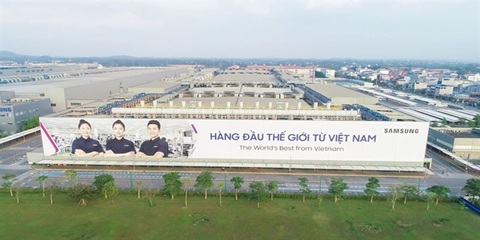
MOBILE PHONE EXPORTS RISE 20% TO $51.8 BILLION IN FIRST NINE MONTHS
Exports of mobile phones and components rose 20 per cent year-on-year to nearly US$51.8 billion in the first nine months of 2026, with China, the US and Republic of Korea accounting for more than half of the total. Shipments to the three markets reached a combined $26.18 billion, or 50.6 per cent of total exports of the product group during the period, according to data from the Vietnam Department of Customs under the Ministry of Finance.

INFRASTRUCTURE / CONSTRUCTION / LOGISTIC / PORT
VIỆT NAM-CAMBODIA TRADE GATHERS PACE TOWARDS $20 BILLION TARGET
Trade between Việt Nam and Cambodia continues to grow, remaining a bright spot and a key pillar of bilateral cooperation as the two countries aim to raise two-way trade to US$20 billion in the coming years. After setting a record of more than $11.3 billion last year, bilateral trade reached about $8.7 billion in the first eight months of this year, up 8.3 per cent year on year.
VIETNAM ECONOMY INVESTMENT
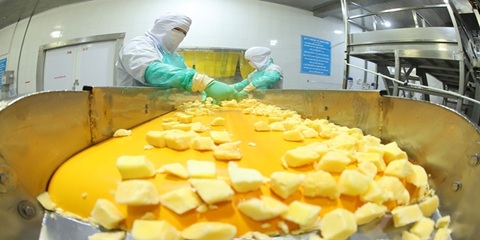
FRUIT AND VEGETABLE EXPORTS POISED TO HIT $10 BILLION IN 2026
Fruit and vegetable exports are on track to reach nearly US$10 billion in 2026, after rising 19.9 per cent year on year to nearly US$7.4 billion in the first nine months, driven by strong seasonal demand and abundant tropical fruit supplies. The Ministry of Agriculture and Environment said the growth reflected stronger international demand for fresh produce and processed agricultural products.
Events Sponsors