Want to be in the loop?
subscribe to
our notification
Business News
COVID-19 SHARPLY SLASHES FDI
The stressful situation of the COVID-19 pandemic continues to be one of the reasons why foreign investment capital (FDI) into Vietnam has declined.
Registered capital falls sharply
According to the Ministry of Planning and Investment, as of July 20, 2021, the total registered foreign direct investment (FDI) capital reached US$16.7 billion, down 11.1% from the same period last year. This is the strongest fall since the COVID-19 pandemic broke out again in late April 2021 and early May 2021 in Bac Ninh and Bac Giang provinces.
Recently, speaking at the video conference of the Prime Minister with businesses, business associations and localities on the morning of August 8, Minister of Planning and Investment Nguyen Chi Dung commented that this fourth wave of pandemic has negatively impacted industrial parks and export processing zones, in some localities, such as Ho Chi Minh City and some Southeast provinces, while these localities are considered FDI centers of Vietnam. It led to the risk of supply chain disruption, greatly affecting the local and national economy. Businesses, especially FDI enterprises, are facing many difficulties with entry and work permits for foreign experts.
The downward trend in FDI attraction was also noted by the Ministry of Planning and Investment in a recent report to the National Assembly. According to the Minister of Planning and Investment, not only the registered or disbursed capital, but the number of projects is also on the decline. Of the total US$16.7 billion FDI attracted in seven months, 1,006 new projects were granted investment registration certificates, down 37.9%. 561 projects registered to adjust investment capital, down 9.4% from the same period last year, with the total additional registered capital reaching US$4.54 billion, down 3.7%, and 2,403 licenses to buy shares from foreign investors, down 46.1%, with the total value of contributed capital reaching nearly US$2.05 billion, down 55.8% from the same period last year.
According to many economic experts, the COVID-19 pandemic has affected Vietnam's FDI attraction. The results of the Business Climate Index (BCI)) survey conducted by the European Chamber of Commerce in Vietnam (EuroCham) published in mid-July 2021 showed that business confidence has declined sharply due to the impact of the 4th wave of the COVID-19 pandemic.
Although registered FDI capital dropped sharply, the positive point is that disbursed FDI still increased slightly by 3.8% over the same period in 2020, with a level of US$10.5 billion. Many enterprises still expand business in Vietnam. In which, the investment capital of the largest investment partners such as Singapore and Japan is mainly in the form of new investment.
According to the World Investment Report 2021 of the United Nations Conference on Trade and Development (UNCTAD), Vietnam is also for the first time in the group of 20 countries attracting the biggest FDI in the world. Vietnam ranks 19th globally as an FDI recipient country with an investment of US$16 billion, up five places compared to 2019.
Devising appropriate solutions to attract FDI
In fact, the decline in investment flows is not a story unique to Vietnam. Recent reports show that the global trend of FDI is slow to recover, and competitive pressure in attracting FDI is large, especially for emerging and developing economies. These are important indicators that an adjustment is needed in the upcoming FDI attraction strategy.
According to Mr. Nguyen Van Toan, Vice Chairman of the Association of Foreign Invested Enterprises, Vietnam was very successful in fighting the pandemic in 2020, creating an advantage to attract FDI with positive results. However, this outbreak has hit many industrial parks, directly affecting the psychology of investors who are interested in Vietnam. Therefore, it is necessary to accelerate the progress of vaccination and create community immunity to recover the economy in a fundamental way, so as not to miss a beat to catch the shifting FDI inflows. Localities, along with an anti-pandemic strategy, need to drastically implement measures to ensure maximum productivity in industrial parks. In addition, other issues such as land fund, human resources, and legal issues continue to need attention.
Dr. Nguyen Dinh Cung said that it is necessary to actively overcome challenges to attract high-quality FDI capital. Especially in the context of complicated developments of COVID-19, good control of the pandemic will be a visa for Vietnam to welcome big corporations to invest not only in 2021, but also in 2021-2025. In particular, it is necessary to have an industrial development program to support priority industries from time to time, to avoid spreading and inefficient investment.
According to the Ministry of Planning and Investment, in the coming time, it is necessary to urgently grasp the situation to adjust the appropriate solution to attract FDI. Investment promotion should be reorganized in the direction of proactively approaching, understanding and supporting partners and large corporations with high technology, leading or operating value chains. We should also proactively plan to create clean premises, connection infrastructure and human resources to meet the requirements of investors.
In addition, the government should focus on policy dialogue, on-the-spot investment promotion, taking timely and appropriate measures and removing difficulties for foreign-invested enterprises operating in Vietnam.
Source: VCCI
Related News

BANKING / FINANCE / INSURANCE / TAX
REMITTANCES TO HCM CITY RISE NEARLY 40% IN Q3
Remittances to HCM City reached more than US$2.83 billion in the third quarter of this year, up 39.5 per cent from the previous quarter and 3.6 per cent year-on-year. This was the first quarter showing positive annual growth this year, helping narrow the decline in remittance inflows over the first nine months. According to the State Bank of Vietnam (SBV)’s Regional Branch 2, remittances transferred to HCM City through credit institutions and economic organisations totalled $2.835 billion in Q3, an increase of more than $802 million from the previous quarter.
TECHNOLOGY
TECH SECTOR GROWTH OPENS UP OPPORTUNITIES FOR VIỆT NAM TO GO GLOBAL
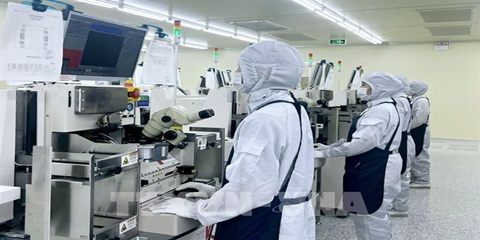
The growth of the electronics, semiconductor and high-tech sectors worldwide is opening up a variety of opportunities for Vietnamese enterprises to integrate more deeply into the global supply chain. However, to become suppliers for these corporations, domestic enterprises must meet rigorous standards regarding quality, technology, productivity and order fulfilment capabilities.
VIETNAM ECONOMY INVESTMENT
FOREIGN INVESTORS SEEKING A SYNCHRONISED MANUFACTURING ECOSYSTEM
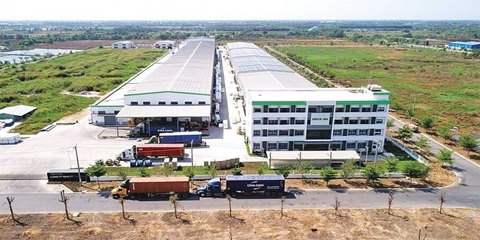
Instead of focusing only on land costs and incentives as usual, foreign investors are seeking a synchronised manufacturing ecosystem, from stable power supply and logistics to shared infrastructure and the convenience of completing residence procedures for experts to serve their long-term investment in the country.
MEMBER CORNER / PROMOTIONS
SENTRYSAFE FHW40200 – PROTECT YOUR VALUABLES, ENJOY PEACE OF MIND!
Looking for a reliable solution to protect your important documents, cash, and valuables from fire and water damage? Genuine SENTRYSAFE - Reliable protection for your valuables and peace of mind! Contact Sen Wai Vietnam for more information and personalized product recommendations.
PROPERTY / INDUSTRIAL ZONE
HCM CITY ATTRACTS US$5.7 BILLION INTO EXPORT PROCESSING AND INDUSTRIAL ZONES
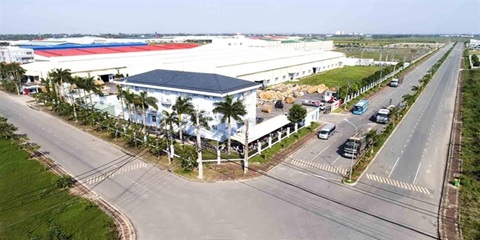
HCM City attracted US$5.7 billion in domestic and foreign investment into its export processing and industrial zones during the first nine months of 2026. The figure exceeded the city's full-year target by 31 per cent, highlighting strong momentum in high-quality industrial investment under Resolution No.10-NQ/TW. Total investment reached 131 per cent of the 2026 target of $4.25 billion and represented a 29 per cent increase compared with the same period in 2025, according to the city's Export Processing and Industrial Zones Authority (HEPZA).
INFRASTRUCTURE / CONSTRUCTION / LOGISTIC / PORT
DONG THAP PROVINCE STEPS UP INDUSTRIAL EXPANSION AND INFRASTRUCTURE CONNECTIVITY
Accelerating public investment, strengthening inter-regional connectivity, and expanding industrial land are helping Dong Thap efficiently bolster competitiveness and drive economic growth. Following the 2025 merger of the former Dong Thap and Tien Giang provinces, the expanded Dong Thap province in the Mekong Delta faces mounting pressure to accelerate infrastructure development and strengthen connectivity among local economic zones, urban areas, industrial parks (IPs), and production centres.
Events Sponsors






















